Iran claims that the recent US strikes are a breach of the ceasefire agreement
Iran announced on Tuesday that the United States had breached a ceasefire by targeting locations near the disputed Strait of Hormuz, which could complicate efforts to resolve the conflict.
Israel intensified its military actions against Lebanon on Tuesday, executing over 120 air strikes, marking one of the most significant days of bombardment in recent weeks, according to Lebanese security sources. Iran has requested a cessation of Israeli attacks in Lebanon as a condition for any agreement.
The foreign ministry of Iran stated that the U.S. strikes in the southern Hormozgan province, where Iranian media reported hearing explosions early on Tuesday, constituted a “gross violation” of a fragile ceasefire that has been in effect for nearly seven weeks. The U.S. stated that its attacks were defensive, aimed at missile sites and boats that were attempting to lay mines.
U.S. Secretary of State Marco Rubio stated that it might require “a few days” to negotiate a deal aimed at halting the conflict, following indications from both sides of progress on an initial agreement that would cease hostilities and resume shipping through the Strait. The initial agreement would provide negotiators with 60 days to address more intricate matters, including Iran’s nuclear program.
Iranian media reported that the country’s negotiators have been advocating for the memorandum to encompass the release of billions of dollars in frozen assets.
Oil prices increase once more.
After the U.S. strikes, Rubio informed reporters aboard his plane in India that the Strait of Hormuz must remain open in any case.
The conflict that commenced with U.S. and Israeli strikes on Iran on February 28 has resulted in an extraordinary oil supply disruption, leading to increased prices for fuel, fertilizer, and food.
Traffic through the Strait of Hormuz, which typically accounts for approximately one-fifth of global trade in oil and liquefied natural gas, has significantly decreased since the onset of the war.
Brent crude futures, which serve as a global benchmark, increased by approximately 3.5% on Tuesday, reaching around $100 a barrel. “THE CLOCK CANNOT BE TURNED BACK,” says the supreme leader.
The Revolutionary Guards stated on Tuesday that they reserved the right to respond to the strikes. Reports indicate that air defense units successfully intercepted a U.S. drone and engaged another drone along with a fighter jet, claiming these aircraft had breached Iranian airspace in the Gulf region.
In remarks shared on his Telegram channel during the annual hajj pilgrimage, Iran’s Supreme Leader Ayatollah Mojtaba Khamenei stated: “From now on, the slogans ‘Death to America’ and ‘Death to Israel’ will represent the Islamic nation and the oppressed people of the world.
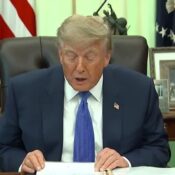
U.S. President Donald Trump has previously referenced the slogans to justify military action against Iran.
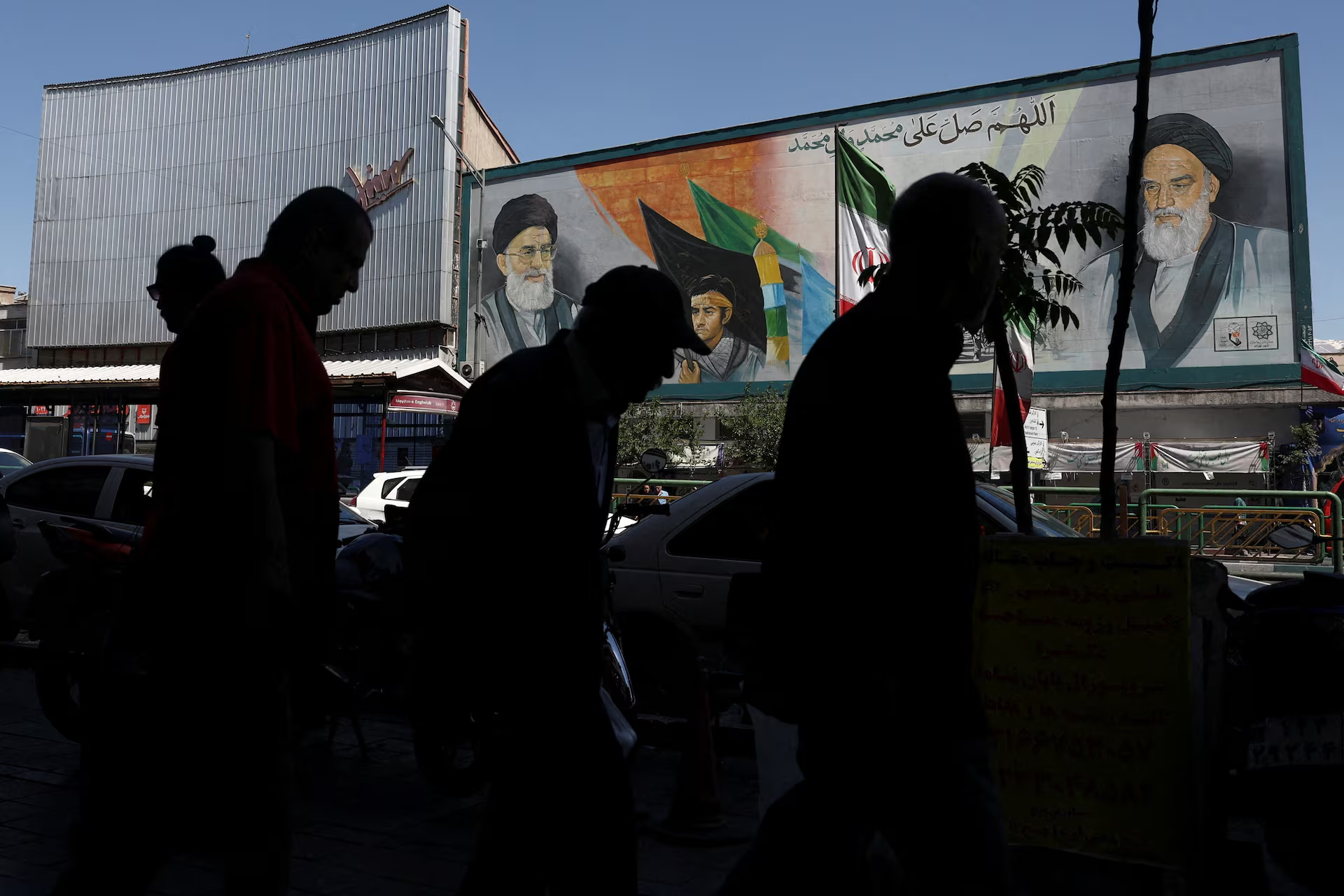
Individuals stroll by a billboard featuring an image of Iranian citizens in Tehran.
FROZEN IRANIAN FUNDS
Iranian and U.S. officials have suggested that recent indirect talks have advanced on a memorandum of understanding, or initial deal, which would pave the way for further negotiations toward a final agreement.
Iran’s chief negotiator, Mohammad Baqer Qalibaf, has returned to Iran from Qatar following efforts to secure the release of approximately $24 billion in frozen Iranian assets as part of the preliminary agreement, according to Iranian media sources.
Iran’s Fars news agency reported a source indicating that the funds were the final obstacle in the agreement. Iran’s ISNA news agency reported that the negotiations in Qatar were “overall positive.
Iran’s primary preconditions focus on the removal of the U.S. naval blockade, addressing nuclear concerns, and ensuring sovereignty guarantees. Additionally, Iran seeks an end to the ongoing conflict in Lebanon, where a ceasefire established in mid-April has not succeeded in stopping the hostilities between Israel and the Iran-backed militant group Hezbollah.
Israeli Prime Minister Benjamin Netanyahu stated on Tuesday that Israel was “deepening its operations in Lebanon” and deploying “large forces in the field.
Lebanese security sources informed Reuters that Israeli strikes targeted areas in southern and eastern Lebanon on Tuesday. Lebanon’s health ministry reported that Israeli strikes in recent hours resulted in the deaths of 31 individuals and left 40 others injured, according to the state news agency NNA early on Wednesday.
THE INITIAL DEAL WOULD ESTABLISH A 30-DAY FRAMEWORK.
Iranian sources indicate that a preliminary agreement would cease hostilities across all fronts, facilitate the movement of traffic through the strait over a period of 30 days, and potentially offer some financial relief. Negotiators would address more complex matters, such as Iran’s nuclear program, in a subsequent phase.
According to a report by Reuters, Iran has been allowing certain ships to pass through the strait, prioritizing vessels associated with nations that maintain strong relations with it.
Trump has stated that his primary objective in the conflict is to stop Iran from advancing its nuclear weapon capabilities through the use of highly enriched uranium. Tehran refutes any such intentions.
Trump has utilized the crisis to urge additional Arab and Muslim nations, including Saudi Arabia, to join the Abraham Accords, which seek to establish normalized relations with Israel.
Saudi Arabia has stated that it will not sign the accords without a clear roadmap to Palestinian statehood.
Thousands have lost their lives in the broader conflict, primarily in Lebanon and Iran.