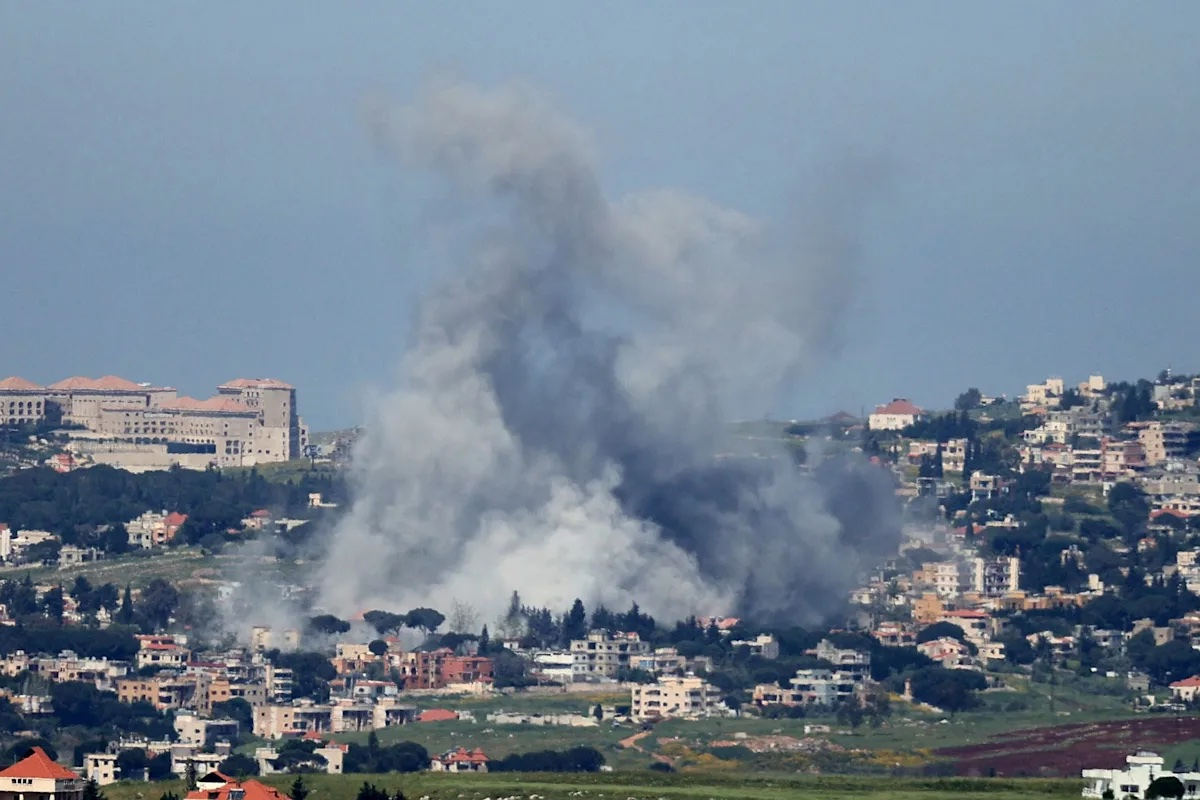
The US is going after Iranian missile bases and boats while new talks in Qatar test the chances of reaching a nuclear deal.
The US said it launched new attacks on southern Iran, aiming at missile sites and boats that were reportedly trying to plant mines.
It was said that the attacks were done in “self-defense” and “to protect our troops from threats posed by Iranian forces.”
Capt. Tim Hawkins, a spokesman for Central Command, said that the US military “continues to defend our forces while using restraint during the ongoing ceasefire” between the US and China.
As of Tuesday, Iran had not reacted to the most recent attacks. But Esmail Baqai, a spokesman for the Iranian Foreign Ministry, said earlier that talks to end the conflict were making some progress but that a deal “is not imminent.”
There is less certainty about attempts to reach a peace deal between Washington and Tehran because of the strikes.
After the attacks, US Secretary of State Marco Rubio said that negotiation was still possible and pointed to the talks on Tuesday between Iran’s top negotiator, its foreign minister, and Qatar’s prime minister.
“Let’s see if we can get things done.” It will take a few days, Rubio told reporters while on an official visit to India. “I think there’s a lot of back and forth about specific language in the first document.”
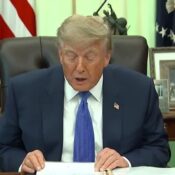
He also said that President Trump had “made it clear that he wanted to make it.”
Rubio said, “He’s going to make a good deal or no deal.”
When asked about the most recent strikes, Rubio said, “The straits have to be open.” They have to be open because they have to be open one way or another. “What’s going on there is wrong, illegal, can’t last for the world, and is unacceptable.”
Captain Hawkins said the operation was aimed at an area close to Bandar Abbas, a port city in the south that is home to an Iranian military base on the Strait of Hormuz. Iranian state media had earlier said that there were blasts in the city.
In May, tensions rose when Iranian and US naval destroyers fought in the Strait of Hormuz. Trump then insisted that the ceasefire was still in effect.
Over the weekend, Trump said he thought both sides were close to reaching a deal. However, he later told the officials to “not rush into” a deal. Rubio had also said that a deal might be possible on Monday.
But Baqai pushed back against reports that a breakthrough was about to happen.
“It is true that we have come to an agreement on a lot of the issues we were talking about…” On the other hand, no one can say that this means an agreement is about to be signed.
Reports say that the main topics of conversation were a plan to extend the ceasefire for another 60 days, reopen the Strait of Hormuz, and have more talks about Iran’s nuclear program.
CBS News reported that US intelligence thinks Iran’s Supreme Leader Mojtaba Khamenei is hiding in a place that hasn’t been revealed because he was hurt in an Israeli strike that killed his father and predecessor at the start of the war. This makes it harder for him to talk to peace negotiators.
US media also said that important problems, such as lifting of sanctions, the unfreezing of Iranian funds, and Washington’s demands that Tehran stop its nuclear activities, would likely be talked about later.
Before the war, it was thought that Iran had about 440 kg of uranium that was up to 60% pure, which is close to the amount needed for weapons.
On Monday night, Trump said that the enriched uranium would either be given to the US “immediately” or “preferably destroyed in place” with the help of the Islamic Republic of Iran.
The US and Iran have had a ceasefire since April 8, but there are still problems around Gulf shipping lines and Iranian ports.
The war started when the US and Israel attacked Iran on February 28, 2023. In response, Tehran attacked Israel and Gulf states that were on the same side as the US. It also took steps to close the Strait of Hormuz, which caused oil prices to rise sharply around the world.