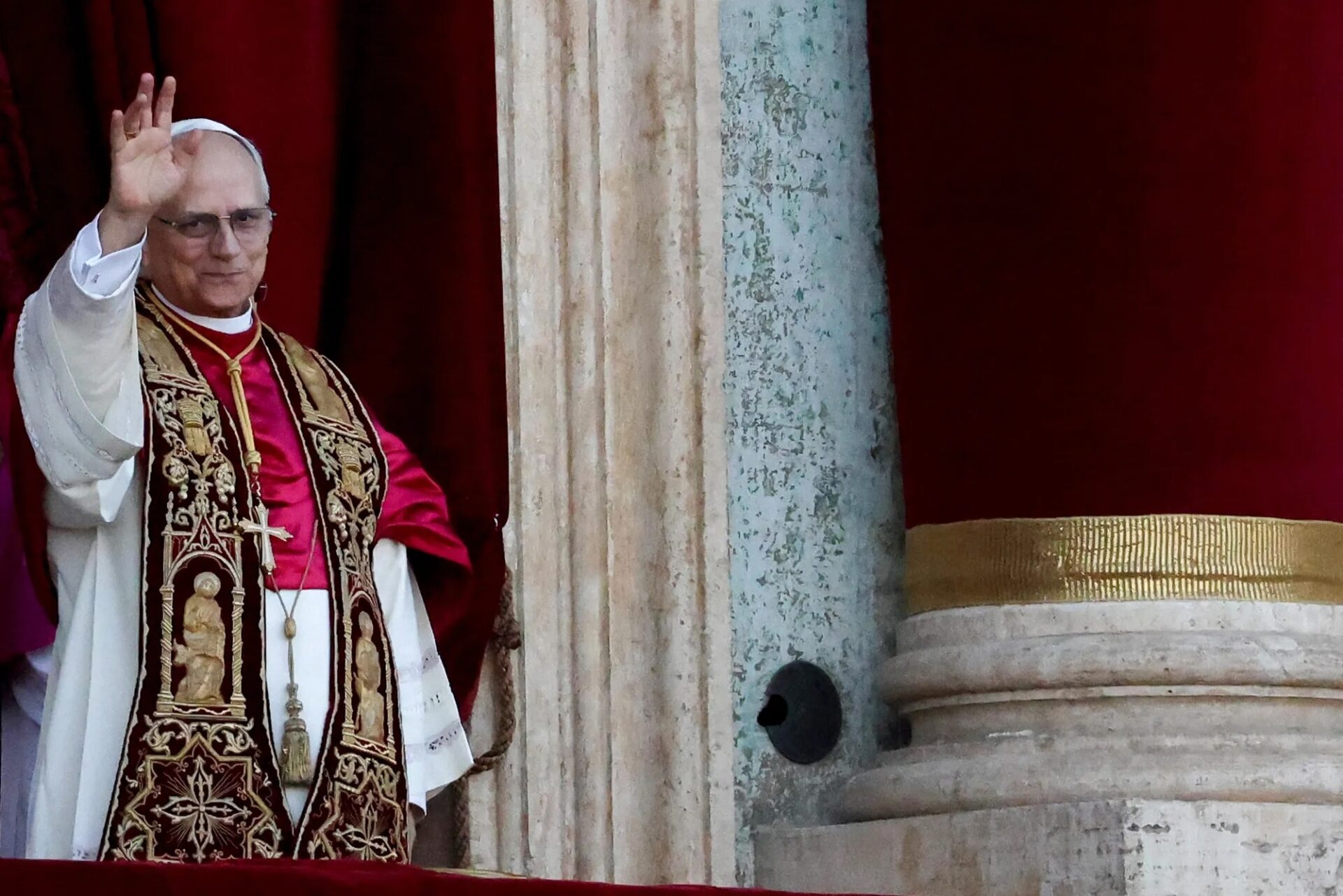
Pope Leo warns that AI could lead to endless wars and asks everyone to stop developing it
Pope Leo says AI could lead to false information, war, and exploitation, and he urges governments to slow down research and make ethical controls stronger.
Pope Leo has asked governments around the world to slow down the development of artificial intelligence. He said that unchecked technology growth could make global conflicts worse, spread false information, and lead to what he called an “unending war” future.
The appeal was in his first big doctrinal document, an encyclical called “Magnifica Humanitas” (Magnificent Humanity) that came out on Monday. It is almost 43,000 words long and is one of the strongest papal statements yet on AI, global conflict, and modern ethics.
Leo, the first pope of the United States, told government leaders that they needed to do a better job of regulating AI systems. He said that people should not let private interests take control of powerful technologies on their own.
He wrote, “What is needed is more active political participation that can slow things down when everything is speeding up.”
He also said that there should be “robust legal frameworks, independent oversight, informed users, and a political system that does not abdicate its responsibility.” He stressed that global policy needs to keep up with the speed of technological progress.
The pope also said that competition between AI companies could get out of hand, which could be very dangerous. He called for a “cooling” of the race to control new technologies.
Leo made one of his strongest comments yet when he talked about the use of AI in war. He insisted that these systems should never be given the power to kill on their own.
He said that any use of AI in military operations “must be subject to the strictest ethical constraints.” He also said that machines should not be given the power to make life-or-death choices.
The letter also talked about global conflict in a bigger way, criticizing what it called a “rising culture of violence” and “weaker international cooperation.”
“The last 60 years have been marked by shockingly violent wars that have often had huge effects on civilian populations,” he wrote.
“People are falling into a violent culture of power, where peace doesn’t seem like a duty to be fulfilled but rather a fragile break between fights,” he said.
Leo also questioned long-standing Church teaching on war and said that the traditional concept of “just war” was becoming less useful.
“The ‘just war’ theory, which has been used too often to defend any kind of war, is now out of date,” he said.
“The use of force, violence, and weapons shows a lack of resources in relationships, which always has terrible results for civilians.”
He said that some world leaders might even start a war to avoid dealing with politics.
“We cannot rule out the possibility that some leaders may see armed conflict as a good way to avoid dealing with problems at home and a cynical way to handle problems,” he wrote.
The pope also spoke out against new forms of exploitation in the AI industry, calling them “new forms of slavery.” These included unsafe working conditions in resource extraction and technology production.
“In some parts of the world, kids and teens work in dangerous conditions to break down materials that are used to get rare earth elements,” he wrote.
“These people’s bodies are scarred, hurt, and worn down so that computation can go on without stopping,” he said, adding that the situation “deeply challenges the moral conscience of our time.”
Leo also apologized on behalf of the Church for its part in slavery, which was a very odd thing for him to do.
“This is a wound in the memory of Christians,” he wrote. “Please forgive me for this in the name of the Church.”
Using biblical images, he said that unchecked technology ambition was like the Tower of Babel and warned people not to build systems without moral foundations.
“With the heart of a shepherd and a father, I ask everyone to stop building another Tower of Babel and work together to make the world a better place,” he said.
He told world leaders and people not to give up because of how dangerous AI is.
“There may be a sneaky temptation to think that the problems are too big and we are too small,” he wrote. “However, everyone has a duty to follow through. We can all do things in our own places.