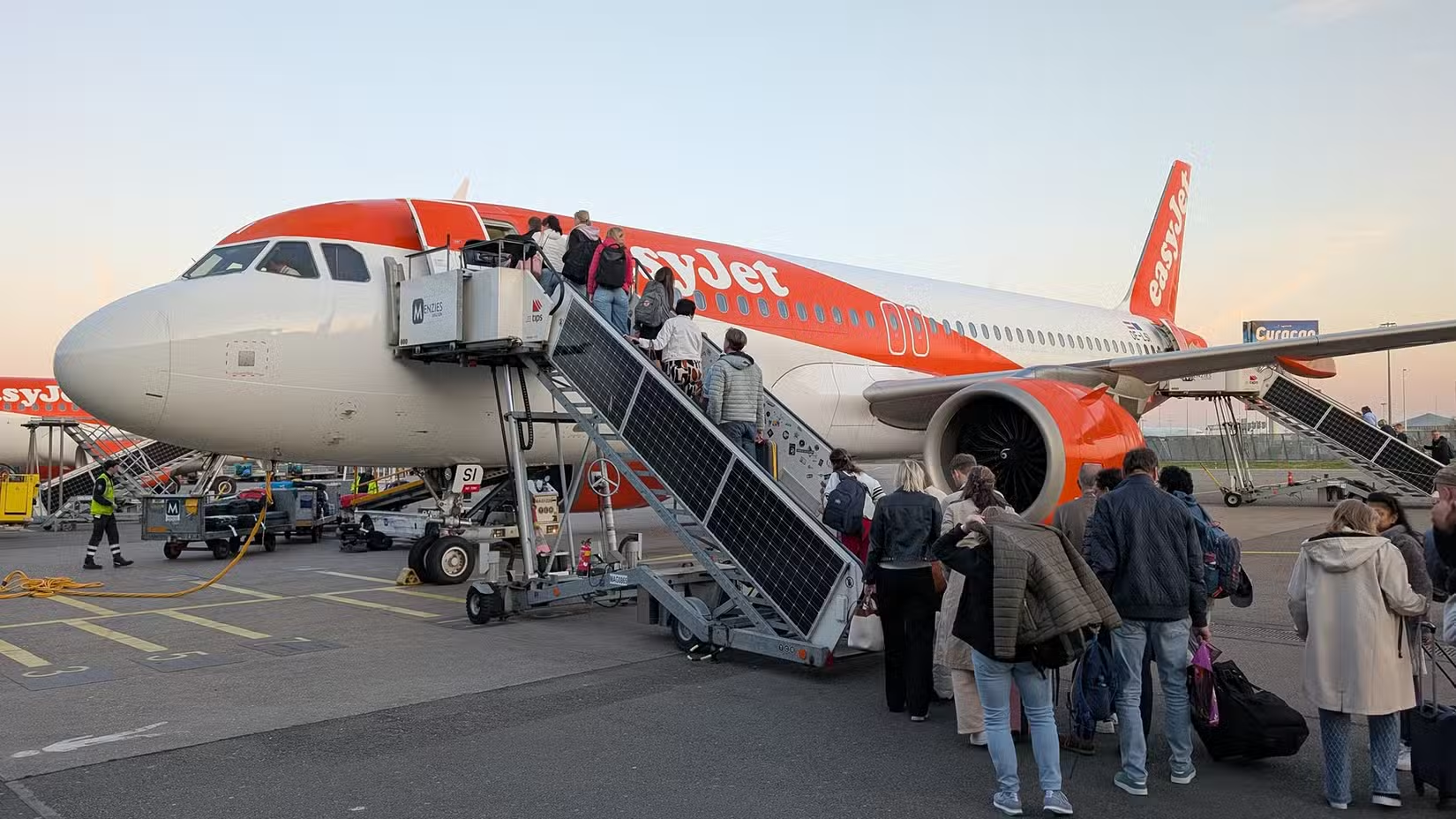
A passenger reported a charging power bank in their checked luggage, which caused the flight to be rerouted in the middle of the air as a safety measure.
An EasyJet flight from Egypt to the UK had to turn around and go to Rome after a passenger said that a power bank that was in checked luggage was charging in the hold of the plane. This caused safety worries about lithium-ion batteries.
Flying from Hurghada, Egypt, to London Luton, flight EZY2618 was sent to Rome Fiumicino Airport on Tuesday night as a safety step, as required by aviation rules.
FlightRadar24 data shows that the plane had been cruising at 36,000 feet over the Adriatic Sea for almost three hours when it abruptly changed direction and made a sharp left turn. It landed in Rome about twenty minutes later.
Over time, EasyJet confirmed that the diversion happened because a passenger told cabin workers during the flight that a portable charger had been left charging in luggage in the hold of the plane.
Even though the device wasn’t broken or caught fire, flight rules say that power banks can’t be charged in the cargo hold of an airplane because lithium-ion batteries can catch ablaze or overheat.
The company said that everyone got off the plane safely and that the flight was rescheduled for the next day.
Someone from EasyJet said in a statement:
“The plane landed safely, and passengers disembarked without any issues. We made sure they had a place to stay and food when it was available.” Some customers stayed at the airport, so they were given drinks.
The source also said:
“The safety of its passengers and crew is EasyJet’s top priority, and the company operates its fleet of planes in strict accordance with all manufacturer’s instructions.”
The airline also apologised to the affected passengers, stating:
«We apologize for any trouble the detour and following delay may have caused all of our passengers.
According to EasyJet’s rules, power banks can only be brought on board as carry-on luggage and can’t be used to charge other electronics during trips. The airline lets each customer bring up to two power banks as long as they are individually protected, either in their original packaging or in plastic bags. Each power bank can’t hold more than 160 watt-hours of power.
The event shows that the flight industry is becoming more worried about the safety of lithium-ion batteries. Portable chargers are banned on all airlines now because it’s easier to put out fires in the cabin than in the cargo hold.
In the same way, Ryanair doesn’t let power banks be in checked bags or overhead compartments, and you can’t use them during taxiing, takeoff, or landing. British Airways also says that power banks can only hold 100 watt-hours and that they should be kept under seats or in seat bags instead of in overhead bins.
The International Civil Aviation Organization (ICAO), which is part of the United Nations, made power banks subject to stricter rules in March after several events around the world involving batteries.
In November 2025, a battery power bank in a man’s pocket caught fire at Melbourne International Airport, resulting in burns to his leg and fingers.
In January 2025, South Korean officials said a portable power bank was most likely to blame for a fire that destroyed a passenger plane and hurt three people slightly.