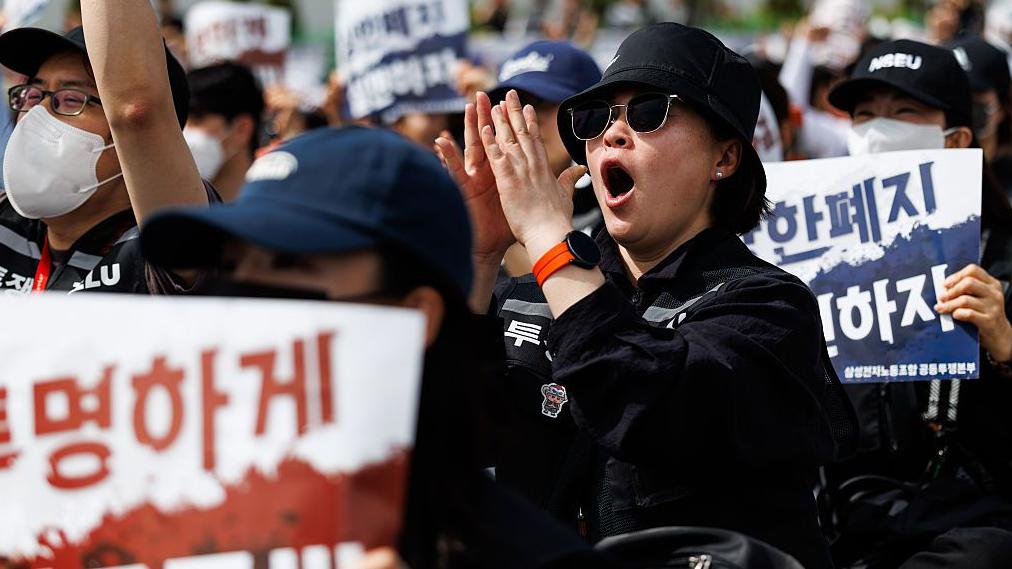
Samsung workers have halted their planned strike following a tentative agreement on pay that addresses AI chip bonuses, alleviating concerns about potential production disruptions worldwide.
Samsung Electronics’ largest labor union has called off a planned strike following a last-minute tentative wage agreement with the South Korean technology giant. This decision comes amid ongoing disputes regarding bonuses tied to the surging demand for artificial intelligence (AI) chips.
The union, representing nearly 48,000 workers, announced that the industrial action set to commence on Thursday has been postponed as members will vote on the proposed agreement from May 22 to May 27.
The dispute focused on how to distribute profits arising from the surging global demand for AI memory chips. Workers in other semiconductor divisions expressed their discontent over the considerably higher bonuses suggested for employees in Samsung’s memory chip sector.
Samsung proposed bonuses reaching as high as 607 percent of annual salaries for employees in its memory chip division, as reported, while workers in other business units were anticipated to receive incentives ranging from 50 percent to 100 percent.
The union contended that workers manufacturing less advanced chips for companies like Tesla and Nvidia ought not to be left out of the advantages stemming from the AI-driven semiconductor surge.
The planned strike raised concerns about potential disruptions in global technology supply chains, as Samsung Electronics is the world’s largest memory chipmaker and a crucial supplier of chips utilized in AI data centers, smartphones, and laptops.
The larger Samsung Group represented almost one-fifth of South Korea’s economic output, rendering the dispute a significant issue for the nation’s export-reliant economy.
Samsung’s operating profit in the January-to-March quarter surged by approximately 750 per cent compared to the same period last year, primarily fueled by a significant increase in demand for AI chips.
The dispute arose as Samsung encountered heightened competition from rivals SK Hynix and Micron Technology in the swiftly growing AI semiconductor market.
In a statement released following the tentative agreement, Samsung expressed, “With a humble attitude, we will cultivate a more mature and constructive labor-management relationship to ensure that such an incident never occurs again.”
Samsung’s shares reportedly increased by over eight percent after the announcement of the agreement, and South Korea’s Kospi stock index also experienced a significant rise.
Analysts at JPMorgan Chase estimated that a prolonged strike could potentially reduce Samsung’s operating profit by an amount ranging from 21 trillion won to 31 trillion won.