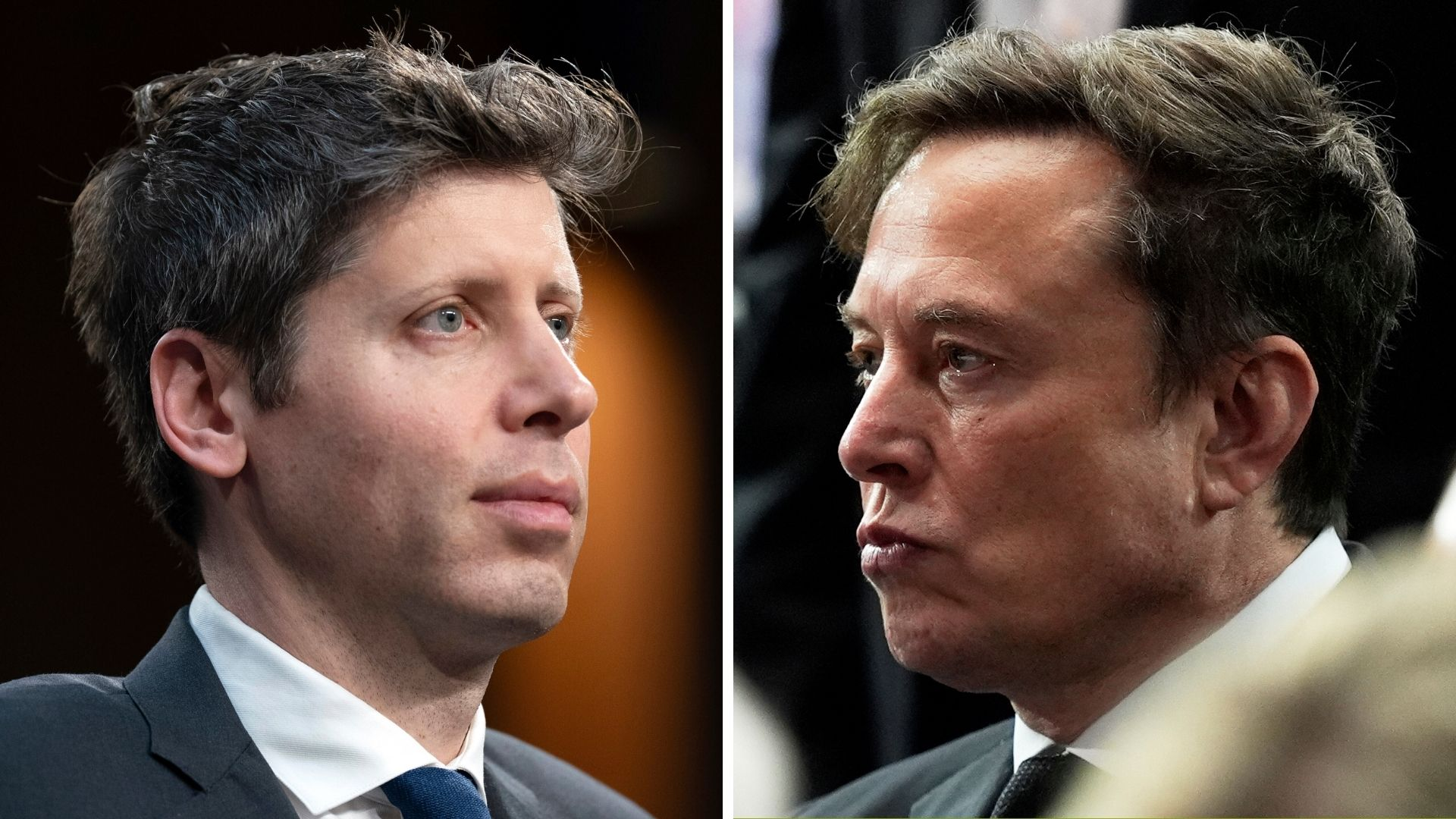
A U.S. jury on Monday ruled against Elon Musk in his lawsuit against OpenAI, determining that the artificial intelligence company was not liable to the world’s richest person for allegedly deviating from its original mission to benefit humanity.
The jury in federal court in Oakland, California, reached a unanimous verdict, stating that Musk had filed his case too late. The jury took less than two hours to reach a decision.
The trial was broadly regarded as a pivotal moment for the future of OpenAI and artificial intelligence as a whole, particularly concerning its applications and the beneficiaries of its advancements.
After the verdict, Musk’s attorney indicated the intention to appeal; however, the judge implied that the path forward could be challenging, as the determination of whether the statute of limitations had expired prior to Musk’s lawsuit was a matter of fact.U.S. District Judge Yvonne Gonzalez Rogers stated, “There’s a substantial amount of evidence to support the jury’s finding, which is why I was prepared to dismiss on the spot.”
Musk made an early investment in OpenAI.
In his 2024 lawsuit, Musk alleged that OpenAI, along with its Chief Executive Sam Altman and President Greg Brockman, coerced him into providing $38 million, only to subsequently undermine him by linking a for-profit venture to its initial nonprofit status and securing tens of billions of dollars from Microsoft and other investors.
Musk described the actions of the OpenAI defendants as “stealing a charity.”
OpenAI was established in 2015 by Altman, Musk, and a group of others. Musk departed from its board in 2018, and the following year, OpenAI established a for-profit entity.
OpenAI responded by stating that it was Musk who was motivated by financial interests, and that he delayed in asserting that OpenAI violated its founding agreement to develop safe artificial intelligence for the benefit of humanity.William Savitt, a lawyer for OpenAI, stated in his closing argument, “Mr. Musk may have the Midas touch in some areas, but not in AI.”
The verdict came after 11 days of testimony and arguments, during which Musk’s and Altman’s credibility faced continuous scrutiny.
OpenAI’s lawyers shared a moment of camaraderie as the verdict was revealed.
Microsoft encountered a claim of aiding and abetting. A Microsoft spokesperson stated, “The facts and the timeline in this case have long been clear, and we welcome the jury’s decision to dismiss these claims as untimely.”
OPENAI READIES FOR INITIAL PUBLIC OFFERING
Individuals utilize AI for a wide range of applications, including education, facial recognition, financial guidance, journalism, legal research, medical diagnoses, and the creation of harmful deep-fakes.
A significant number of individuals convey skepticism regarding technology and are concerned about its potential to replace workers in their positions.
Both sides charged one another with prioritizing financial gain over public service.
During his closing argument, Musk’s attorney Steven Molo highlighted for the jurors that multiple witnesses had raised doubts about Altman’s honesty or labeled him a liar. He also pointed out that Altman did not provide an unequivocal affirmation when questioned in court about his complete trustworthiness.Molo stated, “Sam Altman’s credibility is directly at issue.” “Should you doubt him, victory will elude them.”
Musk alleged that OpenAI is improperly attempting to benefit investors and insiders at the cost of the nonprofit, while neglecting the importance of AI safety. He argued that Microsoft was aware from the beginning that OpenAI prioritized financial gain over altruism.
OpenAI is in competition with AI firms like Anthropic and xAI, and is gearing up for a potential initial public offering that may value the company at $1 trillion.
A Microsoft executive testified that the company has invested over $100 billion in its partnership with OpenAI.
Musk’s xAI has been integrated into his space and rocket company SpaceX, which is gearing up for an IPO that may surpass OpenAI’s in scale.