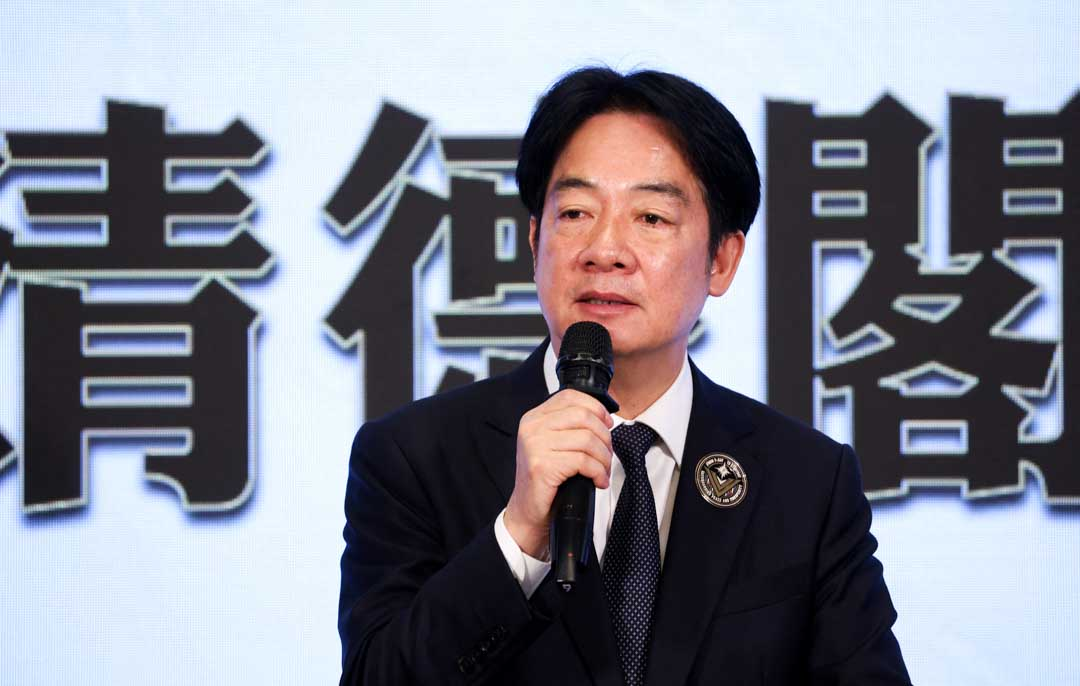
Taiwan will not be sacrificed or traded and will not relinquish its free way of life under pressure, President Lai Ching-te stated on Facebook on Sunday, emphasizing that U.S. arms sales to the island represent a security commitment grounded in law.
Lai’s remarks marked his initial direct reaction to the summit held last week in Beijing, where U.S. President Donald Trump met with his Chinese counterpart Xi Jinping, raising concerns in democratically governed Taiwan regarding U.S. support for the island.
Trump stated that he was still contemplating whether to proceed with new weapons sales to the island claimed by China, emphasizing that the U.S. was “not looking to have somebody say, ‘Let’s go independent because the United States is backing us’.”
Extremely worried
Lai expressed that individuals were “very concerned” regarding the Taiwan content of that meeting, while also extending gratitude to the U.S. government for its ongoing commitment to peace and stability across the Taiwan Strait and for its support of Taiwan.
Taiwan would refrain from provoking or escalating conflict, he added.
“However, we will not relinquish our national sovereignty and dignity, nor our democratic and free way of life, in the face of pressure,” Lai stated, emphasizing that China is the root of regional instability.
No immediate response was received from China regarding his comments.
China has consistently maintained its stance on the use of force to assert control over Taiwan, declaring it a Chinese province rather than an independent country.
COLLECTIVE FOCUS
Lai emphasized that maintaining peace and stability in the Taiwan Strait has consistently been a strong consensus and shared interest among Taiwan, the United States, and democratic nations globally. “Taiwan will absolutely not be sacrificed or traded.”
He stated that the long-term security cooperation and arms sales between Taiwan and the U.S. were founded on the Taiwan Relations Act, referring to the 1979 legislation that requires the sale of weapons to the island.
“This represents not just a U.S. security commitment to Taiwan, but also serves as the most significant deterrent force over the years against actions that threaten regional peace and stability.”
In December, the Trump administration approved a $11 billion arms sales package, marking the largest of its kind. According to Reuters, a second package valued at approximately $14 billion is still pending approval.
‘SOVEREIGN COUNTRY’
Lai also reaffirmed his position that the Republic of China, Taiwan’s official name, is a “sovereign, independent, democratic country”.
The Republic of China and the People’s Republic are not subordinate to one another; the future of Taiwan must be determined by its own people, and its sovereignty cannot be violated or annexed, stated Lai. “This represents the greatest consensus among all the people of Taiwan, and it is the status quo that we aim to protect.” There is no such thing as a ‘Taiwan independence’ issue.
In 1949, the Republic of China government, having been defeated in a civil war by Mao Zedong’s communists, retreated to Taiwan, where the People’s Republic was established.