Iran warns of a severe reaction should the US continue its assaults, while oil prices fluctuate
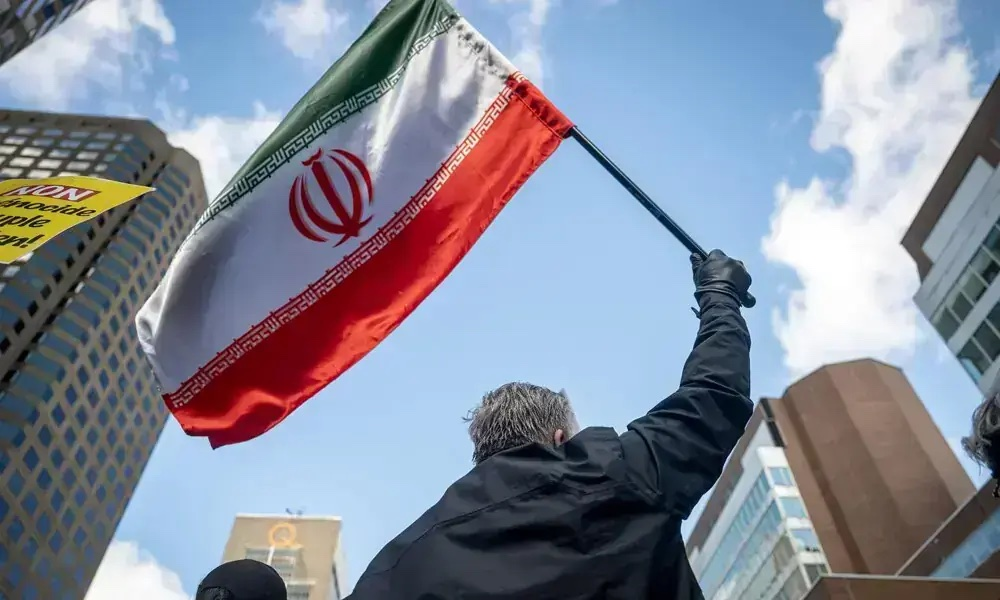
Iran announced on Thursday that it would retaliate with “long and painful strikes” against U.S. positions should Washington resume its attacks. Additionally, Iran reaffirmed its control over the Strait of Hormuz, which complicates U.S. efforts to form a coalition to reopen the waterway.
Two months into the U.S.-Israeli conflict with Iran, the crucial maritime route remains shut, cutting off 20% of the global oil and gas supplies. The situation has caused a significant increase in global energy prices and raised worries about the potential for an economic downturn.
Efforts to resolve the conflict have reached a standstill, with a ceasefire established since April 8; however, Iran continues to obstruct the strait in retaliation against a U.S. naval blockade affecting Iran’s oil exports, which are crucial to the nation’s economy.
U.S. President Donald Trump is scheduled to receive a briefing on Thursday regarding plans for a new series of military strikes on Iran aimed at encouraging negotiations to resolve the conflict, according to a U.S. official who spoke to Reuters.
The options have been a longstanding element of U.S. planning; however, the proposed briefing, initially reported by Axios late on Wednesday, led to significant increases in oil prices, with the benchmark Brent crude contract reaching over $126 a barrel at one point. Subsequently, it fell back to approximately $113 a barrel.
A senior official from the Revolutionary Guards stated that any U.S. attack on Iran, regardless of its scale, will lead to “long and painful strikes” against U.S. positions in the region. Aerospace Force Commander Majid Mousavi, as reported by Iranian media, remarked, “We’ve seen what happened to your regional bases; we will see the same thing happen to your warships.”
Iran seeks to preserve its influence over the Strait.
Supreme Leader Mojtaba Khamenei conveyed in a written message to the Iranian people that Tehran would put an end to “the enemies’ abuses of the waterway” under the new management of the strait, signaling the country’s determination to retain control over it. ” Foreigners who come from thousands of kilometers away…have no place there except at the bottom of its waters,” he stated.
The speaker of Iran’s parliament and the foreign minister hinted at Iranian authority over the strait.
Since the war commenced on February 28, Brent prices have doubled, leading to inflation and causing pump prices to reach politically sensitive levels across the globe.
U.N. Secretary-General Antonio Guterres cautioned that if the disruption from the closure continues into mid-year, global growth will decline, inflation will increase, and tens of millions more individuals will be driven into poverty and extreme hunger. “The longer this essential artery is obstructed, the more challenging it will be to undo the damage,” he stated to reporters in New York.
In addition to obstructing nearly all shipping except its own through the strait, Iran initiated drone and missile attacks on Israel, U.S. bases, infrastructure, and U.S.-affiliated companies in Gulf states.
Amazon AMZN.O announced that it may take months to restore normal operations for its cloud regions in Bahrain and the United Arab Emirates following damage incurred last month due to the ongoing conflict, which has resulted in thousands of casualties in Iran and throughout the Middle East.
According to Axios, another plan to be discussed with Trump includes deploying ground forces to seize a section of the Strait of Hormuz to restore it for commercial shipping. Officials have indicated that Trump is contemplating the possibility of extending the U.S. blockade on Iran or declaring a unilateral victory.
In a clear indication that the U.S. was considering a scenario in which hostilities come to an end, the State Department cable extended an invitation to partner countries to join a new coalition known as the Maritime Freedom Construct (MFC) to facilitate navigation through the strait. “The MFC represents a vital initial step in the creation of a post-conflict maritime security framework for the Middle East,” stated the cable, which was scheduled to be communicated orally to partner nations by May 1.
France, Britain, and other nations have engaged in discussions regarding their potential contributions to a coalition, yet they have expressed a readiness to assist in opening the Strait only after the conflict concludes.
Japan engages in discussions with Iran regarding secure transit through the Strait.
A Pakistani source stated on Wednesday that Mediator Pakistan was attempting to prevent escalation as the two sides exchanged messages regarding a potential deal. Trump has stated that Iran cannot possess a nuclear weapon, whereas Tehran asserts that its nuclear aspirations are peaceful.
Iran’s recent proposal for addressing the war, which has been on hold since April 8 due to a ceasefire agreement, would postpone any discussions regarding its nuclear program until the conflict is officially concluded and shipping matters are settled.
That failed to satisfy Trump’s request to address the nuclear issue from the beginning.
A source from Pakistan indicated that the United States had provided “observations” regarding the Iranian proposal, leaving it to Iran to formulate a response. “The Iranians requested time until the end of the week,” the source informed Reuters.
German Chancellor Friedrich Merz stated that Tehran must cease its tactics of delay, while Japanese Prime Minister Sanae Takaichi mentioned her conversation with Iranian President Masoud Pezeshkian to guarantee the safe passage of a Japanese-related vessel and others through the strait.
Pezeshkian informed Takaichi that Tehran would return to diplomatic efforts once Washington altered its approach.
Weeks of conflict have put significant pressure on the Iranian economy; however, analysts suggest that the ruling clerics and Revolutionary Guards may leverage their strong control over the country to endure the situation, potentially leading to further unrest among the population and challenges to their authority.