China plans to prohibit the sale of drones in Beijing and will mandate permits for their operation under new regulations.
China will prohibit the sale of drones in Beijing and implement extensive new regulations mandating permits for all drone flights in the capital, with these measures coming into effect on Friday.
According to the new regulations, the sale, rental, or importation of drones and essential components into Beijing will be strictly forbidden. Owners will additionally need to register their devices with the police, establishing one of the most stringent urban drone control frameworks introduced in the country to date.
All outdoor drone flights in Beijing will now necessitate prior approval, and users are required to complete an online training session and successfully pass a test on drone regulations before operating any device.
Drones are required to be registered prior to their entry into or exit from the capital. In situations where drones are dispatched outside the city for repairs, owners must retrieve them personally instead of opting for delivery back to their location.
Nonetheless, there are certain limited exemptions. Drones can still be acquired and kept for specific purposes like counter-terrorism and disaster relief operations, as long as they receive approval from the appropriate authorities.
The restrictions are a component of China’s larger initiative to strengthen oversight of its swiftly growing drone industry, which has become integral to what Beijing refers to as the “low-altitude economy”—a strategic sector encompassing drones and flying taxis, anticipated to yield over two trillion yuan (approximately $290 billion; £217 billion) by 2035.
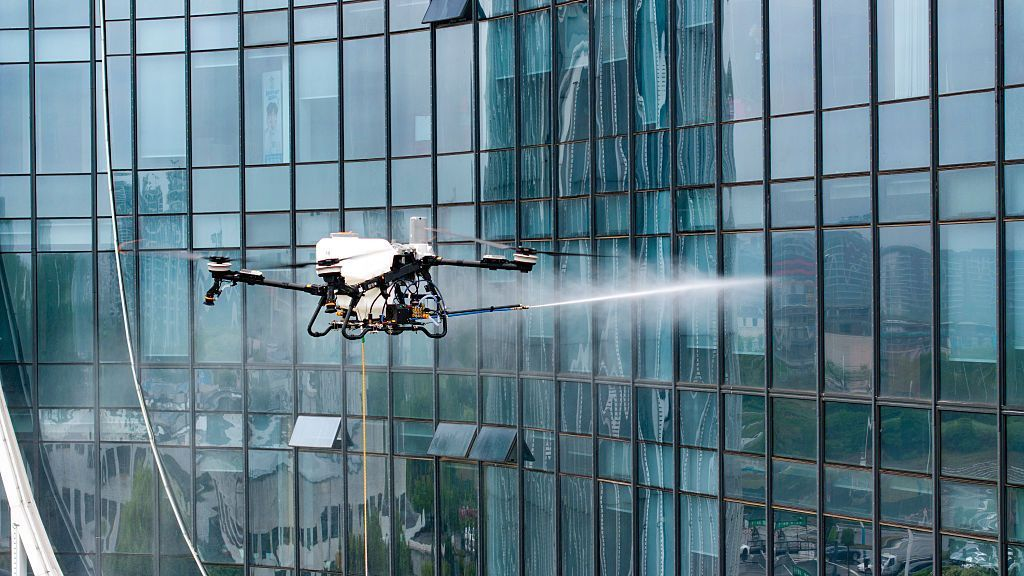
Drones are extensively utilized throughout China for various services, including food delivery, agriculture, and building maintenance. However, the regulatory landscape is tightening, especially in major urban areas.
In recent years, China has progressively strengthened its drone regulations, citing concerns for public safety. Last year, Beijing’s entire airspace was declared a no-drone zone, necessitating approval from air traffic authorities prior to any flight occurring.
The most recent regulations received approval in March. City authorities indicated that there was a need to enhance drone management to tackle the “challenges” associated with ensuring safety in low-altitude airspace.
Xiong Jinghua, a senior official of the Beijing Municipal People’s Congress, stated that the aim was to maintain a careful balance between security and development.
Xiong stated that the objective was to “strike the best balance” between safety and fostering technological and economic advancement.
The extensive restrictions are anticipated to greatly affect China’s vast drone market, which, based on government data, comprises over three million registered drones.
China is home to several of the world’s top drone manufacturers, with DJI standing out as the global industry leader. As the new rules near enforcement, reports suggest that DJI retail outlets in Beijing have started to clear drones and related products from their shelves, indicating a significant change for both consumers and manufacturers in the capital.