Iran Dismisses US Peace Proposal, Launches Missiles at Israel Amid Rising Oil Prices in Escalating Conflict
Iran dismisses US peace proposals, escalates assaults on Israel as regional tensions escalate and global oil prices rise significantly.
Iran has rejected United States proposals aimed at resolving the ongoing Middle East conflict, labeling them as “unrealistic, illogical and excessive,” while ramping up military actions against Israel as the war approaches its second month.
The rejection occurred as Iran initiated new missile strikes on Israel on Monday, intensifying a conflict that has expanded across various fronts in the region. Oil prices surged significantly after Yemen’s Houthi group entered the conflict.
On Monday, Israel’s military confirmed the interception of two drones that were launched from Yemen. The development comes in the wake of recent missile attacks by the Iran-aligned Houthis, signifying their initial direct involvement since the onset of the conflict between the US and Iran.
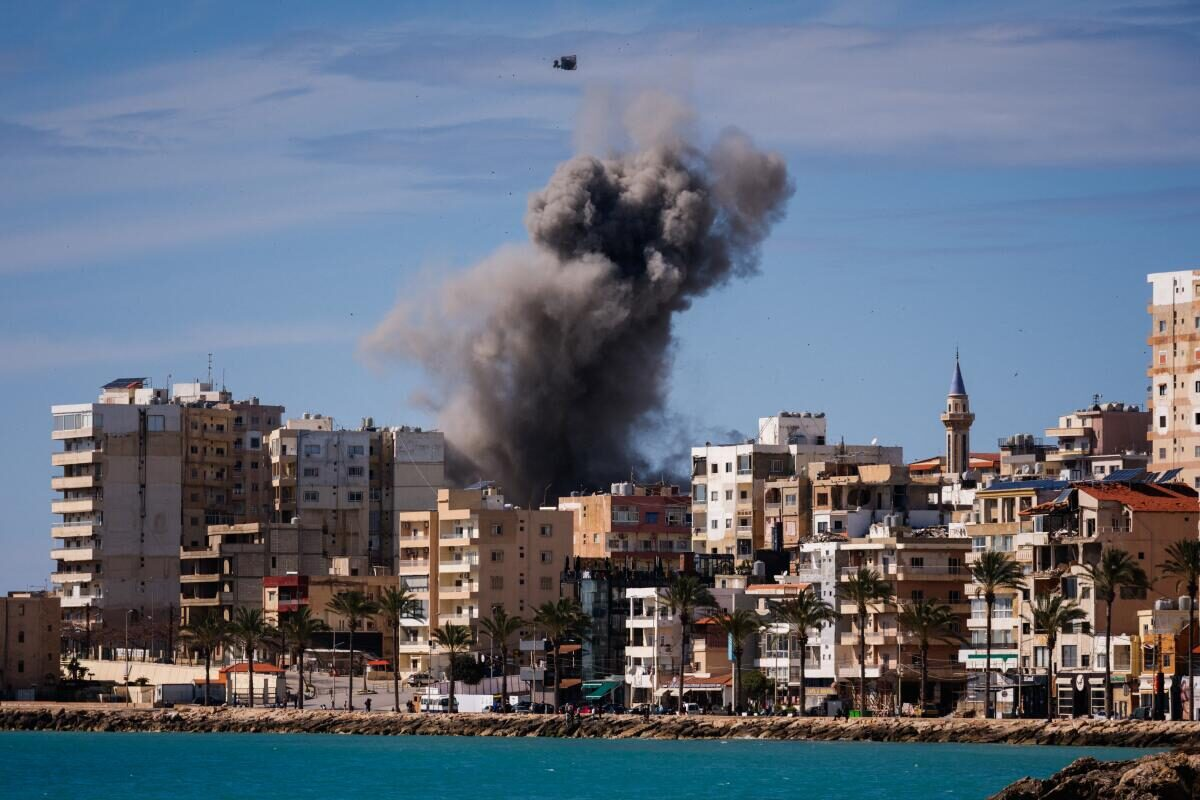
In an expanding arena of conflict, Lebanon’s Hezbollah launched rockets into Israel, leading to retaliatory strikes. The Israeli military reported that it aimed at what it characterized as military infrastructure in Tehran and facilities linked to Hezbollah in Beirut, with black smoke observed rising over the Lebanese capital.
US President Donald Trump delivered a new warning to Iran, insisting on the reopening of the Strait of Hormuz, a vital global energy passage, or risk potential US strikes on its energy infrastructure.
In a social media post, Trump stated: “Great progress has been made but, if for any reason a deal is not shortly reached, which it probably will be, and if the Hormuz Strait is not immediately ‘Open for Business,’ we will conclude our lovely ‘stay’ in Iran by blowing up and completely obliterating all of their Electric Generating Plants, Oil Wells and Kharg Island.”
Iran, nonetheless, continues to stand firm. Esmaeil Baghaei, spokesperson for the Foreign Ministry, confirmed that Tehran had received indirect messages from Washington suggesting a readiness to negotiate, but categorically dismissed the terms put forth.
Our stance is unequivocal. We are facing military aggression. “Thus, we are concentrating all our efforts and strength on our defense,” Baghaei stated during a press conference.
He also disclosed that Iran’s parliament is considering a possible withdrawal from the Nuclear Non-Proliferation Treaty, heightening concerns regarding the future of nuclear oversight in the region.
Diplomatic efforts are ongoing, as Pakistan, Egypt, Saudi Arabia, and Turkey participate in mediation discussions. Nonetheless, a Pakistani security official indicated that direct talks between the US and Iran seem improbable in the near future, stating: “We are doing everything we can to facilitate this as soon as possible.”
In spite of persistent diplomatic signals, the military escalation persists. The United States has sent more troops to the Middle East, as Iran continues its blockade of the Strait of Hormuz.
The conflict has greatly impacted global energy markets. Brent crude increased by $2.42, approaching $115 per barrel, on track for a historic monthly rise. Analysts caution that the market is preparing for additional escalation, as the Houthis’ involvement heightens concerns about possible disruptions to the Bab el-Mandeb Strait, another vital shipping route.
The conflict has resulted in significant casualties throughout the region. Numerous lives have been lost, encompassing both civilians and military members in Iran, Lebanon, Iraq, and among US forces.
Iran has confirmed the death of Alireza Tangsiri, a senior commander of the Revolutionary Guards Navy, marking the loss of another prominent figure in the ongoing conflict. In the face of ongoing bombardment by US and Israeli forces, Iran persists in executing missile and drone strikes.
In Israel, debris from intercepted missiles hit a fuel storage facility close to a naval base in Haifa, with Hezbollah taking responsibility for attacking the same site.
The escalating conflict has rekindled tensions in southern Lebanon, where Israel has signaled intentions to create a “buffer zone,” heightening concerns about extended military occupation and additional displacement.
As the conflict intensifies and expands throughout the region, global markets and diplomatic efforts continue to be on high alert, with no quick resolution in view.