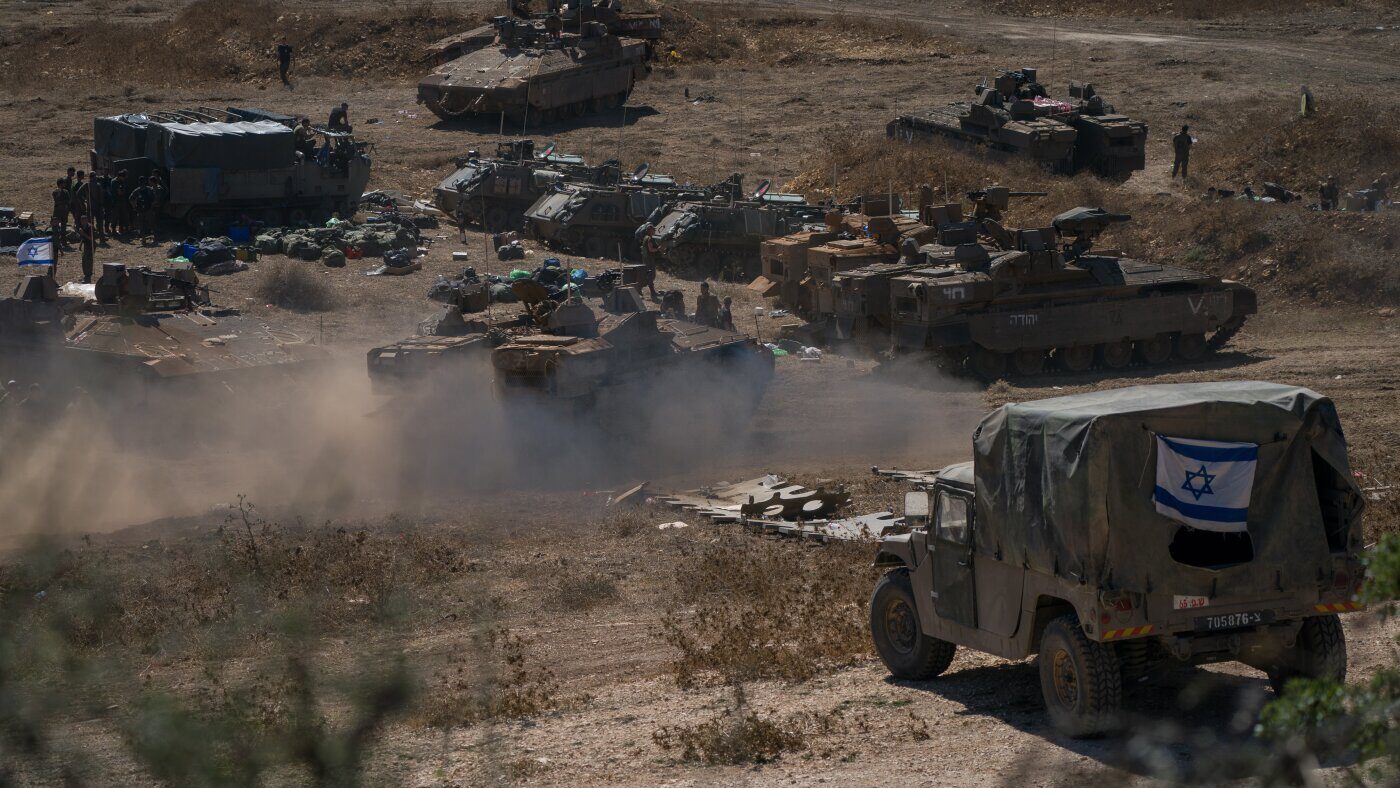
Tensions between Hezbollah and Israel have intensified following Israel’s approval of expanded attacks, heightening concerns about a potential ground invasion in Lebanon.
The Israeli military has sanctioned plans to enhance its ground and air operations against Hezbollah, heightening concerns in Lebanon about a possible extensive ground invasion.
The escalation comes after a resurgence of hostilities earlier this month, as Hezbollah launched rockets into Israel within the context of the larger conflict involving the United States and Israel opposing Iran. Since then, violence has escalated, with Lebanon’s health ministry reporting over 1,000 fatalities, including at least 118 children and 40 healthcare workers. More than one million individuals have been displaced, raising alarms about an impending humanitarian crisis.
The Israeli military reports that Chief of Staff Eyal Zamir has approved plans to proceed with “targeted ground operations and strikes” against Hezbollah, characterizing the campaign as a “prolonged operation.” Officials in Israel state that the aim is to safeguard northern communities from persistent rocket assaults.
Defense Minister Israel Katz stated that troops have been ordered to eliminate crucial crossings over the Litani River, which Israel alleges are utilized by Hezbollah for the movement of reinforcements. Soon after, an Israeli airstrike impacted the Qasmiye bridge close to the coastal city of Tyre, an essential route connecting southern and central Lebanon. The infrastructure is extensively utilized by civilians.
The recent developments have sparked concerns in Lebanon regarding Israel’s intentions to isolate the southern region, which serves as Hezbollah’s stronghold and a center for the Shia community. This situation could potentially lead to territorial incursions or the establishment of a buffer zone.
Lebanese President Joseph Aoun denounced the strikes, characterizing them as a “prelude to a ground invasion” and alleging that Israel is engaging in a “policy of collective punishment against civilians.” He cautioned that these actions might indicate wider aspirations to increase Israeli presence in Lebanese territory.
Katz also noted that Israeli forces have received orders to demolish homes in border villages, reflecting tactics employed in operations against Hamas in Gaza. The operations have resulted in extensive destruction and compelled evacuations to create security zones.
The recent escalation is a continuation of a larger cycle of conflict in the region, heightened by the ongoing war involving Iran and its allies. Recent attacks by Hezbollah were reportedly executed as a response to the killing of Ali Khamenei and in reaction to ongoing Israeli strikes in Lebanon, despite a ceasefire that was established in November 2024.
The Lebanese government’s attempts to disarm Hezbollah have encountered significant obstacles and remain unresolved. President Aoun has dismissed the option of using force, cautioning that this approach could exacerbate sectarian divisions and lead to increased instability in the nation.
As tensions escalate, the likelihood of a broader regional conflict rises, with civilians on both sides bearing the brunt of an ever-more unstable situation.