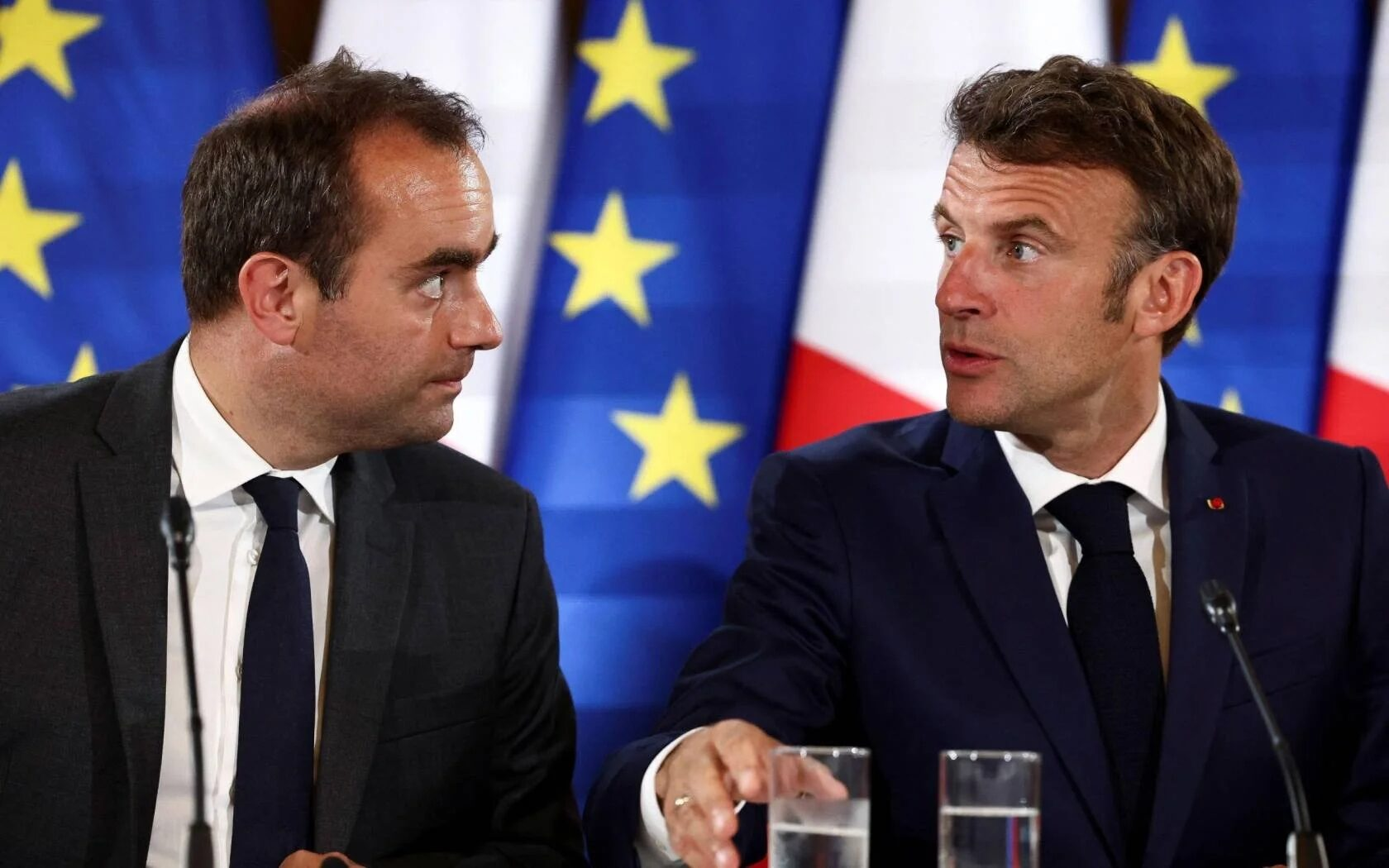
In the next 48 hours, French President Emmanuel Macron will name a new prime minister, his office announced Wednesday.
Amid growing political unrest and broad opposition to calls for a sudden legislative election, French President Emmanuel Macron says he will choose a new prime minister within the next 48 hours, his office said Wednesday.
Sebastien Lecornu, France’s fifth prime minister in as many years, resigned on Monday, barely hours after announcing his cabinet, according to the latest news. According to current records, his administration was the shortest-lived in contemporary French history.
Despite resigning, Lecornu has persisted in consulting with political figures from both the center-left and the center-right at Macron’s request in an attempt to stabilize the administration.
“A majority of deputies oppose dissolution (of parliament); a platform for stability exists; a path is possible to adopt a budget by December 31,” according to a statement from the Elysee Palace, which cited Lecornu’s discussions. Macron will proceed with the appointment of a new premier “within the next 48 hours” based on this, the statement continued.
Following threats to pass a no-confidence resolution against Macron’s administration from opposition parliamentarians and even some Macron supporters, Lecornu resigned. The action highlighted the political precarity of France’s hung parliament, where policy deadlock has grown commonplace and no single bloc has a majority.
In an interview with France 2 TV, Lecornu expressed his belief that “a path is still possible” to secure the 2026 budget and provide financial stability to the second-largest economy in the eurozone. Finding agreement “won’t be easy,” he said, but he implied that the likelihood of a sudden election was dwindling.
“I told the President of the Republic that I think he can name a prime minister within the next 48 hours,” Lecornu stated.
As far-right and far-left groups have increasingly called on Macron to step down or dissolve parliament, his leadership has been put to the test. Far-right National Rally (RN) Marine Le Pen called the president’s actions a “delaying tactic,” while hard-left leader Jean-Luc Mélenchon reiterated his call for Macron to resign completely.
The center-left alliance, led by Marine Tondelier of the Greens and Olivier Faure of the Socialist Party, has stated that it is prepared to form the next administration. A 2% wealth tax on France’s wealthiest residents and the repeal of Macron’s contentious pension reforms are among the initiatives they are promoting; these are popular with the general public but unpopular with conservatives.
Despite the uncertainties, investors embraced Lecornu’s indications of political stability, and financial markets showed a modest recovery on Wednesday, with the CAC 40 index climbing 1.1%. France is still among Europe’s economic laggards in 2025, though, and analysts caution that the protracted impasse may put additional pressure on the nation’s budget deficit and investor confidence.
The focus now shifts to the next prime minister of France, who will have to manage a divided parliament and rebuild confidence in the nation’s capacity to govern itself in the face of its worst political crisis in decades, while the country waits for Macron to proceed.