 "Where Africa Comes to Stay Informed."
US Edition
"Where Africa Comes to Stay Informed."
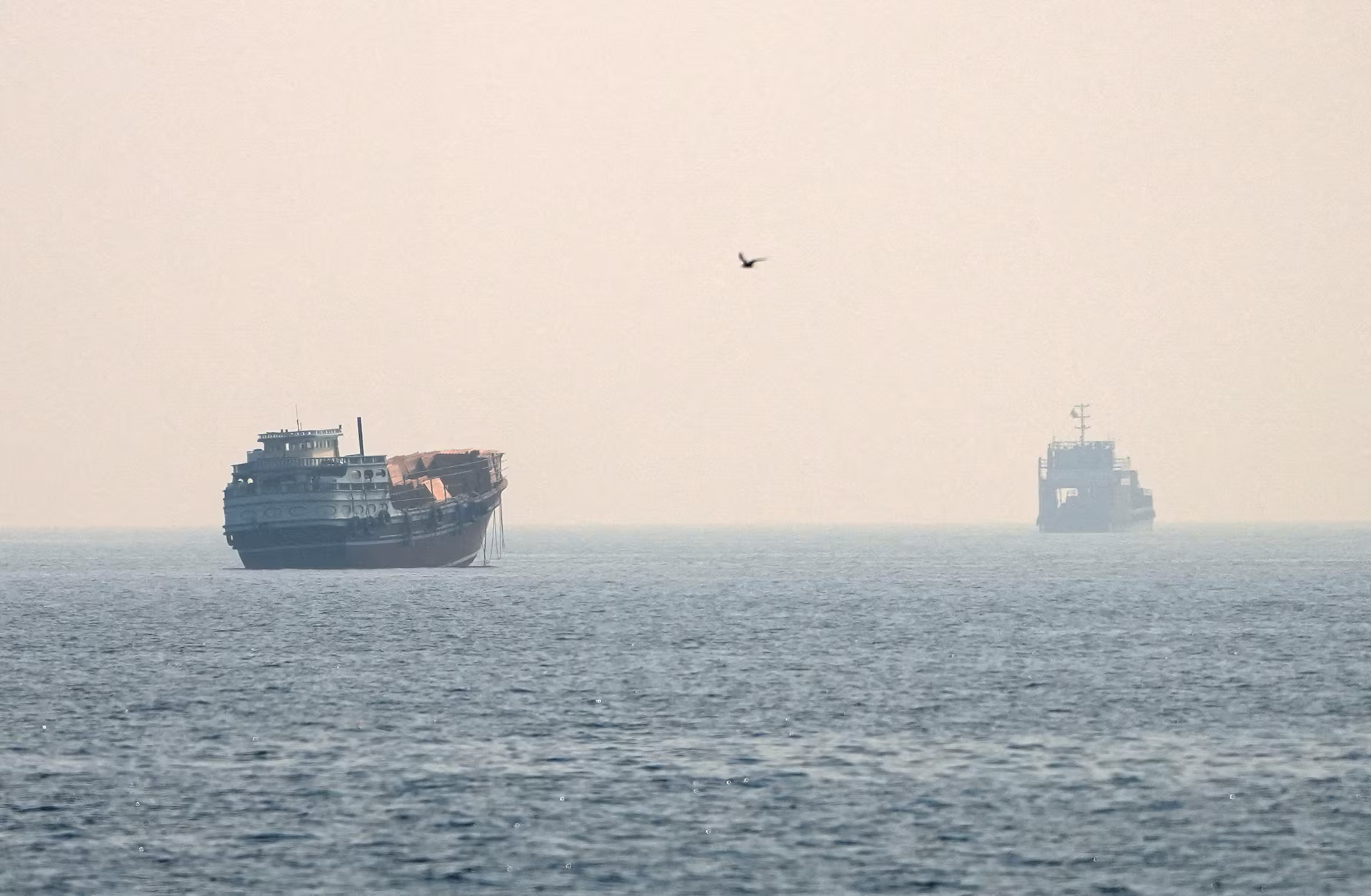
Barely 17 commodity ships made the passage through the Strait of Hormuz over the weekend, a steep drop that underlines how badly the Middle East conflict has throttled one of the world's busiest energy corridors. Shipping data put the previous weekend's count at 37, with Washington and Tehran still locked in a standoff.
The strait moved roughly one fifth of the world's oil and liquefied natural gas before the fighting started. That flow has since thinned to a trickle. Producers in the region have not stopped shipping altogether, though: crude is still moving out by tanker, and some masters are switching off their transponders as they go.
Before the US-Israeli war with Iran opened on February 28, about 125 large commercial vessels a day used the waterway, a mix of tankers, gas carriers, bulk ships and container vessels.
Provisional figures from the analytics firm Kpler counted five trackable ships leaving the strait on Sunday and two smaller oil tankers heading into the Gulf as of 0706 GMT. The outbound group included the very large crude carrier Pinios, two tankers loaded with refined products and two empty vessels rigged for bulk cargo and gas.
Saturday was busier. Eight ships departed the Gulf between them carrying crude, agricultural goods, petroleum products, liquefied natural gas, liquefied petroleum gas and fertilizer, while a very large gas carrier and a VLCC came in the other way.
The Pinios spent Monday off Fujairah in the United Arab Emirates, moving roughly two million barrels of Iraqi Basrah crude across to another very large crude carrier, the New Constant, which is due to head for China.
The LNG carrier Shandong Redwood, filled at Qatar's Ras Laffan terminal, cleared the strait on September 19 on a course for Pakistan.
Kpler's weekly tally showed 22 tankers, most of them VLCCs, taking 42 million barrels of crude out of the strait during the week of September 13. Saudi Arabia and Iraq each supplied 43 percent of that volume.
The war has squeezed the alternatives as well. Houthi strikes on Saudi Aramco's East-West pipeline have pushed the state energy company to route more of its exports through Hormuz across this month and next.
Traffic is thinner at the Bab el-Mandeb Strait too, at the foot of the Red Sea. Fifty-one vessels transited in total, 33 of them outbound over the weekend, among them an Aframax tanker holding about 700,000 barrels of Saudi crude. The comparable figure a weekend earlier was 57.
No oil loadings have been visible at Saudi Arabia's Yanbu port on the Red Sea since September 16.




Comments
0