 "Where Africa Comes to Stay Informed."
US Edition
"Where Africa Comes to Stay Informed."
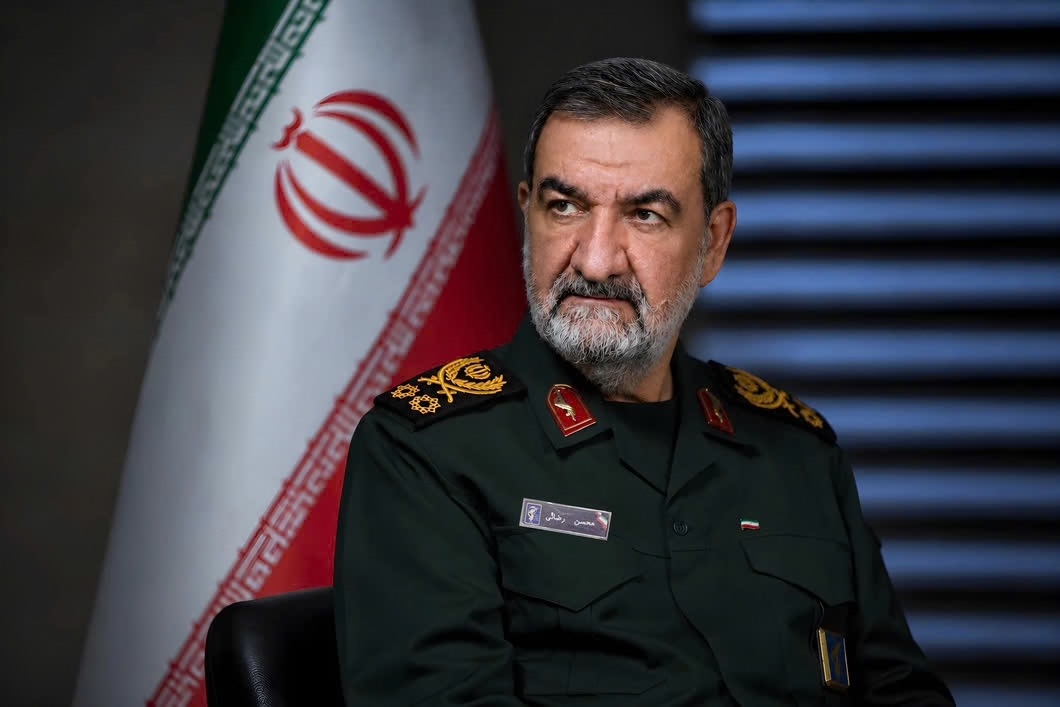
Iran has announced plans to establish a new restricted zone and shipping corridor in the Gulf, following disruptions to traffic through the Strait of Hormuz due to recent strikes.
Mohsen Rezaei, secretary of Iran’s Supreme National Security Council, has stated that Iran will unveil a new restricted zone in the Gulf in the coming days, along with maps for a new shipping corridor through the Strait of Hormuz, as renewed strikes on shipping drive oil prices upward.
Mohsen Rezaei, the secretary of Iran’s Supreme National Security Council, stated that the restricted zone would commence at the point where the US blockade of Iran begins and will extend into certain areas of the Gulf.
Rezaei offered limited information but indicated that any vessel entering the new zone would be added to a sanctions list.
He also mentioned that maps detailing new routes through the Strait of Hormuz, an essential global energy corridor that has been mostly inaccessible to tanker traffic, would soon receive approval.
“The maps of a new international corridor located in Iranian and Omani waters, where Iran will hold management, have been finalized and are expected to be signed in the coming days,” he stated.
Iran has linked the reopening of the strait to a cessation of US military actions against Tehran.
“We will only commit to keeping the Strait of Hormuz open when the Americans cease their sabotage, threats, and attacks on Iran,” Rezaei added.
The announcement follows six months after US-Israeli strikes on Iran ignited the conflict, which now seems to have reached a stalemate. A preliminary ceasefire agreement reached in June has fallen apart, and diplomatic efforts to revive peace talks have seen minimal advancement.
Following a relative lull in military activities throughout much of August, hostilities have recommenced between the two factions.
On Saturday, US forces targeted three Iranian oil tankers, one of which was located near Kharg Island, a crucial oil-export hub for Iran, as reported by US Central Command. The strikes came in response to assaults by Iran’s Islamic Revolutionary Guard Corps on US warships in the area.
Tehran has shown that it still possesses the ability to target US interests in neighboring nations and to disrupt oil flows through the Strait of Hormuz, a critical passage for approximately one-fifth of global oil supplies prior to the conflict.
An average of 10 commodity ships crossed the strait each day over the previous 10 days, marking the lowest level since May, according to shipping data released Monday.
The decrease in traffic contributed to the continuation of last week’s significant oil-price increases, with Brent crude climbing 0.8 percent to surpass $97 a barrel.
Iran is experiencing increasing economic pressure due to US sanctions aimed at its oil exports and measures to curb sanctions evasion.
Three senior Iranian sources indicated that the US efforts to limit Iran’s oil revenues and tighten its economic situation were becoming progressively challenging for Tehran to endure.
Iranian Parliament Speaker Mohammad Baqer Qalibaf stated that the United States must acknowledge that the situation has evolved.
“From now on, any attack against Iran’s interests and security will receive a faster, heavier, and more painful response,” he stated in a speech shared on his Telegram channel.
Qalibaf stated that Iran's primary struggle, in addition to the military conflict, now centers on production and the well-being of its citizens.
He pointed out that currency volatility, inflation, unemployment, and market management are significant economic challenges facing the country, stating that while Iranians can withstand hardship, they cannot tolerate government mismanagement or inaction.
Iran’s Economy Minister Ali Madanizadeh stated that Tehran intends to address US economic pressure through reforms and dismissed the notion that sanctions would compel Iran to alter its political direction, as reported by state media.
“They talk about economic pressure and isolation, about severing financial ties, believing that by exerting pressure on a country's economy, they can alter the decisions of its people,” Madanizadeh stated.
“I must emphasize one important aspect: the duty of reforming Iran’s economy lies with its government and its people, rather than with the US Treasury.”

Comments
0