 "Where Africa Comes to Stay Informed."
US Edition
Thursday, August 27, 2026
"Where Africa Comes to Stay Informed."
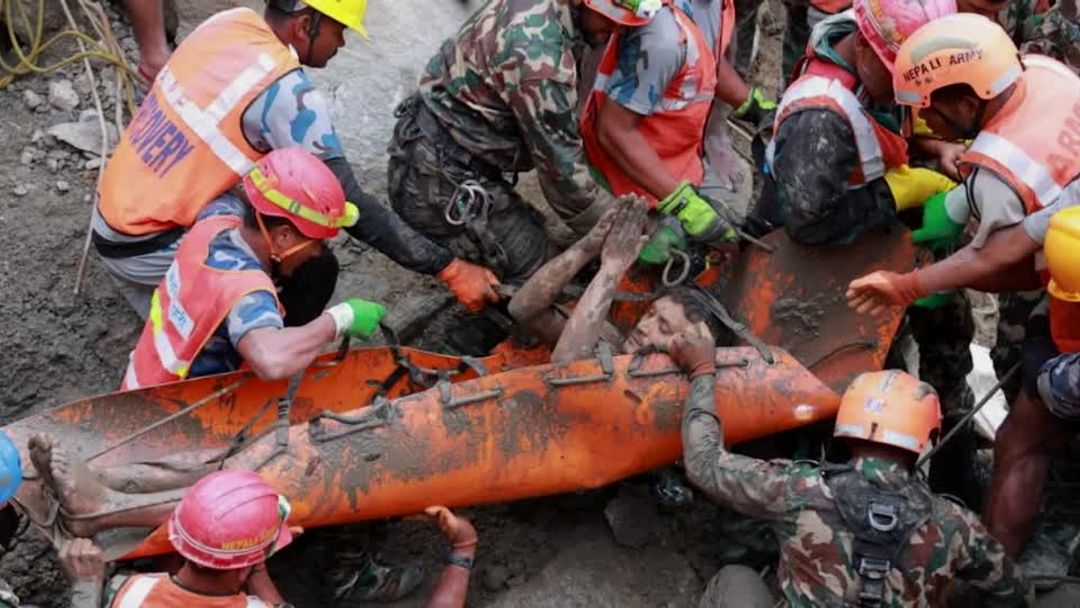
Two workers were saved alive from a hydropower tunnel in Nepal nine days after floods caused by a glacier collapse trapped hundreds underground.
Two workers have been successfully rescued from a hydropower tunnel in Nepal nine days following the catastrophic floods that ravaged the Trishuli River valley, resulting in over 1,200 fatalities and leaving thousands unaccounted for.
The individuals, recognized as mechanical foreman Sanjay Sah and mechanical supervisor Kabir Maharjan, were retrieved from a tunnel at the Upper Trishuli 3A Hydropower Station on Friday.
The rescue occurred after rescuers detected faint voices emanating from within the tunnel, prompting an escalation in efforts to remove the mud and debris obstructing access to the facility.
Authorities and rescue teams reported that the glacier collapse on August 26 near the upper Trishuli River trapped hundreds of workers within tunnels associated with hydropower projects. Nearly 900 workers are reported missing across 12 projects, with approximately 500 believed to be trapped underground.
Nepal’s disaster has resulted in the loss of at least 1,259 lives, with over 5,000 individuals still unaccounted for, as per the latest reports. The floods caused significant destruction in communities close to the border with China-controlled Tibet, obliterating homes, roads, and other vital infrastructure, and displacing tens of thousands of individuals.
China has confirmed 21 deaths in Tibet, with authorities reporting that 541 individuals remain unaccounted for.
Sah and Maharjan are the first workers to be rescued from the hydropower tunnels after the disaster. They were discovered approximately 170 meters within the tunnel.
Images released by Nepali authorities depicted a worker being pulled through an opening in the ground, eliciting cheers from both rescuers and onlookers. Sah was subsequently transported to a rescue tent, where he was covered in mud and examined by Nepal Army medical personnel who assessed his vital signs.
Officials reported that Sah’s injuries were not life-threatening, whereas Maharjan was unable to move his arms and legs. Both men were transported to Kathmandu for additional medical care.
Maharjan’s brother, Amir, mentioned in a conversation with Reuters that the family had not yet received official confirmation, but they had been directed to go to the hospital.
He mentioned that the family was filled with joy upon hearing the news that Kabir had been found alive.
The rescue has sparked renewed optimism for locating additional survivors as teams persist in their search of the damaged hydropower facilities, employing heavy machinery, helicopters, and specialized technical support.
Rescue efforts continue to concentrate on the tunnels where workers might have survived in air pockets, even after being trapped for over a week. Officials have stated that the search will persist as teams strive to reach individuals who may still be alive beneath the surface.


Comments
0