 "Where Africa Comes to Stay Informed."
US Edition
"Where Africa Comes to Stay Informed."
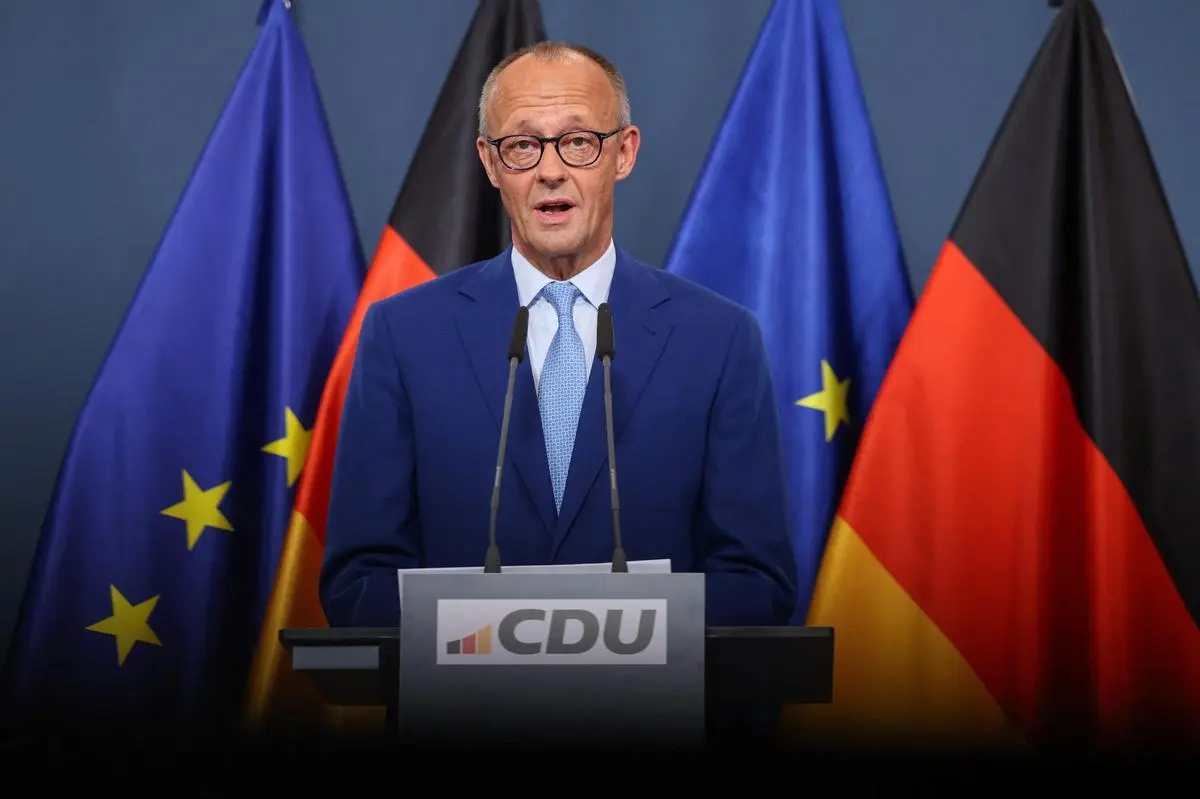
The far-right Alternative for Germany has finished first in state elections in Germany's northeast, inflicting a historic defeat on Chancellor Friedrich Merz's conservatives. Projections from public broadcaster ARD put the AfD on 38.3% in Mecklenburg-Western Pomerania, with the center-left Social Democrats second on 35.4%.
Merz's party was projected at 4.9%, short of the 5% needed to hold any seats in the state parliament at all — the conservatives' weakest state showing since 1949.
The chancellor did not soften the verdict. “It's a disaster,” he said once the exit polls landed, while making clear he intended to stay in office and press on with his reform program, despite talk beforehand that a poor night might force him out.
It is the second state election this month in which the AfD has come first. The party also tops national polling, yet remains shut out of government because the other main parties will not govern alongside it.
In the capital, projections had the far-left Linke first on 25.3% and Merz's conservatives down at 19%. The AfD lifted its own vote in traditionally liberal Berlin to 16.3%.
Merz took office last year pledging to pull Germany's economy out of its slump through reform. Pension, tax and healthcare changes have drawn steady criticism since, and climbing energy and housing bills have deepened voter frustration.
Marcel Fratzscher, who heads the Berlin-based DIW research institute, expects the arithmetic to get harder: “It will now become even more difficult for the federal government to muster the courage and political support for a fundamental reform programme.” Should the coalition partners hold to their stated limits, he warned, “political paralysis will become entrenched, economic weakness will persist, and the likelihood of an AfD election victory in 2029 will rise further.”
Vice-Chancellor Lars Klingbeil, who leads the SPD, indicated he wants a different direction, pointing to how voters feel about the pension overhaul. Merz went the other way, insisting the changes are what Europe's biggest economy needs to grow again.
“What needs to be done now requires backbone, steadfastness, and patience,” he said. “I would go so far as to say that these reforms are the antidote to the authoritarian poison that is penetrating ever deeper into our society, driven by the allure of authoritarianism.”
Manuela Schwesig, the SPD's popular state premier in Mecklenburg-Western Pomerania, had gained ground before Sunday's vote by attacking the AfD and the federal reform agenda alike. She also argued the AfD had picked up support by attacking German backing for Ukraine.
Schwesig once backed the Nord Stream pipelines, which carried Russian gas through her Baltic coast state into Germany until they were destroyed in 2022, before reversing her stance. “First, in my state, many people oppose support for Ukraine, both financial and military,” she said. “And a second point: Many people also wish to see energy flowing through Nord Stream again.”
Sunday's votes in Mecklenburg-Western Pomerania, a mostly rural state in the former communist east, and in Berlin came after the September 6 ballot in Saxony-Anhalt, which the AfD also won.
Little more than a decade has taken the party from a marginal eurosceptic outfit to the front of national polling. Its platform calls for harder measures to deport foreigners with no right to stay in Germany, a restoration of energy links with Russia and an exit from the euro.
The AfD treats its Saxony-Anhalt performance as a staging post on the way to the 2029 federal election, and the run of results has left Germany's established parties under strain. Sunday also revived argument over the “firewall” — the refusal of the mainstream parties to sign coalition deals with the AfD.
Merz has found it hard to build public support since taking office, and stumbles in communication have sharpened resistance to his economic and social program. Anger at the federal government ran through both campaigns, with energy and housing costs raised repeatedly. On Friday he unveiled a consumer relief package that included tax cuts on gas and diesel.
Cost of living dominated when voters in Mecklenburg-Western Pomerania were asked what mattered. “Here in Schwerin, with these wages, you can hardly afford anything anymore,” said Carlotta Heick, speaking in the state capital. An elderly man, who did not want to be named, objected to money going abroad: “We need our money here, for our country, for children and pensioners,” he said.
Merz now faces the task of holding together support for his reform program while the AfD keeps climbing in both state and national polls.



Comments
0