 "Where Africa Comes to Stay Informed."
US Edition
"Where Africa Comes to Stay Informed."
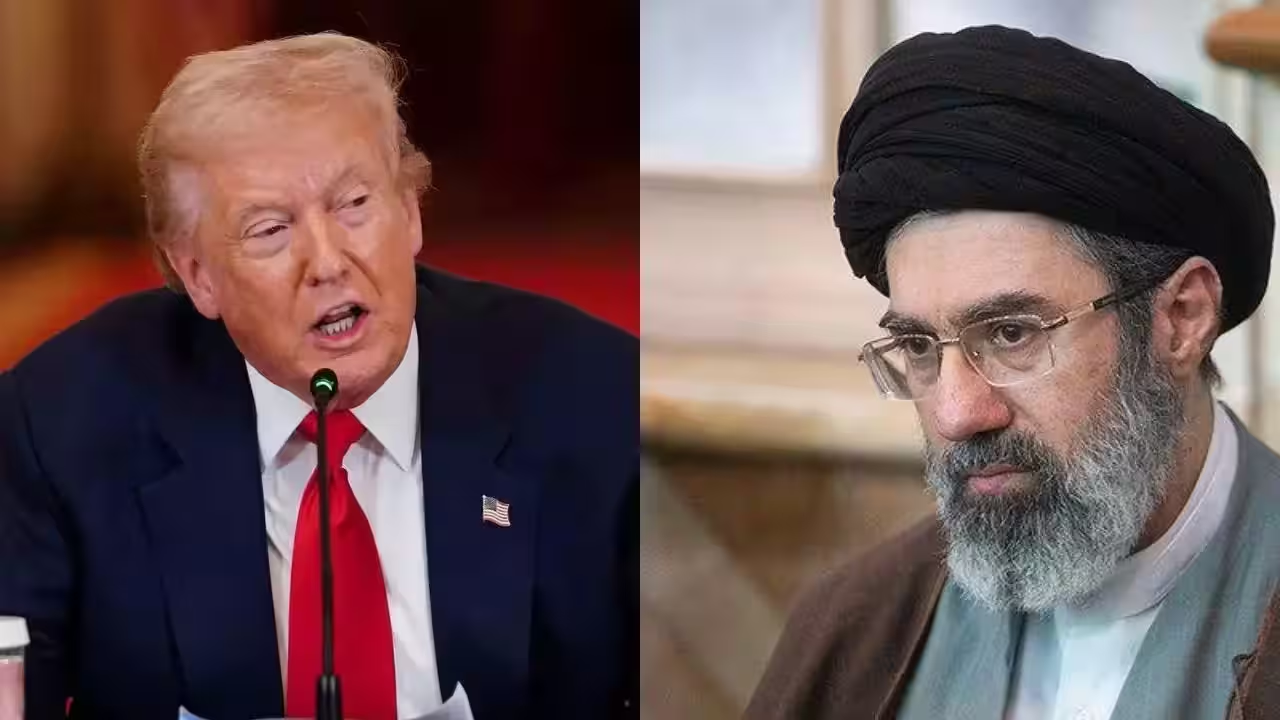
The ongoing conflict between the United States and Iran, which began over six months ago, has already incurred significant financial and strategic costs, according to a new report by the Congressional Budget Office (CBO). The war has not only depleted US munitions but has also strained the federal budget, raising concerns about the country's ability to address additional global conflicts.
As per the latest figures, the US has spent an estimated $38 billion on the war effort, with costs continuing to rise by approximately $3 billion each month. This substantial expenditure has been primarily due to the rapid depletion of long-range precision missiles and other munitions, which the CBO suggests could take up to five years to fully replenish.
The war has not only affected the US military's stockpile but has also pushed global energy prices higher. This is particularly due to the conflict’s impact on the Strait of Hormuz, a crucial channel for oil transportation, which has been a focal point in the conflict. The CBO has expressed concerns that the shortfall in essential munitions could jeopardize the Pentagon's readiness for other potential conflicts, notably any future hostilities involving China and Taiwan.
Despite the CBO’s findings, White House spokeswoman Anna Kelly and Chief Pentagon spokesperson Sean Parnell have defended the administration's preparedness and strategy. Kelly highlighted the decisive actions taken to protect US interests, while Parnell disputed claims of munitions shortages, asserting that the military is well-equipped to handle any required operations.
The war's toll extends beyond financial measures, having already resulted in the deaths of eighteen US servicemembers, with more injured. Brendan Boyle, a prominent Democrat on the House Budget Committee, has criticized the Trump administration for the human and fiscal costs of the conflict. The ongoing expenses and the strategic vulnerabilities it exposes have sparked a broader debate about the war's conduct and its long-term implications for the United States.
As the conflict drags on, with the Trump administration exploring options to end the hostilities and reopen the Strait of Hormuz, the world watches to see how the US will navigate these challenging financial and geopolitical waters. The situation remains dynamic, with significant implications for international relations and US domestic policy.


Comments
0