 "Where Africa Comes to Stay Informed."
US Edition
"Where Africa Comes to Stay Informed."
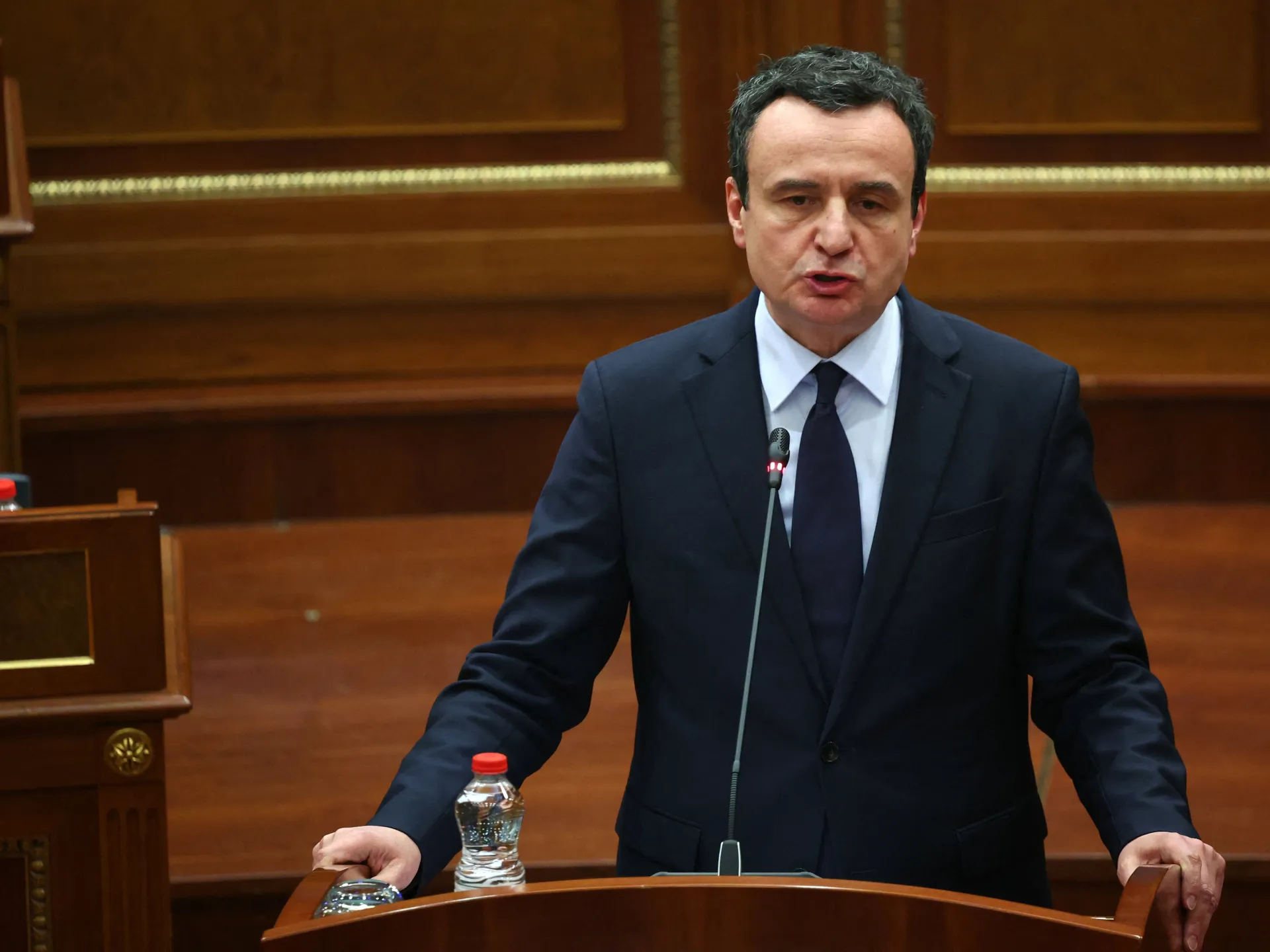
Kosovo's parliament re-elected Albin Kurti as prime minister on Sunday following his party's victory in the June elections. However, the inability to elect a president may lead the country toward another snap election.
Kurti received 62 votes in the 120-seat parliament election.
This mandate is focused on decisively restoring security and prosperity for our citizens," Kurti stated prior to the vote. “Frequent elections have merely disrupted the ability of the same government to govern.”
In late August, Kurti struck an agreement with the opposition Democratic League of Kosovo (LDK), which holds 18 MPs, to support law professor Bekim Sejdiu as the new president. A day later, six LDK lawmakers announced that they would not adhere to their leader's decision.
It is still uncertain when the presidential vote will occur. If parliament does not succeed in electing a new president, Kosovo will be required to conduct yet another snap election, marking the fourth such event in just two years.
Kosovo, one of Europe's poorest countries, aspires to join the European Union; however, Brussels has consistently indicated that the nation must establish stable institutions capable of implementing the necessary reforms for membership.
Political instability has postponed reforms and hindered access to EU funding. To elect the president, a two-thirds majority of votes is required, as the position primarily holds a ceremonial function.
Two opposition parties, the Democratic Party of Kosovo (PDK) and the Alliance, chose to boycott the session and announced their intention to seek clarification from the Constitutional Court regarding a potential violation of the law during the constitution of parliament. LDK also abstained from voting on the new government.


Comments
0