 "Where Africa Comes to Stay Informed."
US Edition
"Where Africa Comes to Stay Informed."
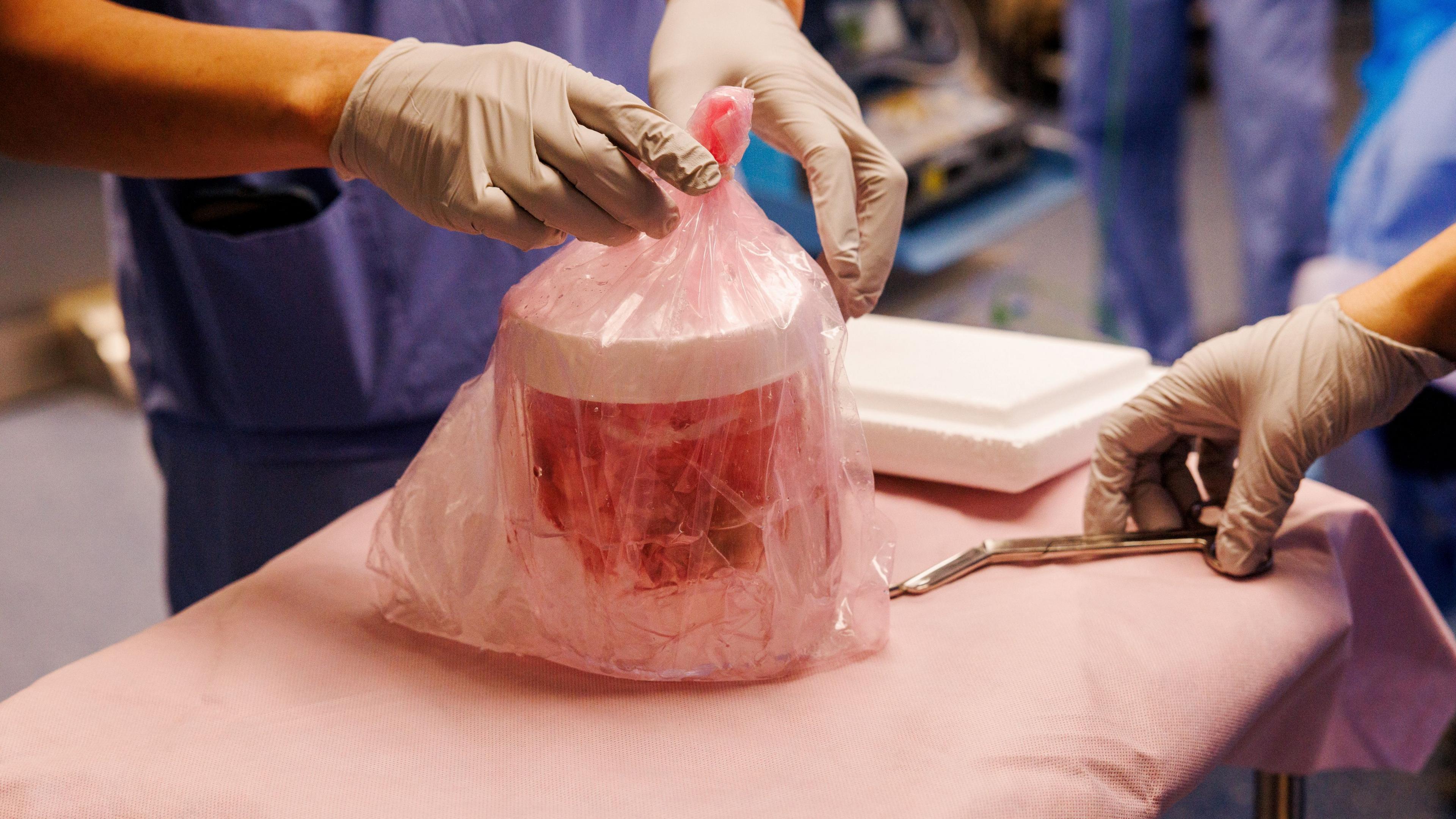
US doctors indicate that the genetically modified pig kidney transplant presents a promising solution for decreasing reliance on dialysis, especially in light of the critical shortage of human donor organs.
A genetically modified pig kidney has successfully functioned within a human patient for an impressive 271 days, according to US doctors. They believe this advancement could significantly contribute to alleviating the global shortage of donor organs.
The kidney was transplanted into 66-year-old Tim Andrews, who suffered from end-stage kidney disease associated with type 2 diabetes and was anticipating years of dialysis while awaiting a human donor organ.
Doctors at Massachusetts General Hospital stated that the case illustrates the potential of pig organs as a temporary “bridge” for patients waiting for human transplants.
Andrews received the pig kidney on January 25, 2025, and the organ began functioning right away, filtering his blood and enabling him to bypass months of dialysis.
“I experienced a bit of a time crunch… it can be quite disheartening,” Andrews reflected, remembering that he had been informed it might take around seven years to ascend the transplant waiting list.
He characterized the experimental transplant as a beacon of hope.
“Hope is the most significant aspect, the opportunity to break free from the [dialysis] machine and truly live your life,” he stated.
The pig kidney continued to function for 271 days before doctors removed it in October 2025 due to a deterioration in its condition.
Andrews underwent dialysis for 82 days before receiving a human donor kidney in January 2026. Doctors report that the new kidney is performing effectively.
Dr. Leonardo Riella of Mass General Brigham’s Center for Transplantation Sciences stated that the lack of donor organs has resulted in a significant healthcare crisis.
“We are diligently striving to instill hope, and we genuinely believe that xenotransplantation could serve as an alternative for patients lacking a living donor, potentially allowing us to bypass dialysis and facilitate a transplant,” Riella stated.
Doctors indicated that there were initial signs of Andrews' immune system rejecting the pig kidney; however, the issue was effectively addressed by modifying his medication.
However, after approximately six months, the blood vessels in the transplanted kidney started to experience damage. The organ experienced inflammation before ultimately failing.
Doctors indicated that the exact cause of the failure is still uncertain, as there is no evidence of antibodies targeting the pig kidney.
The findings, published in The Lancet, underscore both the promise and ongoing challenges of xenotransplantation—the practice of using organs from animals in human patients.
Pigs are viewed as potential donors due to the similarity in size between their organs and those of humans, along with the ability to breed these animals in controlled environments.
However, a pig organ that has not been modified would typically provoke a strong immune reaction in the human body.
To address this issue, researchers have created genetically modified Yucatan miniature pigs with 69 genomic modifications to their organs.
The modifications eliminate or modify pig traits that activate the human immune system, incorporate human genes to assist the organs in evading immune responses, and deactivate viruses present in pig DNA to lower the risk of infection.
The demand for these alternatives arises from a critical lack of donor organs.
In the United States, approximately 100,000 individuals are on the waiting list for kidney transplants, yet only about 25,000 kidney transplants are conducted each year.
In the United Kingdom, over 7,000 individuals are currently awaiting kidney transplants.
The Mass General Brigham team stated that Andrews’ case illustrates the potential of xenotransplantation to offer patients a functioning kidney while they await a human donor, thereby reducing or possibly eliminating the necessity for extended dialysis.
The doctors concluded that the case illustrates both the potential of kidney xenotransplantation and the considerable challenges that persist before the procedure can be widely accessible as a treatment.




Comments
0