Iran Conflict: Oil Prices Rise, Exceeding $110 Following Attacks on Energy Infrastructure
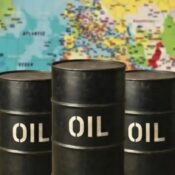
Global oil prices soared past $110 following Israeli strikes on Iran’s gas infrastructure.
Brent crude surged by over 5 percent, exceeding $110 a barrel on Wednesday, following Israel’s coordinated operation with the United States that targeted the world’s largest natural gas reserve in Iran.
The assault represented the initial instance in which Iran’s upstream oil and gas infrastructure, rather than those in the Gulf, has come under attack since the conflict commenced on February 28, marking the 19th day of the crisis.
Iran shares the extensive South Pars gas field with Qatar, which utilizes its portion to provide approximately one-fifth of the global LNG (liquefied natural gas) supply. The foreign ministry of Qatar denounced the strikes, describing them as “a dangerous and irresponsible step.”
Iran’s response was somewhat more stringent. Tehran issued a list of energy facilities it intended to target, which included locations in Saudi Arabia, the UAE, and Qatar. Specific targets mentioned were Saudi Aramco’s Samref refinery, the Jubail petrochemical complex, and the Al Hosn gas field in the UAE. Iran’s military joint command announced plans to intensify the conflict “in new ways.”
The recent price movements occurred alongside what has already been one of the most robust oil rallies in years. Since the onset of the conflict, Brent has experienced a remarkable surge of approximately 80 percent, primarily fueled by the near-complete halt of tanker traffic through the Strait of Hormuz, a critical chokepoint responsible for about 20 percent of global oil and gas flows.
Last week, the International Energy Agency (IEA) declared the largest emergency reserve release ever, totaling 400 million barrels. Meanwhile, the U.S. pledged to draw 172 million barrels from the Strategic Petroleum Reserve over a period of 120 days. Up to this point, the reserves have had minimal impact on controlling prices. Gas prices have surged to their highest levels since 2023, increasing by nearly a dollar since the onset of the war with Iran.
However, the increase in WTI crude, which serves as the benchmark for Texas oil, pales in comparison to the developments occurring across the Pacific. Last week, Dubai crude, the pricing benchmark for Asian buyers, reached an unprecedented high, surpassing $150 a barrel. On Monday, Oman crude closed at over $152.
WTI is currently trading at approximately $96 in the U.S. An extraordinary gap of over $50 for the same commodity has been observed, a significant deviation from the usual spread of $5 to $8, according to Fortune Media. In Asia, physical crude is currently trading at almost a $40 premium compared to its paper counterpart, indicating that actual barrels are significantly more limited than what futures imply.
Analysts are concerned that the shortage in Asia may escalate into a more serious global situation if the war persists. Rory Johnston, a commodities analyst with a focus on oil, stated that the prolonged closure of the Strait increasingly turns Asia’s supply shortage into a widespread issue for all.
Iran Targets Qatar’s Ras Laffan in Response
On Wednesday, QatarEnergy reported that the Ras Laffan industrial complex suffered damage due to a missile attack. “Emergency response teams were promptly deployed to manage the ensuing fires, as significant damage has occurred,” QatarEnergy stated.
The interior ministry of Qatar has linked the attack to Iran, stating that it has “gained preliminary control over the fire at Ras Laffan, with no reported injuries.”
On Wednesday, Tehran identified the 305,000 b/d Ras Laffan refinery in Qatar as one of five downstream facilities it intends to target soon, in response to what it termed US-Israeli strikes on Iranian gas treatment plants at the South Pars gas field.
It was unclear at first if the refinery or the nearby 77 mn t/yr LNG export terminal had been directly attacked or had suffered any damage.
Tehran has issued threats of strikes targeting the 400,000 b/d Samref refinery located in Yanbu, the Sadara petrochemical complex in Jubail, Qatar Chemical in Doha, and the Al-Hosn sour gas field in Abu Dhabi.
Additionally, the Saudi defense ministry reported that Saudi Arabia was attacked on Wednesday night local time. The ministry reported that a portion of an intercepted ballistic missile landed near a refinery situated south of Riyadh. Also, it was reported that drones targeting an unnamed gas facility in the eastern part of the country were intercepted.
Esmaeil Khatib, Iran’s Intelligence Minister, has been killed.
On Wednesday, Iran’s intelligence minister, Esmaeil Khatib, was killed just hours after Iranian state media reported the deaths of the country’s influential security chief, Ali Larijani, and the leader of the IRGC’s Basij paramilitary force.
Iran President Masoud Pezeshkian expressed that the “cowardly assassination” has plunged Iran “into deep mourning,” following Israel’s announcement of Khatib’s death in an air strike.
Following the assassination of Supreme Leader Ayatollah Ali Khamenei on the first day of the war, 28 February, numerous high-ranking Iranian officials and commanders have been targeted and killed in attempts by Israel and the US to undermine the regime’s leadership.
Pezeshkian expressed his condolences to the Iranian people regarding the officials’ deaths in a post on X, stating he was “certain their path will continue more steadfastly than before.”
In an interview with the BBC, a woman from Tehran expressed that the “killing of Khatib might benefit the people since he was part of the leadership.” She added, “It could be that when people respond to a call to protest, the chances of them being killed are now reduced.” “Although they all have substitutes, these were the primary figures.”
On Wednesday, Israel’s defense minister Israel Katz declared that Khatib had been “eliminated” in an Israeli strike on Tehran.
“Prime Minister Benjamin Netanyahu and I have given the IDF the authority to eliminate any senior Iranian official for whom the intelligence and operational circle has been closed, without requiring further approval,” he stated.
The IDF stated that Iran’s Ministry of Intelligence has been crucial in facilitating the regime’s “repression and terrorist activities,” with Khatib having a “significant role” in the “arrest and killing of protesters” amid the recent crackdown on protests in Iran.
Khatib was appointed as Iran’s defense minister by the late former president Ebrahim Raisi in 2021. He pursued Islamic jurisprudence under the guidance of several esteemed clerics, including Khamenei, and occupied various senior positions within the Ministry of Intelligence and the Office of the Supreme Leader.
In 2022, he faced sanctions from the US Treasury due to his position as head of Iran’s Ministry of Intelligence, attributed to his involvement in cyber-enabled activities targeting the United States and its allies.
According to the Iranian government, over 1,300 individuals have lost their lives in Israeli and US strikes on Iran since the onset of the war, which includes 226 women and 204 children.
Qatar has expelled the Iranian envoy.
The Qatari foreign ministry states that it “reserves its right to respond” to the Iranian missile attacks on its Ras Laffan Industrial City.
The foreign ministry stated that the attack was characterized as “a dangerous escalation” and emphasized that Qatar “will not hesitate” to safeguard its sovereignty.
The Gulf nation has designated the representative of Iran’s defense ministry at the Iranian embassy in Qatar as persona non grata, mandating their departure from the country within 24 hours.
“Qatar asserts its right to respond in line with Article 51 of the United Nations Charter and the right to self-defense as provided by international law, emphasizing that it will not hesitate to take all necessary actions to safeguard its sovereignty, security, and the safety of its citizens and residents,” a statement indicated.
“Although Qatar has maintained a stance of distancing itself from this conflict since the beginning and has committed to preventing any escalation, the Iranian side persists in its irresponsible targeting of Qatar and its neighboring countries, which undermines regional security and poses a threat to international peace.”
It went on to say, “The Iranian side persists in its escalatory policies that are pushing the region toward the brink and drawing countries not involved in this crisis into the conflict zone.”
Trump Claims US is ‘Finishing Off’ Iranian State
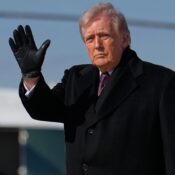
On Wednesday, the president of the United States made two posts on social media regarding the war in Iran. Initially, Donald Trump justified his military actions by stating they aimed to eliminate the “Number One State Sponsor of Terror.”
In the second, he contemplated the annihilation of the “Iranian Terror State” and suggested that America’s allies should manage the repercussions in the Strait of Hormuz. Since the onset of the war, Trump has oscillated between seeking assistance from allies, asserting that America has no need for allies in this conflict, and expressing dissatisfaction with allies for their lack of support.
The prices of oil and gas worldwide, including in the US, are significantly influenced by the uninterrupted passage of shipments through the Strait of Hormuz, a route that has faced threats or attacks from Iran since the onset of US bombing.
Trump has threatened to delegate the responsibility for opening the Strait of Hormuz to the countries that utilize the route in his latest criticism of America’s allies for their unwillingness to offer military support.
Iran declared the closure of the crucial waterway over two weeks ago, warning that all vessels navigating through it faced the threat of attack, which resulted in a significant surge in global oil prices. Approximately 20% of the global oil supply transits through the Strait.
In a post on Truth Social, the US president stated: “I wonder what would happen if we ‘finished off’ what’s left of the Iranian Terror State, and let the countries that utilize it, which we do not, be responsible for the so-called ‘Strait’?” That would motivate some of our unresponsive ‘allies’ to take action quickly!!!
British military specialists collaborate with the US to reopen the Strait of Hormuz.
British military specialists are collaborating with the US to explore possibilities for reopening the Strait of Hormuz. The team has been dispatched to US Central Command, which oversees American military operations in the Middle East, as reported by Tottenham Independent.
However, defense sources emphasized that the circumstances in the Strait of Hormuz are so perilous that few nations would be inclined to position warships “in the midst of that threat at this time.”
British experts are still collaborating with the US to explore potential ways to reopen the strait, as the ongoing blockade poses a significant threat to the global economy.
Armed Forces Minister Al Carns stated, “In 1987, when this last occurred, it required 30 warships to provide escort in the Strait of Hormuz.” This serves as a clear illustration of the resources needed.
He stated that the situation has become even more intricate now, with Iran’s arsenal comprising fast attack boats, various types of mines, ballistic missiles, and unmanned drones operating in the air, on the sea, and beneath the waves.
Carns stated, “I believe this requires a multinational solution.” We are not close to that right now, but I will say this: there is one thing worse than collaborating with allies, and that is doing so without them.
On Wednesday, Defence Secretary John Healey engaged in discussions regarding the situation with his counterparts from France, Germany, Italy, and Poland. “We are collaborating with our allies to strengthen regional security and safeguard British interests,” Mr. Healey stated.
A senior defense official remarked that the situation is “incredibly fluid,” adding, “The level of threat is such that I don’t see many nations being willing to place warships in the midst of that threat at this moment.”
Trump has consistently criticized countries such as the UK for not responding to his appeal for assistance in the maritime chokepoint.