Italy issues a warning about a drifting Russian LNG tanker that poses an imminent explosion risk, endangering Mediterranean ecosystems, while the EU advocates for immediate measures to avert a disaster.
Alfredo Mantovano, Secretary of the Council of Ministers
Italian authorities have expressed serious concerns regarding a sanctioned Russian tanker transporting liquefied natural gas that is drifting aimlessly in the Mediterranean Sea, cautioning that it could explode at any moment and lead to a significant ecological disaster.
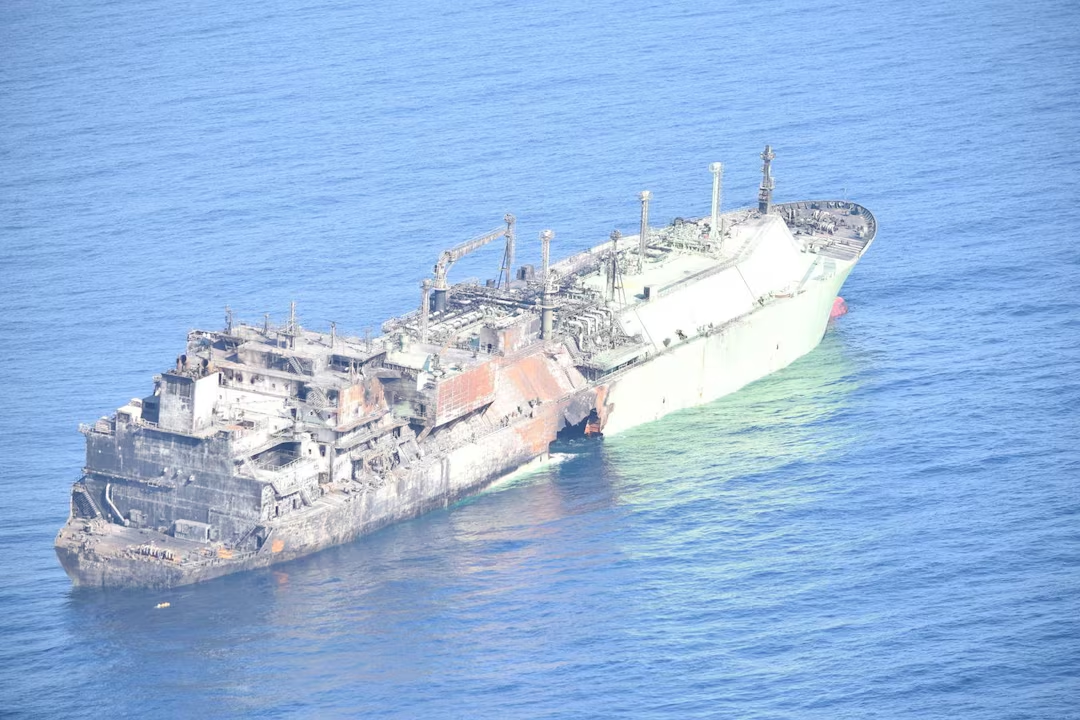
The vessel Arctic Metagaz, which is part of a shadow fleet employed to transport sanctioned Russian oil and gas, sustained significant damage earlier this month in a suspected sea drone attack near Maltese waters. The tanker has a significant breach in its side and is presently without crew, raising concerns regarding its stability and safety.
Italy, together with eight other European Union nations, has reached out to the European Commission, calling for prompt action and characterizing the vessel as a significant environmental hazard. An Italian official described the tanker as an “environmental bomb” poised to explode.
During an appearance on Italy’s Radio 24, Secretary of the Council of Ministers Alfredo Mantovano cautioned that the dangers linked to the drifting tanker were “enormous,” stating that it could “explode at any moment.”
The tanker is said to be transporting substantial amounts of liquefied natural gas (LNG), along with approximately 450 tonnes of fuel oil and 250 tonnes of diesel, increasing the potential consequences of any explosion or spill.
The vessel is currently drifting southward, moving away from Italian waters and the island of Lampedusa towards Libya, while being closely monitored by Italian and Maltese authorities. As of Tuesday afternoon, it was approximately 45 nautical miles from Italian territorial waters and 25 miles from Libya’s designated search-and-rescue zone.
The Arctic Metagaz left the Russian port of Murmansk in February, only to experience a sequence of explosions and a fire in early March. Russian President Vladimir Putin accused Ukraine of a “terrorist attack,” while Kyiv has yet to respond to the claim.
Ukraine has consistently asserted that these “shadow fleet” vessels are valid targets, contending that they operate with their transponders disabled to avoid Western sanctions and generate revenue that bolsters Russia’s ongoing military campaign. Moscow has persistently carried out bombardments on Ukraine’s civilian energy infrastructure since the onset of its full-scale invasion.
The incident occurs in the context of a reported rise in drone strikes aimed at Russian tankers. In December, Ukraine’s SBU intelligence service reported that it had caused damage to three vessels in the Black Sea over a span of two weeks, including the Dashan, which reportedly suffered critical damage. Shortly thereafter, the Quendil oil tanker was struck in the Mediterranean, although it was said to be empty at that moment.
Two weeks have passed since the Arctic Metagaz suffered critical damage. Initial reports from Libyan port officials indicated that the tanker had sunk; however, it has stayed afloat, drifting and continuing to pose risks without any crew on board. The Libyan coastguard had previously rescued the crew from the incident.
Environmental organizations, such as the World Wildlife Fund, have issued a “maximum alert” regarding the situation, cautioning that any possible spill or explosion could result in fires and enduring pollution in an area recognized for its “exceptional ecological value,” which is home to many protected marine species.