Zelenskyy and Starmer Meet in London While the UK Presses Russia on the War
Zelenskyy engages with UK leaders amid concerns over the shifting US sanctions and their implications for Russia’s war and escalating global tensions.
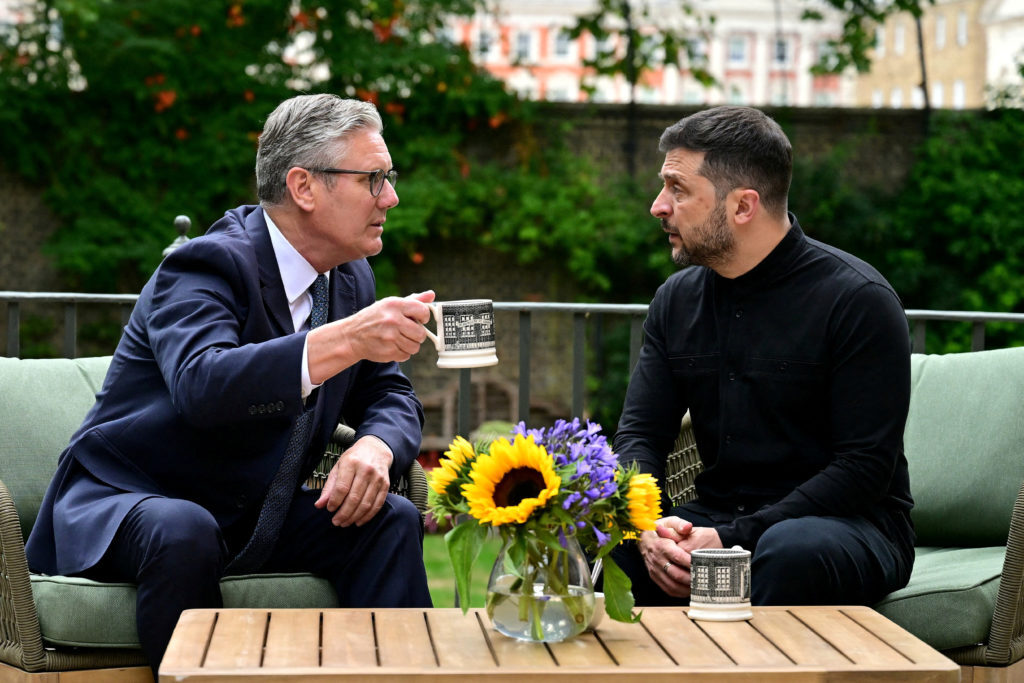
Ukrainian President Volodymyr Zelenskyy is scheduled to engage in high-level discussions in London with UK Prime Minister Keir Starmer, as European leaders ramp up efforts to maintain global attention on Russia’s war in Ukraine amidst rising tensions in the Middle East.
The British government has announced that the meeting at 10 Downing Street will also feature NATO Secretary-General Mark Rutte. Discussions are anticipated to focus on peacemaking initiatives in Ukraine and the necessity of sustaining sanctions pressure on Russia, according to Starmer’s office.
The discussions follow closely on the heels of the United States’ recent decision to temporarily relax certain sanctions on Russian oil exports, aimed at stabilizing global supply disruptions associated with the Middle East conflict, which was initiated by joint US-Israeli strikes on Iran starting February 28.
Zelenskyy expressed strong disapproval of Washington’s decision, cautioning that it might strengthen Moscow’s position. He stated that the action would provide Russia with a financial advantage to support its military efforts in Ukraine.
US President Donald Trump has emphasized his efforts to secure a peace agreement aimed at resolving what is considered Europe’s largest conflict since World War II. Nonetheless, European leaders continue to express caution, indicating that Russia may present a considerable security challenge to the European Union by the decade’s close.
The pace of diplomatic efforts has diminished, as US-mediated talks between Moscow and Kyiv have produced minimal advancements on critical matters. The discussions have encountered additional delays as worldwide focus turns to the crisis in the Middle East.
Simultaneously, Trump has turned down Zelenskyy’s proposal to assist US and Persian Gulf allies in combating Iranian drone assaults, even though Ukraine is increasingly recognized as a prominent developer of sophisticated, battle-proven drone interception technologies.
Officials from Britain report that Russia and Iran are enhancing their cooperation on drone technology and tactics within the Middle East. In response, specialists in drone warfare from the UK and Ukraine have been sent to aid countries in the region in their defense against these threats.
Starmer’s office has also confirmed that the UK and Ukraine will enter into a new defense agreement focused on merging “Ukraine’s expertise and the UK’s industrial base to manufacture and supply drones and innovative capabilities.” Britain is also providing funding for an “AI Center of Excellence” in collaboration with Ukraine’s Ministry of Defense.
In a statement, Starmer pointed out the strategic importance of emerging military technologies, stating, “Drones, electronic warfare, and rapid battlefield innovation are now central to national and economic security, and that has only been further magnified by the conflict in the Middle East.”
“By enhancing our defense partnerships, we are bolstering Ukraine’s capacity to protect itself against Russia’s relentless, ongoing assaults, while also ensuring that the UK and our allies are more equipped to confront future threats,” he added.
In the meantime, Russia’s Defence Ministry announced that its air defense systems intercepted 206 Ukrainian drones overnight across various regions, including the annexed Crimean Peninsula and the Azov Sea. It was noted that 40 of the intercepted drones were en route to Moscow.
Kremlin spokesman Dmitry Peskov characterized the escalating Ukrainian drone campaign as “continuing absolutely futile resistance” against Russia’s invasion.
Volodymyr Zelenskyy stated that Ukrainian counteroffensives along the eastern and southern front lines have interfered with Moscow’s plans for a March offensive. Although his assertions could not be independently confirmed, the Institute for the Study of War indicated that Ukrainian counterattacks “are likely constraining” certain Russian operations.
Ukraine’s air force reported that Russia launched 178 long-range drones overnight, with 154 intercepted or jammed and 22 reaching their targets.
A Russian strike in the southern city of Zaporizhzhia caused damage to a terminal owned by Nova Poshta, the largest private delivery company in the country. Ivan Fedorov, the head of the regional military administration, reported that eight individuals sustained injuries in the attack.