African nations cautiously navigate the recruitment of citizens by Russian networks
This week, Kenya’s foreign minister is in Russia, facing domestic pressure to persuade Moscow to halt the recruitment of Kenyans to its military. However, Nairobi, similar to other African governments, is expected to adopt a less confrontational stance.
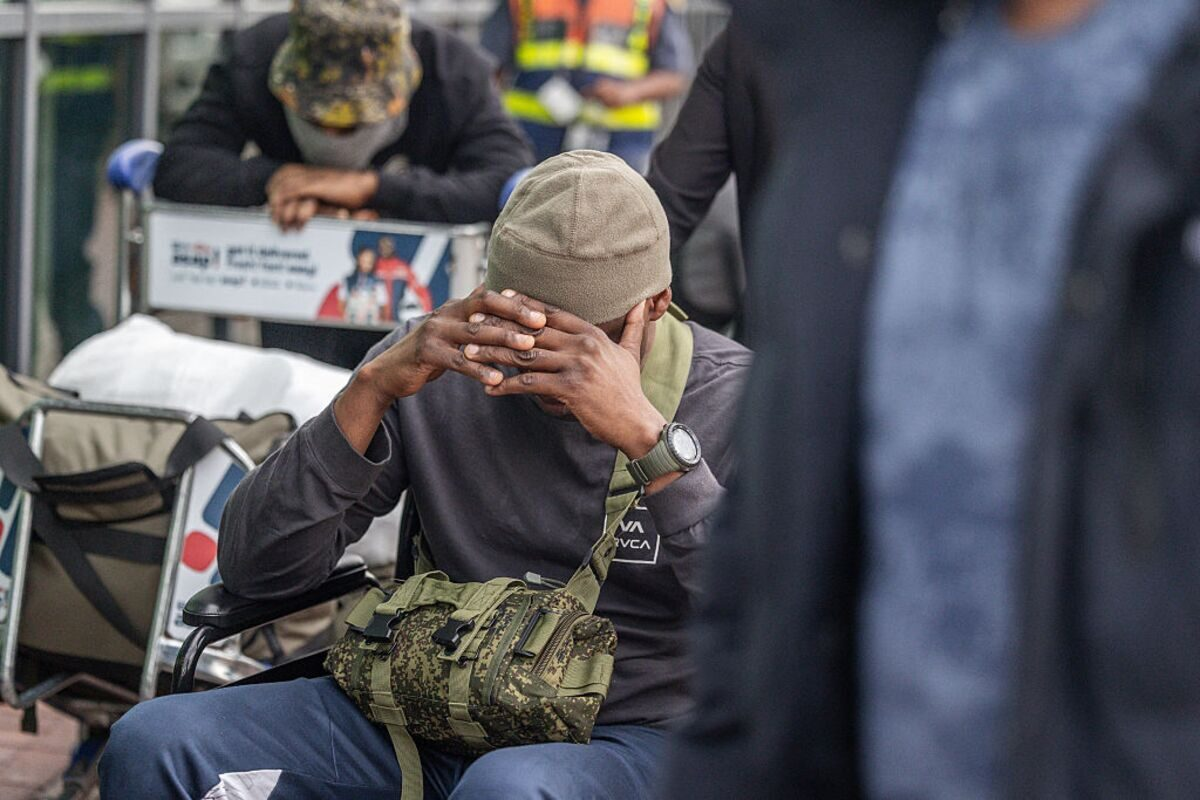
Recent reports have highlighted the extent of the recruitment of Africans into Russia’s diminished forces, frequently facilitated by third parties promising attractive civilian employment, which has sparked outrage in nations such as Kenya, Ghana, and South Africa.
Families are calling for increased efforts to bring the recruits home; however, African governments, cautious about openly aligning themselves in Russia’s war in Ukraine, have been careful not to provoke Moscow. They are aware that the recruitment scandal has not yet sparked significant public outrage or political pressure.
“We want Kenyans to be halted—they should not be included at all,” Musalia Mudavadi, Kenya’s minister for foreign affairs, stated to Reuters prior to his trip. “There is considerable pressure from several affected families who are increasingly finding the courage to come forward and address the issue.”
Nonetheless, Mudavadi expressed that he was “pragmatic and realistic” regarding the matter, characterizing Russia as a superpower with which Nairobi has maintained a longstanding relationship.
“It’s not a confrontation,” he stated. “This addresses the issues at hand and the distress they are causing the Kenyan people, and we require a collaborative effort to resolve it.”
The Russian defense ministry did not provide a response to a request for comment outside of regular business hours.
On March 12, Maria Zakharova, spokeswoman for the Russian Foreign Ministry, announced that Foreign Minister Sergei Lavrov would engage in discussions with Mudavadi regarding the “state and prospects for the development of traditionally friendly Russian-Kenyan relations,” focusing on economic and trade partnerships. ‘LURED INTO BATTLE’
Ukraine reports that more than 1,700 Africans are fighting on the Russian side, although analysts suggest that the actual number may be greater.
The country’s intelligence agency reported recruiting over 1,000 Kenyans. Mudavadi stated that he was unable to provide an exact number of Kenyans participating in the conflict.
In February, Ghana reported that over 50 Ghanaians had lost their lives in the Ukraine war after being “lured into battle.” Samuel Okudzeto Ablakwa, Ghana’s foreign minister, informed Reuters that the actual number might be greater.
Authorities in Russia have rejected allegations of unlawfully enlisting African citizens to participate in the conflict in Ukraine.
Ablakwa stated that Ghana has established and will continue to uphold diplomatic relations with Russia. “However, I want to emphasize this: when Ghanaian citizens are being harmed, misled, or pulled into a conflict they do not comprehend, we will communicate directly and take action,” he stated.
Most African governments are expected to adopt a cautious stance similar to that of South Africa, a Russian ally, which has witnessed numerous citizens misled into participating in the conflict in Ukraine.
“We’re … investigating the circumstances surrounding people’s departures,” Zane Dangor, director general of South Africa’s foreign affairs department, informed Reuters. “This investigation will also ascertain whether Wagner has played a role,” he added, referring to the Russian mercenary group that operated in Africa and was succeeded by the Kremlin-controlled Africa Corps.
Dangor stated that the evidence gathered thus far does not indicate the involvement of the Russian state. ‘JUST SCRATCHING THE SURFACE’
Inpact, an organization based in Geneva that explored the Russian recruitment networks, confirmed multiple lists of recruits it acquired, including one that outlined 1,417 citizens from various parts of the continent.
A report published in February indicated that Cameroon, Egypt, and Ghana were among the countries with the highest number of recruits.
Inpact stated that the recruitment of Africans was central to a strategic plan aimed at strengthening the forces intended to inundate Ukrainian defensive lines with successive assaults.
“We believe we are merely beginning to explore the potential of these numbers,” stated Lou Osborn, a member of Inpact. Osborn stated that more than 40 families had reached out to the organization since the report was released, validating the recruitment methods.
Ablakwa stated that he was collaborating with other African nations to tackle the issue as a continental matter, emphasizing the need for a coordinated response to address the challenges posed by foreign conflicts that exploit vulnerable populations across the continent.
“This surpasses Ghana,” he stated. “Africa must respond as a united front if deceit and exploitation draw Africans into a foreign conflict.”
Pier Pigou, a senior consultant at the International Crisis Group, expressed that he did not believe the issue would impact relations between Russia and African countries unless there was a notable political backlash.
Most individuals understand that these individuals are merely attempting to earn a livelihood. “And since their countries don’t offer that for them, they’re going to seize the opportunities that come their way,” he stated.