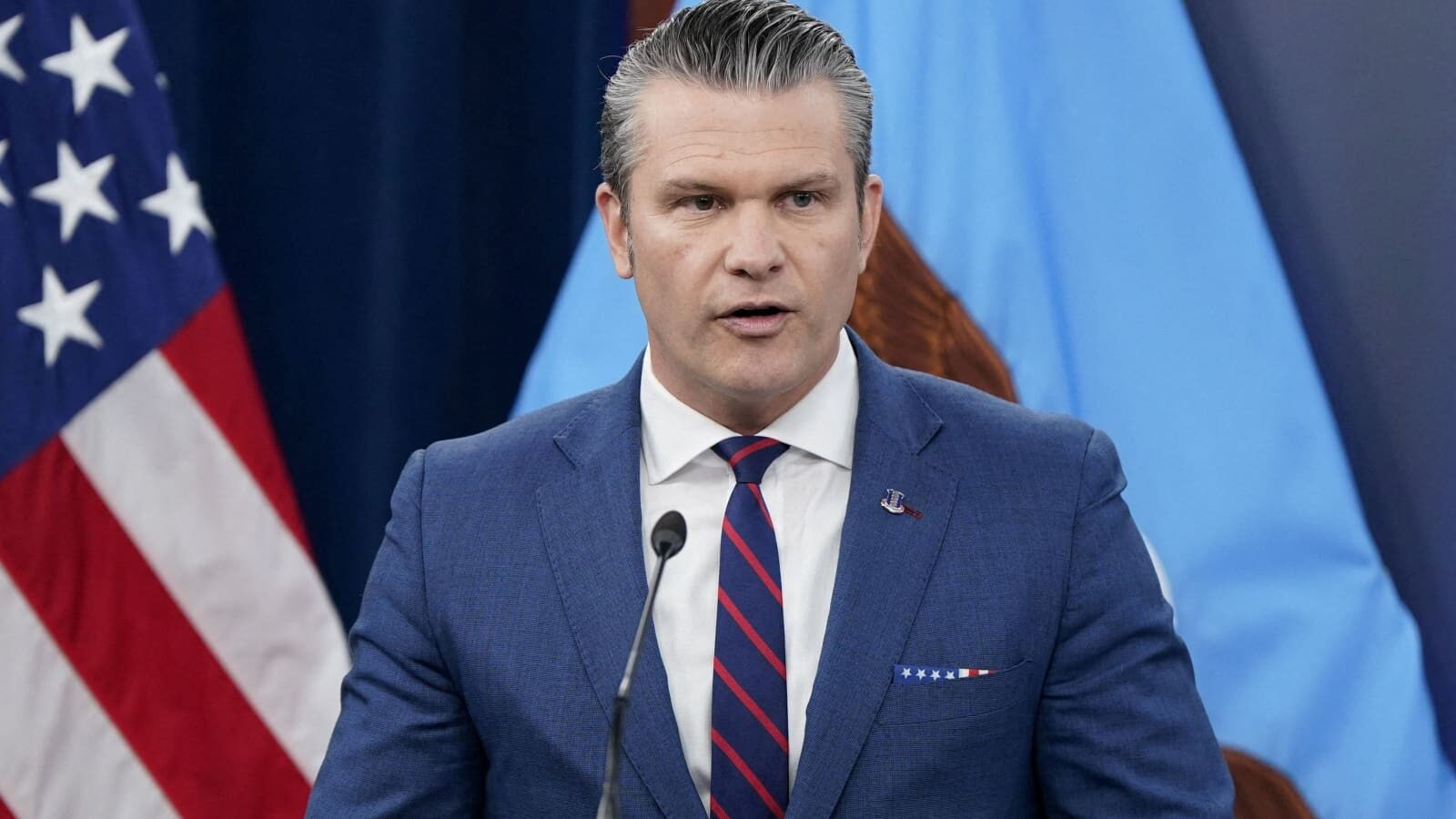
US Defense Secretary Pete Hegseth asserts that allegations suggesting Washington underestimated the risks to the Strait of Hormuz amid the Iran conflict are baseless.
US Defense Secretary Pete Hegseth has rejected claims that American officials underestimated the potential impact of the ongoing conflict with Iran on the Strait of Hormuz, labeling such assertions as “patently ridiculous.”
Hegseth commented in response to reports indicating that US officials may not have sufficiently taken into account the potential for Iran to disrupt shipping in the crucial waterway.
“Certainly, for many years, Iran has posed threats to shipping in the Strait of Hormuz,” Hegseth informed reporters.
“This is consistently their tactic—taking the Strait captive.” CNN seems to believe we overlooked that possibility. “This report lacks seriousness,” he stated.
The defense secretary stated that the potential for Iran to obstruct or interfere with traffic in the Strait has been a consideration in U.S. military planning for some time.
The Pentagon has consistently upheld and revised contingency plans to respond to possible Iranian military activities in the crucial maritime corridor.
The Strait of Hormuz is regarded as one of the most vital energy transit routes globally, facilitating a substantial share of oil and liquefied natural gas shipments worldwide.
Several current and former U.S. officials informed CNN that strategies for potential military action concerning Iran generally consider the likelihood of Tehran trying to shut down the waterway.
Officials noted that during times of relative stability in global oil and LNG supplies, the wider risks to global markets were not consistently regarded as an urgent issue.
During that period, U.S. oil production achieved unprecedented levels, and Washington was simultaneously investigating enhanced energy supply options from nations like Venezuela.
Officials indicated that these developments led to a perception of adequate buffers in global energy markets against potential disruptions.
Analysts point out that a prolonged closure of the Strait could have a substantial impact on global energy markets, given the significant volume of oil and gas shipments that transit the route each day.
The recent comments by Hegseth occur during a time of increased tensions in the Middle East, where military clashes and geopolitical rivalries have sparked worries regarding the safety of global energy supply routes.