Trump states that the US will respond to Iran ‘very hard’ following the relaxation of sanctions on Russian oil
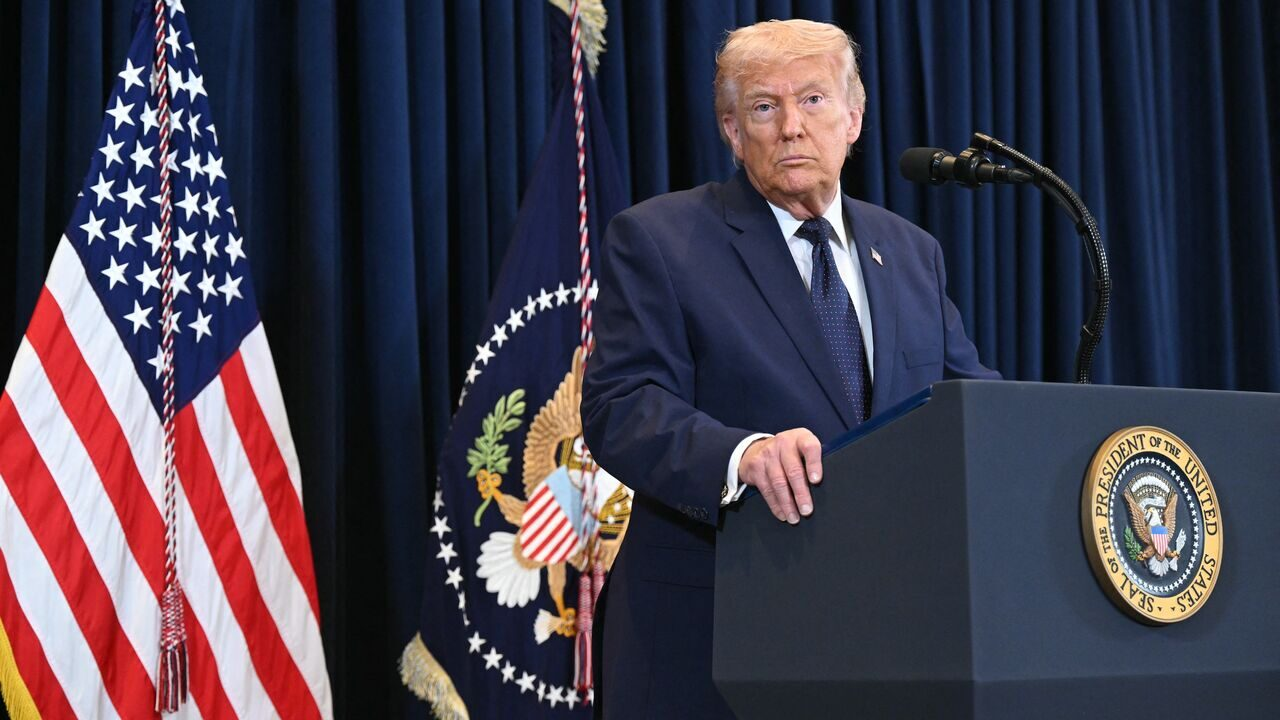
President Donald Trump stated that the U.S. would be targeting Iran “very hard over the next week,” shortly after granting a partial 30-day waiver for purchases of sanctioned Russian oil, aiming to alleviate prices impacted by the U.S.-Israeli conflict with Iran.
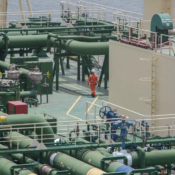
Prices have been fluctuating sharply due to Trump’s shifting remarks regarding the potential length of the war, which has led Iran to target vessels in the Strait of Hormuz, a key passage for a fifth of the world’s oil.
Trump has stated before that the war is “complete” and has also vowed to ensure the safety of vessels in the Strait. During a Fox News interview broadcast on Friday, Trump stated that the U.S. would provide escort for shipping in that area “if we needed to.”
Benchmark Brent crude declined approximately 0.6% to roughly $99.80, yet remains nearly 40% higher since the onset of the conflict.
CONFLICT IN IRAN SPREADS THROUGHOUT THE MIDDLE EAST
Following almost two weeks of conflict, 2,000 individuals have lost their lives, predominantly in Iran, with significant casualties also reported in Lebanon and an increasing toll in the Gulf, which for the first time in decades of Middle Eastern strife has found itself at the forefront. Millions of individuals have been forced to leave their residences.
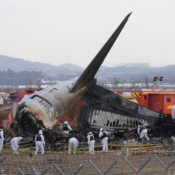
U.S. forces have experienced losses as well. The U.S. military has confirmed that all six crew members on board a refueling aircraft that crashed in western Iraq have died.
Iran launched additional missiles and drones targeting Israel, with reports of Iranian drones also entering the airspace of Kuwait, Iraq, the United Arab Emirates, Bahrain, and Oman.
The Israeli military conducted strikes throughout Tehran and persisted in its assaults on the Iranian-aligned Hezbollah militia in Lebanon and the capital, Beirut.
The air force reported that it had targeted over 200 locations in western and central Iran within the last day, which included ballistic missile launchers, air defense systems, and weapons production facilities.
According to Iranian Press TV, a woman was killed by an airstrike near a rally in Tehran for Quds (Jerusalem) Day, part of numerous demonstrations throughout Iran in support of Palestinians residing in Israeli-occupied territory.
President Masoud Pezeshkian, Foreign Minister Abbas Araqchi, and security chief Ali Larijani were all seen in videos verified by Reuters openly participating in the rally as a show of defiance, contrary to U.S. Defense Secretary Peter Hegseth’s claim that the leadership was “cowering” underground.
“Individuals do not fear these assaults.” “As you can see, individuals have gathered in this rain, enduring these challenges,” judiciary chief Gholamhossein Mohseni-Ejei stated at the march. “We will stand firm without hesitation.”
The possibility that the disruption to global energy supplies might persist has elevated oil prices by approximately 9% to $100 a barrel on Thursday, contributing to a decline in U.S. stocks.
As gasoline and diesel prices continue to climb at pumps across the United States and globally, the U.S. government announced on Thursday a 30-day license permitting countries to purchase Russian oil and petroleum products that are already at sea, where it is often the case that shipments are sold or their buyers are changed.
The International Energy Agency announced on Thursday that the war is causing the largest oil supply disruption ever recorded. On Thursday, average U.S. retail diesel prices reached $4.89 a gallon, marking the highest level since December 2022, according to data from the motorist association AAA.
Nonetheless, Trump asserted that the U.S. would benefit from elevated oil prices, while his treasury secretary, Scott Bessent, described the increase as a “temporary disruption that will yield significant advantages for our nation and economy in the long run.”
Ukraine and Europe express frustration over the U.S. decision to ease sanctions.
This action marks the second instance in which the U.S. conflict in Iran has led to a notable reduction of U.S. sanctions concerning the war in Ukraine within a span of just over a week. Moscow has embraced the decision, while Kyiv and its allies are expressing their frustration. “Six members of the G7 conveyed a very clear stance that this gesture was not the appropriate signal,” German Chancellor Friedrich Merz stated at a press conference in Norway. “This morning, we learned that the American government has seemingly made a different decision.”
Ukrainian President Volodymyr Zelenskiy stated that the action could yield $10 billion for Russia, emphasizing, “It certainly does not help peace.”
In a post during the early hours, Trump criticized Iran’s leadership, referring to them as “deranged scumbags.”
“For 47 years, innocent lives have been lost around the globe, and now, as the 47th President of the United States, I find myself in the position of taking action against them.” It is truly a remarkable privilege to have the opportunity to do this!
In his inaugural public remarks on Thursday, Iran’s new supreme leader, Mojtaba Khamenei, pledged to maintain the closure of the Strait of Hormuz and called on neighboring countries to shut down U.S. bases within their borders, warning that failure to do so could lead to their vulnerability to attacks.
Khamenei’s remarks were delivered by a television presenter, leaving it unclear why he chose not to appear in person or record his statements.
Hegseth stated during a news briefing that the U.S. was aware he was “wounded and likely disfigured.” A Reuters report on Wednesday indicated that an Iranian official stated Khamenei sustained minor injuries but is still actively working.
Hegseth also stated that the U.S. would not permit shipping in the Strait of Hormuz to be “contested,” though he did not elaborate on how this would be achieved.
President Emmanuel Macron announced that one French soldier lost his life and several others were injured in an attack in northern Iraq, just hours after an assault on an Italian base in the same region. The French soldiers were engaged in training as part of a global coalition combating Islamic State militants.
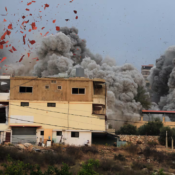
Numerous residences in a Bedouin Arab town close to an air base in northern Israel sustained significant damage overnight. The situation regarding whether there was a direct strike or debris from an interception remains unclear. The injuries were primarily minor.