South Korean authorities conduct a raid on transport ministry offices as investigations deepen into the tragic 2024 Jeju Air crash.
Authorities in South Korea have conducted a raid on the headquarters of the transport ministry amid increasing scrutiny regarding the government’s management of the nation’s most catastrophic aviation disaster.
On Friday, investigators conducted searches at the offices of the Ministry of Land, Infrastructure, and Transport in the administrative city of Sejong, as reported by the Yonhap News Agency, in pursuit of new evidence concerning the crash of Jeju Air Flight 2216.
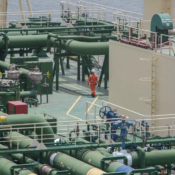
On 29 December 2024, a Boeing 737-800 operated by Jeju Air overshot the runway at Muan International Airport and collided with a concrete structure, resulting in the tragic loss of all but two of the 181 individuals aboard.
Initial findings suggested that the jet experienced a bird strike just prior to landing. Investigators indicate that the collision with a concrete mound close to the runway significantly intensified the impact and subsequent fire.
The raid is a key component of the government’s primary investigation into the crash, with final results anticipated by mid-year. Concurrently, multiple other investigations are in progress involving government agencies and legislators, including inquiries into the safety protocols at the airport and the response measures taken after the crash.
Public outrage has grown recently following the discovery of more human remains and victims’ belongings stored in sacks among the rubble taken from the crash site. The families of the victims had been urging for months that the debris be re-examined.
In light of the discovery, Lee Jae Myung initiated a new investigation on Thursday to ascertain the reasons behind the failure to identify the remains and personal items sooner. He urged the implementation of disciplinary measures against those responsible for the delays in victim recovery.
The transport ministry has extended an apology; however, the victims’ relatives have deemed it inadequate. A representative for the families expressed that the delayed response felt “like killing the victims a second time.”
An investigation by the Board of Audit and Inspection of Korea revealed that the concrete mound the plane collided with was constructed as a cost-saving measure.
Due to the airport’s location on sloping terrain, authorities decided against leveling the ground for the installation of a navigation antenna system. The localizer equipment of the system was instead positioned on an elevated concrete structure adjacent to the runway.
Auditors indicated that these structures ought to be engineered to disassemble upon impact to minimize the risk to aircraft.
Simulations indicated that all individuals on board could have survived had the plane not struck the solid structure. Following a collision with a flock of migratory ducks, the pilots managed to land the aircraft on its belly, gliding down the runway until it collided with a concrete mound, resulting in a dramatic fireball.