The Republic of Congo is set to hold a presidential election on Sunday, likely ensuring the continued rule of Denis Sassou Nguesso. His opponents face challenges due to voter apathy and what rights organizations characterize as a repressive environment, which includes restrictions on freedom of speech, assembly, and the press that hinder their ability to campaign effectively.
Sassou, 82, has governed the oil-rich Central African nation for nearly all of the years since 1979, with only a five-year interruption. He is up against six lesser-known challengers, as the primary opposition parties have chosen not to present candidates.
General Jean-Marie Michel Mokoko and André Okombi Salissa, two prominent opposition figures, have spent nearly a decade in prison following their convictions for undermining state security.
ATMOSPHERE OF ANXIETY
Rights organizations characterize the suppression of dissent as a significant portion of the pre-election anxiety.
According to Joe Washington Ebina, a notable human rights activist, there have been arrests of activists, suspensions of several opposition parties, and close monitoring of public gatherings.
He mentioned that a recent violent crackdown by the state on youth gangs, referred to locally as “bébés noirs,” had further escalated tensions and “created a climate where people no longer feel safe leaving their homes and expressing themselves.”
Security forces cast their ballots on Thursday. “Intimidation and repression by state security forces will once again play a crucial role in maintaining Sassou Nguesso’s regime.” “The tactic of having security forces vote before election day—freeing them to patrol polling stations—proved effective in 2021,” said Maja Bovcon, an independent consultant focused on West and Central Africa.
The government has dismissed allegations of bias.
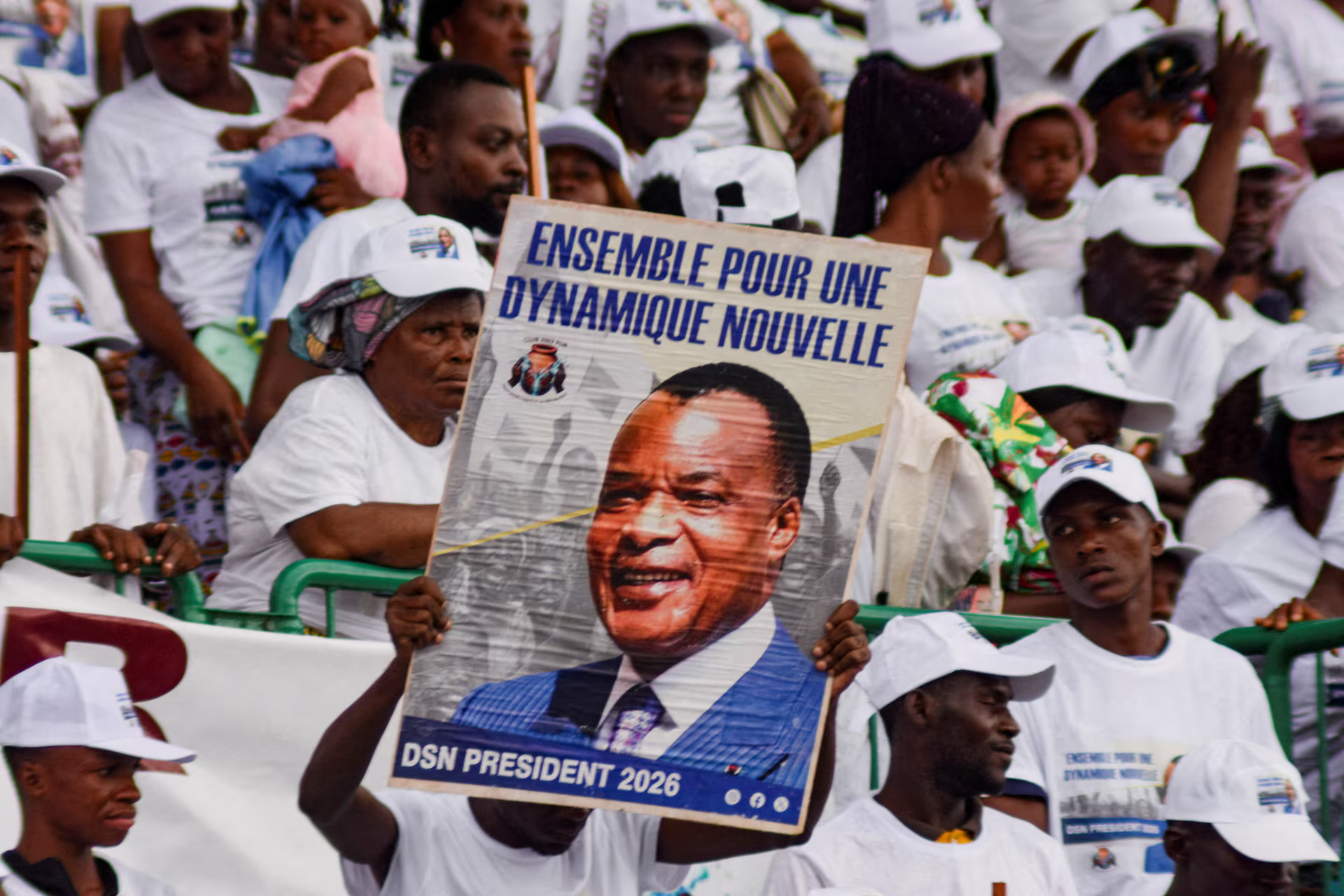
This week, Sassou’s posters adorned major roundabouts in cities throughout Congo, while small groups of opposition campaigners distributed leaflets in markets, struggling for visibility.
“Everywhere I look, I see only the president’s face, as if the others weren’t even in the race,” remarked Rosalie Tsianko, a communications professional based in Brazzaville.
Prime Minister Anatole Collinet Makosso dismissed claims of repression and political bias, stating to Reuters that “no election is won in advance.” He stated that Congo was equipped with oversight bodies “to ensure transparency, fairness, and the vitality of our democracy.”
Certain voters supported Sassou’s focus on stability. “I support him because he embodies peace,” stated businessman Roger Ennel Ahoue.
At a rally in Brazzaville this week, opposition candidate Uphrem Dave Mafoula called on a small group of supporters to explore an alternative. “Forty years of suffering is enough,” he stated, criticizing Sassou’s economic and social record as detrimental.
Anticipated Low Participation
More than 3.2 million Congolese have the right to vote, yet many express their intention to abstain, anticipating minimal excitement.
“I would rather remain at home than go out to vote,” said Boudibangoyi Brunel, a student in Brazzaville.
In the 2021 presidential election, the official turnout reached nearly 68%, yet civil society groups anticipate a decline in this figure for the upcoming election.
The abstention rate is expected to be quite significant, potentially reflecting the growing disillusionment among voters and concerns about the electoral process. “The people of Congo are weary,” Ebina stated.