Cuba announces that it has initiated discussions with the US as the oil blockade impacts the nation
Cuba has initiated discussions with the U.S. government, as stated by President Miguel Diaz-Canel on Friday. The oil blockade imposed by former U.S. President Donald Trump is exacerbating the economic crisis in the Communist-run nation. “These discussions are focused on seeking solutions through dialogue to address the bilateral differences between our two nations,” Diaz-Canel mentioned in a video broadcast on state television.
Diaz-Canel expressed his hope that the negotiations would steer the two long-time rivals “away from confrontation.”
Cuba is becoming more and more desperate. The citizens of the Caribbean nation, already weary from years of economic turmoil and scarcity, now spend most of their days without electricity. Escalating prices, tightly controlled fuel supplies, and shortages of medicine have driven numerous individuals to their breaking point.
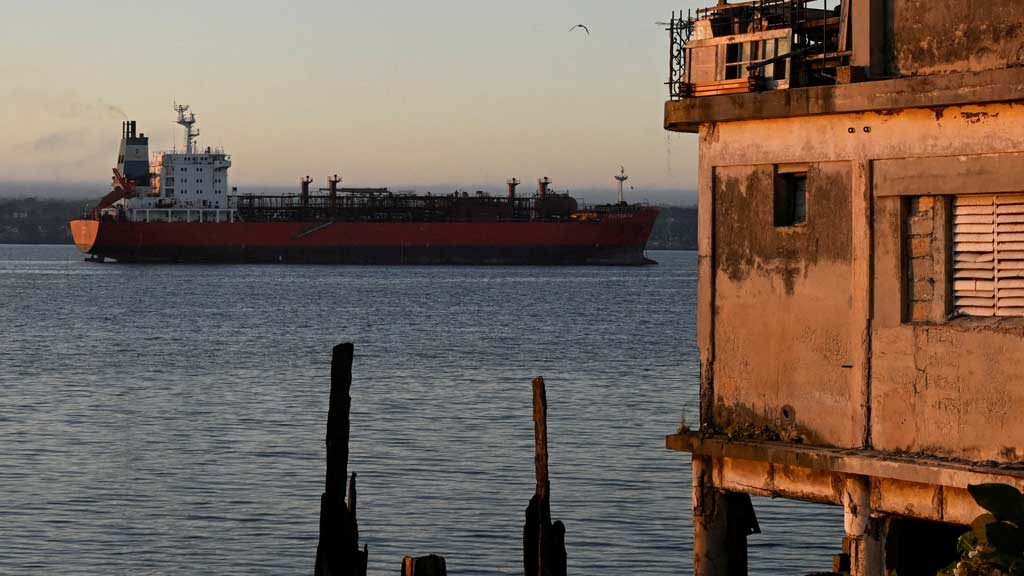
Following the U.S. capture of Venezuelan President Nicolas Maduro and the removal of Cuba’s key foreign benefactor in January, Trump has halted Venezuelan oil shipments to Cuba and warned of potential tariffs on any nation that supplies oil to Cuba.
Recently, Trump has made a number of statements, claiming that Cuba is on the brink of collapse or keen to negotiate a deal with the United States. On Monday, he remarked that Cuba could be facing a “friendly takeover,” but he also noted, “It may not be a friendly takeover.”
Cubans in the streets of Havana greeted the news as a potential remedy for the power blackouts that sparked protests this week, where Reuters noted residents banging on kitchen pots in the darkness.
“We are already overwhelmed; we can’t endure this situation any longer. I believe that the dialogue between Cuba and the United States should result in an improved circumstance,” stated Yaimi Gonzalez, a 44-year-old homemaker.
No fuel has entered Cuba for three months.
Cuba expressed its interest in engaging in discussions “on the basis of equality and respect for the political systems of both states, as well as for the sovereignty and self-determination of our governments,” stated Diaz-Canel.
However, he emphasized in his comments on Friday that the oil blockade was having a significant impact.
Diaz-Canel stated in a press conference with the Cuban media on Friday that no fuel has entered Cuba in three months, leading to a decrease in diesel and fuel oil reserves, which has caused Cuba’s electrical grid to become increasingly “unstable.”
Last week, a blackout cast the majority of the island’s citizens into darkness, with outages since then increasing to over 12 hours daily throughout much of the capital, Havana.
Diaz-Canel outlined Cuba’s initiatives to enhance the island’s energy independence during ongoing discussions with the United States, noting that Cuba had raised its production of domestic crude and gas this year and was on track to increase solar generation by 10% by the end of March.
During a statement made Thursday night among senior officials of the Communist Party, Diaz-Canel indicated that he was leading the discussions for the Cuban delegation, alongside former Cuban President Raul Castro and additional officials. He did not disclose who had participated for the United States, nor did he specify when or where the events had occurred.
Trump has stated that U.S. Secretary of State Marco Rubio was involved.
The White House and the U.S. State Department have not yet responded to a request for comment regarding Diaz-Canel’s remarks made on Friday.
Diaz-Canel stated that the discussions were in their early phases and that Cuba was open to continuing them. He stated that one objective was to assess whether there was a willingness on both sides to come to an agreement.
Felipa Rodriguez, a 67-year-old retiree, emphasized the importance of Cuba adhering to its principles. “If the talks are going to be friendly and Cuba doesn’t have to make political concessions, there’s no problem at all,” Rodriguez stated.
Cuba has released prisoners following an agreement with the Vatican.
Trump has consistently stated that the United States was engaged in high-level discussions with representatives from Cuba. Up to this point, the Cuban government has refuted any claims of official encounters but has not clearly dismissed media reports regarding back-channel discussions with Raul Guillermo Rodriguez Castro, the grandson of the 94-year-old Raul Castro, who continues to hold significant influence.
Rodriguez Castro was positioned behind Diaz-Canel and among the Communist Party officials shown in the video, a notable presence considering he does not officially occupy a high-ranking role within the party. The Castro grandson, 41, commonly referred to as “El Cangrejo,” or “The Crab,” was also present at the press conference on Friday morning. “Cuban officials recently engaged in discussions with representatives of the United States government to explore, through dialogue, a potential resolution to the bilateral differences between our nations,” Diaz-Canel informed reporters.
Historically, the Vatican has acted as a mediator in discussions between the two countries, exemplified by the 2014 negotiations that resulted in improved relations between Cuba and the United States during Barack Obama’s presidency.
On the eve of Friday’s announcement, Cuba stated it will release 51 prisoners in the coming days as part of an agreement with the Vatican. The release of the prisoner occurs two weeks following the meeting between Foreign Minister Bruno Rodriguez and Pope Leo at the Vatican.
Diaz-Canel stated that the choice to release the prisoners was “sovereign” and not “imposed by another country.”