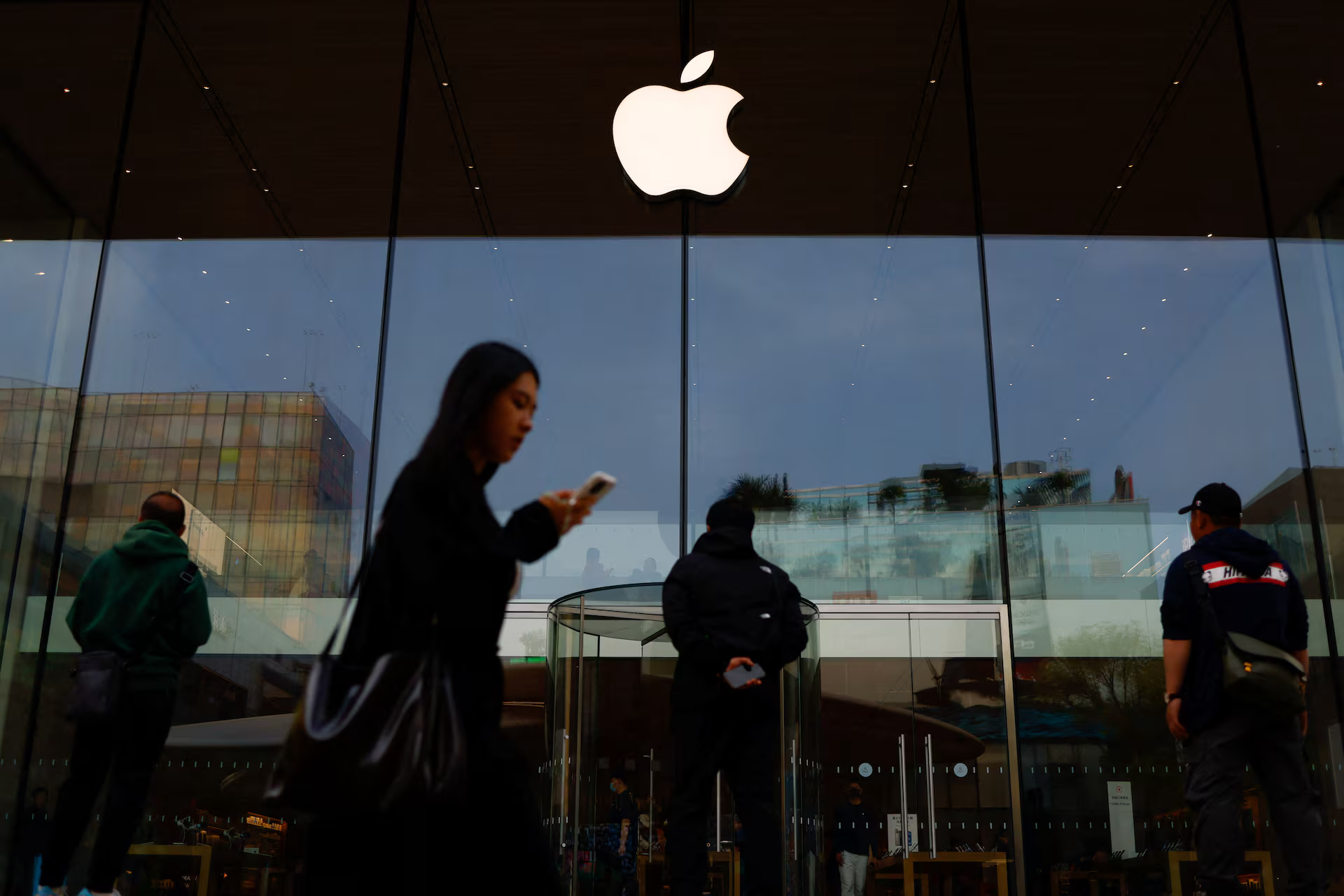
Apple announced on Thursday that it would reduce the commission fees it collects from its App Store in mainland China, a major win for Chinese developers after what seems to be pressure from regulators in the tech giant’s second-largest market.
The California-based company announced on its website that fees for in-app purchases and paid transactions will be reduced from 30% to 25% beginning on Sunday. Developers participating in Apple’s small business and mini apps partner programs will see a reduction in in-app purchase transaction fees from 15% to 12%. Mini apps are defined as smaller applications that function within a larger application, such as Tencent’s WeChat.
The decision represents an important step forward for Chinese app developers and the operators of “super apps,” such as Tencent and ByteDance, the owner of TikTok, whose platforms feature numerous smaller applications developed by third parties.
The reduction is projected to save Chinese developers over 6 billion yuan ($873 million) in annual operating expenses, according to a Thursday report by the state-owned Economic Daily, which characterized the action as a positive development for Chinese digital consumers. “This adjustment will … enhance consumption choices and information transparency,” stated the Economic Daily. “The premium for digital goods and services on the iOS platform will be gradually removed, leading to anticipated decreases in prices for membership subscriptions, game recharges, live broadcast tips, mini programs, and other scenarios, potentially saving consumers close to 1 billion yuan each year.”
GLOBAL EXAMINATION OF ‘APPLE TAX’
The 30% “Apple Tax” continues to attract significant antitrust scrutiny from regulators across the globe. In 2024, the EU enacted new legislation requiring Apple to reduce commission fees for developers to a range of 10% to 17%. In the United States, Apple permits users to settle in-app charges through alternative payment options.
“In China’s situation, (Apple) has been in discussions with the IT ministry and other departments and has been asked or pressured to lower their fees,” stated Rich Bishop, founder of AppInChina, a company that advises foreign software developers on making their apps accessible in China.
The change will take effect on World Consumer Rights Day this Sunday, a period when Chinese state media typically emphasizes both domestic and foreign companies that have been accused of violating consumer rights. In 2013, Apple faced scrutiny from a campaign when state broadcaster CCTV criticized its after-sales service, leading the company to issue a public apology.
Bishop stated that in the future, the Chinese government might ask Apple to gather App Store revenues within China rather than from overseas and could impose stricter regulatory oversight on foreign apps available in China.
Apple has removed apps like virtual private networks (VPNs) from its China App Store in response to requests from Chinese internet regulators.
Every internet-connected device possesses a unique code that reveals its location, and VPNs enable users to conceal their location by providing their device with a new code. Numerous Chinese users and international companies conducting business in China utilize them to navigate the stringent domestic internet censorship of foreign websites, as these tools allow access to blocked content and facilitate communication with the outside world.
Last year, Bloomberg News reported that China’s antitrust regulator was considering an investigation into Apple’s policies and App Store fees, following an antitrust complaint filed by Chinese consumers regarding the company’s app fee structure in October. Last week, Google reduced Android developer fees globally.
Apple’s fee reduction extends to international developers with apps available on the China App Store.
“Duolingo, the leading education app in China, generates approximately $50 million annually from the Chinese market, which will result in significant savings for them,” Bishop noted.