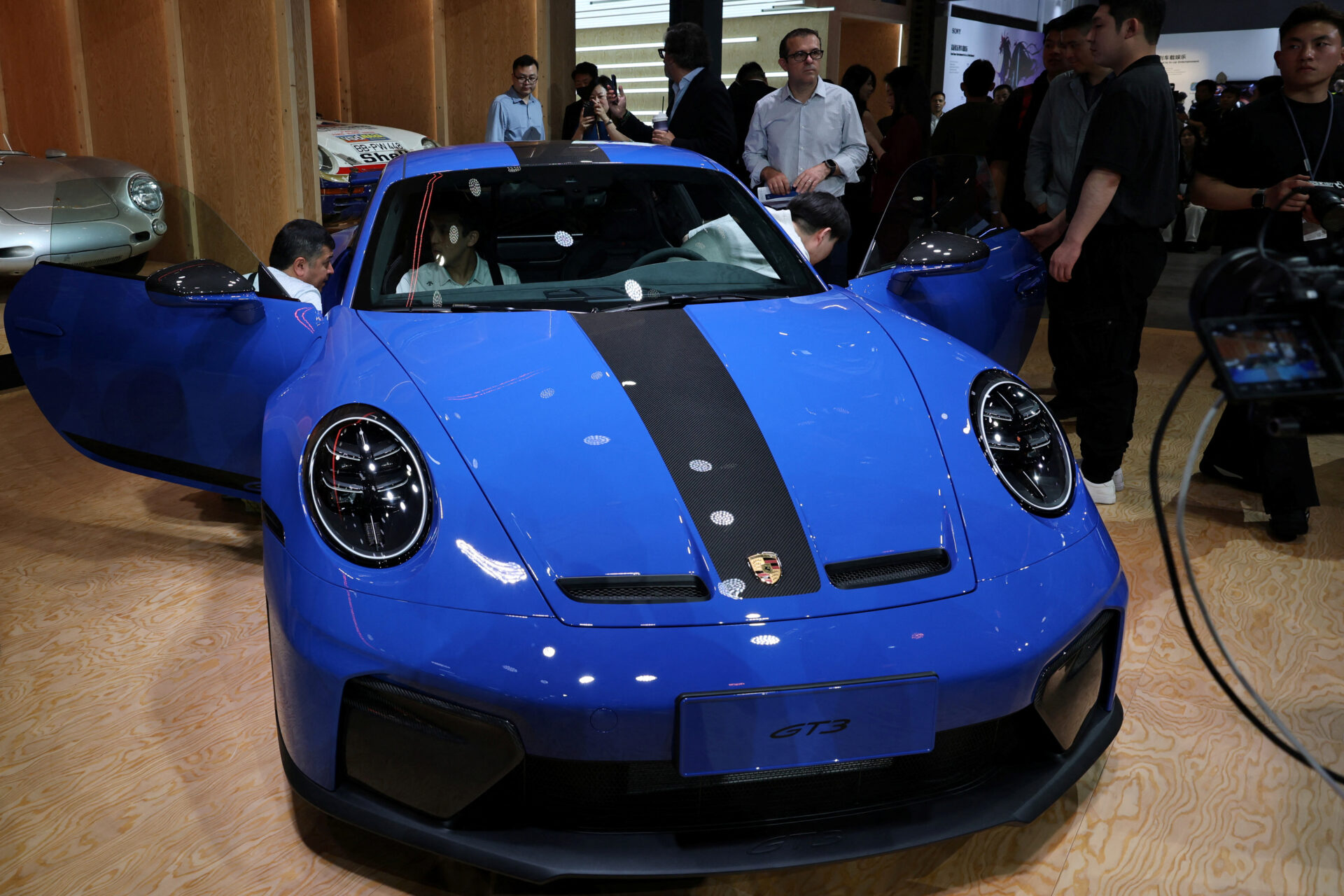
Porsche’s new CEO is expected to intensify cost-cutting measures and focus more on combustion-engine vehicles as he aims to convince investors of his ability to rejuvenate the struggling sports car manufacturer during his first earnings update on Wednesday.
However, global trade tensions and the possible economic impact of conflict in the Middle East will complicate any recovery efforts, making it even more challenging for Porsche to regain investor confidence and improve its financial performance.
Time is crucial.
Porsche’s shares have dropped by more than half since their listing in 2022, its margins have significantly declined, it has lost substantial market share in China—the largest auto market globally—and last year it faced a $3.1 billion setback due to a poorly timed transition to electric vehicles.
Investors tend to lack patience. Ingo Speich, a top-20 shareholder from Deka Investment, expressed his desire for clarity on Porsche’s strategy as soon as possible. We anticipate a significant emphasis on expenses. He effectively oversees costs and is capable of managing them.
Porsche is experiencing a decline in auto sales across North America, the Middle East/Africa/India region, and China, where deliveries have decreased by more than half in the past four years.
Porsche is experiencing a decline in auto sales across North America, the Middle East/Africa/India region, and China, where deliveries have decreased by more than half in the last four years.
Michael Leiters, the former McLaren boss who assumed his role in January, is aiming to simplify Porsche’s management structure to achieve cost savings and enhance the speed of decision-making, according to a source familiar with the situation, as part of a broader strategy to address the declining sales and adapt to changing market demands.
He is expected to rely on a positive aspect from 2025—robust demand for the iconic 911 combustion-engine model—to help restore the “emotional connection” with the brand’s fan base, the source noted.
Porsche, similar to other automakers reducing their electric vehicle aspirations due to lower-than-anticipated demand, has announced that it will continue to provide plug-in hybrids and combustion-engine models well into the 2030s, in addition to its all-electric offerings.
SHOULD HE SHOW HIS CARDS OR MAINTAIN HIS MYSTERY?
However, there is a significant challenge ahead for the Volkswagen-controlled brand.
Porsche’s operating profit fell dramatically by 98% to 90 million euros ($105 million) in 2025, with its margin dropping to a mere 0.3%—a significant decline from 14.5% in 2024 and 18% during its IPO year.
The company is already implementing cost reductions, announcing plans to eliminate 1,900 positions in the upcoming years following the layoff of 2,000 temporary workers last year, while discussions are ongoing regarding a second cost-cutting initiative.
The current market conditions appear to be persistently challenging. Last year, tariffs resulted in significant costs for Porsche, amounting to hundreds of millions of euros, while competition from Chinese rivals like BYD and Xiaomi continues to grow stronger.
The conflict in the Middle East, along with the possible impact on the global economy, may complicate recovery efforts further, particularly by affecting supply chains and consumer confidence in key markets. “Even affluent individuals might adopt a more cautious approach to discretionary spending, potentially presenting another challenge for Porsche,” remarked Pal Skirta, an analyst at investment bank Metzler.
Leaders’ optimal approach might be to exercise patience regarding any significant strategic announcements.
“The danger for him lies in making a statement and then needing to retract it,” remarked Jefferies analyst Philippe Houchois. “For the time being, it would be more beneficial for him to maintain confidentiality.”