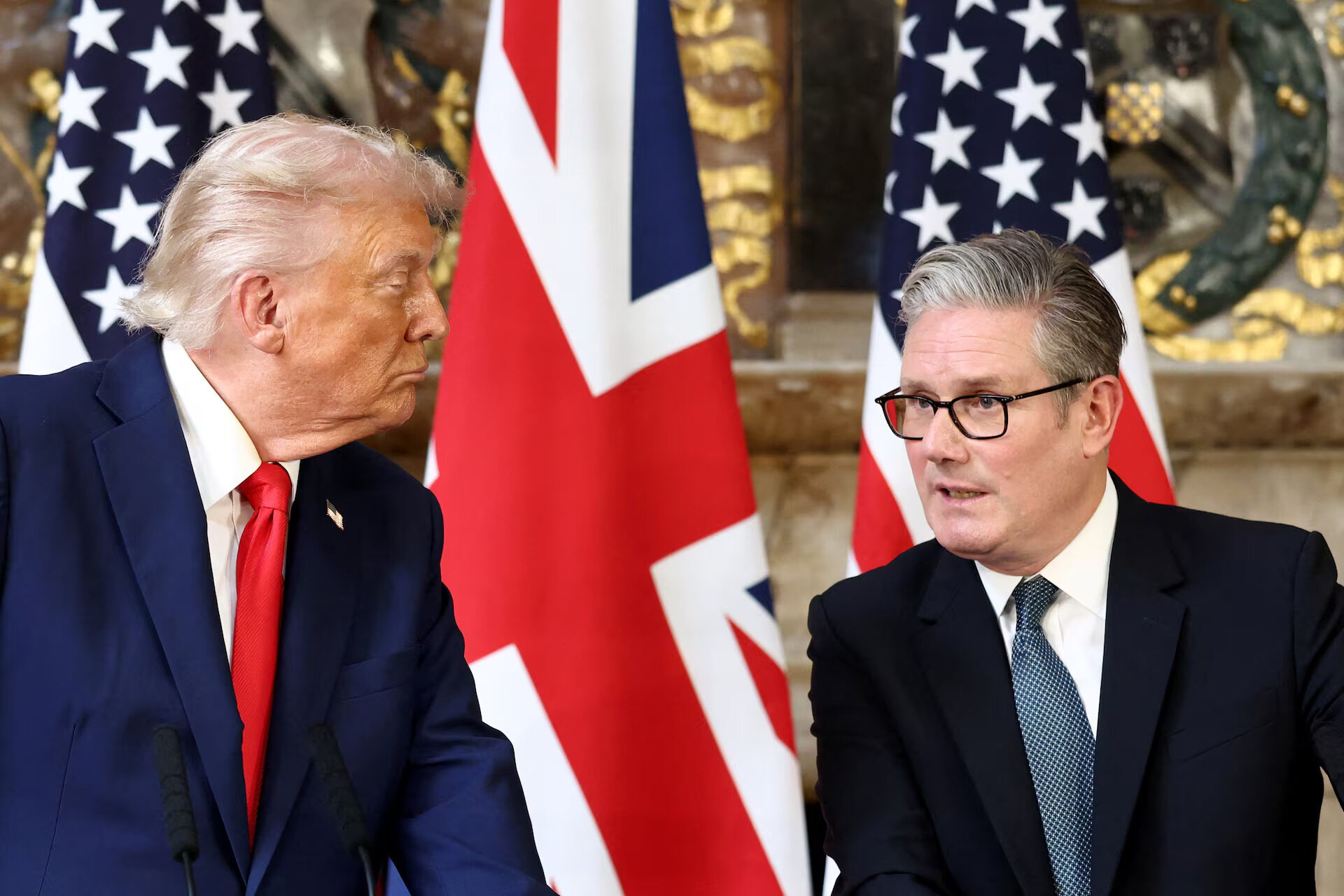
Starmer and Trump engage in their initial conversation following the Iran dispute, while the UK emphasizes its commitment to restricting its involvement to defensive military support.
British Prime Minister Keir Starmer and US President Donald Trump have engaged in their inaugural discussion following the rise in tensions due to Britain’s decision not to participate in the initial US offensive strikes against Iran.
Downing Street has confirmed that the two leaders discussed the escalating situation in the Middle East and the ongoing military coordination between the UK and the United States.
A statement from No. 10 indicated that the discussion encompassed collaboration involving British airbases to aid defensive operations in the region.
“The leaders commenced their discussion by addressing the current situation in the Middle East and the military collaboration between the UK and US, highlighting the utilization of RAF bases to support the collective self-defense of regional partners,” the statement indicated.
During the call, Starmer conveyed his condolences to the United States in light of the deaths of six American soldiers amid the conflict.
The discussion follows Trump’s public criticism of Britain for denying a US request to utilize its bases for the initial wave of offensive strikes on Iran.
The UK government has opted to allow American forces to utilize British facilities solely for defensive operations focused on intercepting Iranian missiles.
Trump expressed his dissatisfaction with the decision, indicating that the UK was reluctant to provide complete backing to the United States in the conflict.
In a social media post, the president rejected claims that Britain could deploy aircraft carriers to the area, stating, “We don’t need people that join wars after we’ve already won!” and referred to Britain as “our once great ally.”
The US leader has consistently expressed disapproval of Starmer regarding the decision. This week, Trump expressed his dissatisfaction with the UK, stating that the British prime minister was “no Winston Churchill.”
In the face of criticism, the UK government has upheld its position of non-participation in the broader offensive military campaign.
Foreign Secretary Yvette Cooper supported the government’s stance, asserting that Britain should prioritize its national interests instead of simply following US policy.
“The decision regarding what is in the national interest of the US rests with the president,” Cooper stated. “It is the responsibility of the UK government to determine what aligns with the national interest of the UK.”
She noted that the UK might not always align with Washington on every matter and cautioned against both uncritical endorsement of US military actions and total dismissal of collaboration.
“We will offer defensive support in response to Iranian strikes on partner nations where British citizens are present,” she stated.
In line with those defensive strategies, British RAF jets have been dispatched to the area to intercept Iranian missiles and drones aimed at allied nations.
The aircraft carrier HMS Prince of Wales has been placed on advanced readiness, though the government has yet to confirm its deployment to the Middle East.
The discussion regarding Britain’s involvement in the conflict has also attracted comments from former prime minister Tony Blair, who was at the helm during the UK’s 2003 invasion of Iraq.
During a private event, Blair is said to have contended that Britain ought to have supported the US strikes from the outset, characterizing the United States as an “indispensable cornerstone” of the UK’s security.
Cooper, who held the position of junior minister during Blair’s administration when Britain entered the Iraq War, emphasized the importance of policymakers learning from that conflict.
She stated that those lessons encompassed the understanding that every decision regarding military involvement should prioritize the interests and safety of British citizens.
At the same time, Iran’s ambassador to London, Seyed Ali Mousavi, cautioned Britain to exercise extreme caution regarding any increase in its involvement in the war.
Mousavi warned that should British military bases or facilities be utilized in assaults on Iran, they might be regarded as “legitimate targets.”