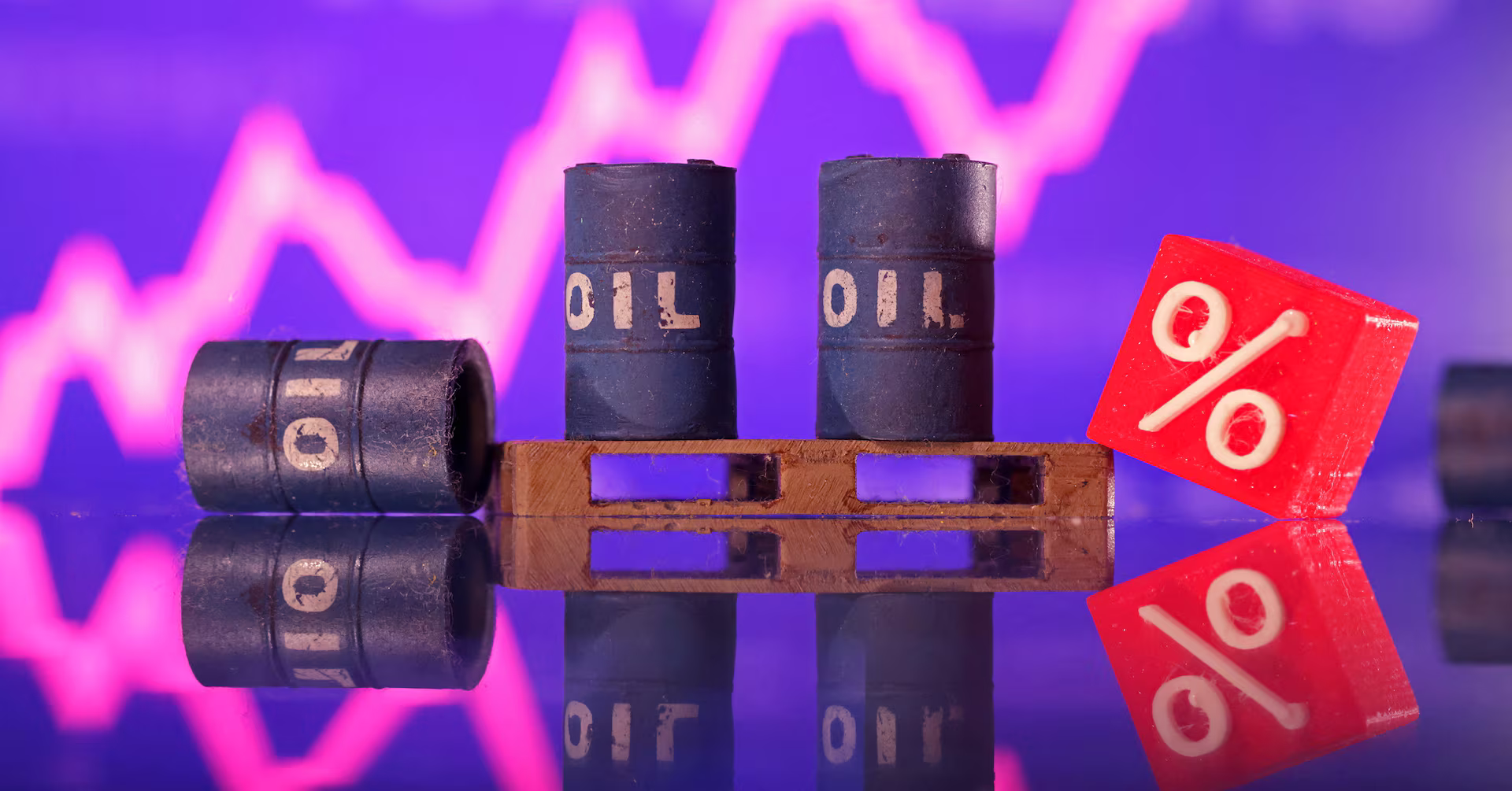
Goldman Sachs cautions that oil prices may reach $150 a barrel as the flow through the Strait of Hormuz declines to 10%.
Goldman Sachs has issued a warning that global oil prices may exceed $100 a barrel within days and could potentially hit $150 by the end of the month if disruptions to crude shipments through the Strait of Hormuz persist.
The investment bank reported that oil flows through the vital maritime route, connecting key Middle Eastern producers to global buyers, have decreased significantly more than initially anticipated after the recent US-Israeli attack on Iran.
Goldman Sachs anticipated that crude flows through the strait would decrease to approximately 15% of typical levels. Nevertheless, Iran’s successful blockade of tankers navigating the narrow waterway has resulted in only approximately 10% of the oil cargoes that typically traverse the route being able to pass.
In a communication to clients on Friday, the bank indicated that the disruption constituted a shock significantly more severe than previous global supply crises.
“Considering the latest data, developments, and the magnitude of the shock, we now anticipate that oil prices could surpass $100 next week if no indications of solutions arise by that time,” the bank stated.
“It is now considered probable that oil prices, particularly for refined products, could surpass the peaks seen in 2008 and 2022 should the flows through the Strait of Hormuz continue to be constrained throughout March.”
Goldman Sachs indicated that its analysis revealed the effect on global oil flows last week was 17 times greater than the peak production loss noted in April 2022, following Vladimir Putin’s order for the Russian invasion of Ukraine, which drove crude prices to approximately $110 a barrel.
The international oil benchmark temporarily rose above $120 in 2022 and approached approximately $145 during the 2008 energy crisis, with both instances leading to significant repercussions for the global economy.
Prices have started to rise significantly. Oil surged past $90 a barrel late last week, achieving the largest weekly gains since the COVID‑19 pandemic six years prior, highlighted by a $10 increase in just one day on Friday.
Trading on weekend markets operated by IG Group suggested further increases. US crude was priced above $94 a barrel on Sunday—indicating a probable rise when global financial markets resume operations.
Clayton Seigle, a senior fellow at the Center for Strategic and International Studies, notes that markets are increasingly recognizing the potential for a prolonged supply shock.
“The grace period afforded to the Trump administration by the market came to an end at the close of last week,” Seigle stated.
“A shortfall of 20 million barrels per day is impacting global oil market dynamics with no indication of improvement.” In contrast, President Donald Trump is insisting on unconditional surrender, a highly improbable outcome. Although some observers may have initially perceived his indifference to soaring oil prices as a mere bluff, it has become evident that this is not the case.
Oil prices have increased by over 50% this year, climbing from approximately $60 a barrel at the beginning of 2026. Gains started to accumulate slowly in January and February, then surged dramatically following the US-Israeli strike on Iran just over a week ago.