Iran War could have a long-term impact on the world’s energy markets
Even if the week-old battle ends quickly, the U.S.-Israeli confrontation with Iran may cause weeks or months of higher gasoline prices for businesses and consumers around the world as suppliers deal with destroyed facilities, disrupted logistics, and increased shipping risks.
“The market is shifting from pricing pure geopolitical risk to grappling with tangible operational disruption, as refinery shutdowns and export constraints begin to impair crude processing and regional supply flows,” JP Morgan analysts wrote in a research note on Friday. The outlook presents a global economic threat and a political vulnerability for U.S. President Donald Trump as he approaches the midterm elections, with voters being sensitive to energy bills and unfavorable to foreign entanglements.
Since Tehran attacks energy infrastructure throughout the region and targets ships in the crucial Strait of Hormuz between its shores and Oman, the battle has already resulted in the suspension of around a fifth of the world’s supply of natural gas and crude oil.
Since the beginning of the conflict, oil prices have increased by more than 25% globally, raising the cost of fuel for customers everywhere.
Due to a nearly total closure of the Strait, the major oil producers in the region—Kuwait, Saudi Arabia, the United Arab Emirates, and Iraq—have been forced to halt the shipment of up to 140 million barrels of oil to refiners worldwide, which is equivalent to around 1.4 days’ worth of demand.
According to analysts, traders, and sources, oil and gas storage facilities in the Middle East’s Gulf are filling up quickly, forcing oil fields in Iraq and Kuwait to reduce oil production, with the United Arab Emirates probably following suit. “At some point soon, everyone will also shut in if vessels do not come,” said a source with a state oil company in the region who wished to remain anonymous.
According to Amir Zaman, head of Rystad Energy’s Americas commercial team, “The conflict could be ended, but it could take days or weeks or months, depending on the types of fields, the age of the field, and the type of shut-in that they’ve had to do before you can get production back up to what it once was.”
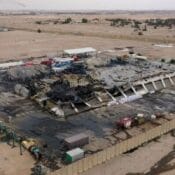
Meanwhile, Iranian forces are attacking regional energy infrastructure, such as refineries and ports, forcing them to close as well. Attacks have severely damaged some of these facilities, necessitating repairs.
Following Iranian drone assaults, Qatar announced a force majeure for its massive gas export volumes on Wednesday. The return to normal production could take at least a month, according to sources who spoke to Reuters. 20% of the world’s LNG comes from Qatar.
Meanwhile, strikes have forced the closure of Saudi Aramco’s massive Ras Tanura refinery and crude export terminal; the extent of the damage is unknown.
Although it hasn’t given specifics, the White House has defended the attack on Iran by claiming that the nation constituted an immediate threat to the US. Additionally, Trump has expressed alarm about Iran’s ambitions to acquire a nuclear weapon.
IN THE STRAIT DANGER
Markets would calm down if the war ended soon. However, depending on the amount of the shipping and infrastructural damage, it may take weeks or months to return to pre-war pricing and supply.
Joel Hancock, energy analyst at Natixis CIB, stated, “As far as physical damage from Iranian strikes is concerned, we have not seen anything that would be considered structural, although the risk remains as long as the war continues.”
How and when the Strait of Hormuz will be secure for shipping again is the most important concern for energy supplies. Trump has promised U.S. insurance support for ships in the area and provided naval escorts to oil tankers.
However, according to military and intelligence officials, Iran can continue drone attacks on ships for months, making safety in the canal potentially elusive.
By highlighting the risks associated with low stocks, the battle may also incentivize nations to replenish their strategic petroleum stockpiles in the weeks and months following its conclusion. That would boost oil demand and keep prices stable.
Global Political and Economic Risk
Meanwhile, supply chains and businesses in Asia, which depend heavily on imports and get 60% of their crude oil from the Middle East, are being affected by the disruption in energy shipments.
According to sources this week, the state-run Mangalore Refinery and Petrochemicals in India declared force majeure on gasoline export cargoes, joining an increasing number of refineries in the area that are unable to fulfill sales commitments because of a shortage of supply.
In China, at least two refineries have stopped producing. China, a major regional supplier, has requested that refineries halt the export of fuel. Vietnam has stopped shipping oil, and Thailand has also stopped exporting fuel.
Russia has benefited from disruption. Due to the U.S. granting Indian refiners a 30-day waiver to purchase Russian crude to replace lost Middle Eastern supplies, prices for Russian crude cargoes have increased. Under the prospect of tariffs, Washington had put pressure on India to reduce its imports of Russian oil.
In anticipation of rising fuel prices, baseload power contracts for Tokyo for the fiscal year beginning in April surged more than a third this week on the EEX (European Energy Exchange) in Japan, the world’s second-largest importer of LNG (liquefied natural gas). Additionally, cars in Seoul waited in line at gas stations as pump prices increased.
The crisis in gas supply and the escalating costs pose a dual challenge for European consumers. Following Russia’s invasion of Ukraine in 2022, the region suffered the most from the disruption of gas supplies brought on by sanctions on Russian energy imports.
To replace Russian pipeline gas, Europe resorted to importing LNG. To fill gas storage to the required levels before next winter, Europe must now purchase 180 more LNG cargoes than it did the previous year.
Due to its recent growth into the world’s greatest producer of gas and oil, the United States faces fewer supply worries. However, even when domestic supply is adequate, pump prices for gasoline and diesel are impacted because U.S. crude and fuel prices grow in tandem with foreign oil markets.
For instance, AAA reports that the average retail price of gasoline in the United States was $3.32 per gallon nationwide on Friday, an increase of 34 cents from the previous week. In contrast, the price of diesel increased from $3.76 per gallon to $4.33 per gallon a week ago.
Rising gas prices pose a serious threat to Trump and his fellow Republicans as they get ready for the midterm elections in November.
“Gasoline prices are psychologically powerful,” Siebert Financial Chief Investment Officer Mark Malek stated. “They are the inflation numbers that consumers see every single day.”