This article explores the Nepal campaign that could elevate Balendra Shah to prominence
The movement that displaced Nepal’s entrenched political figures and propelled 35-year-old rapper-turned-politician Balendra Shah to the brink of power originated from the upper levels of a six-story building in western Kathmandu.
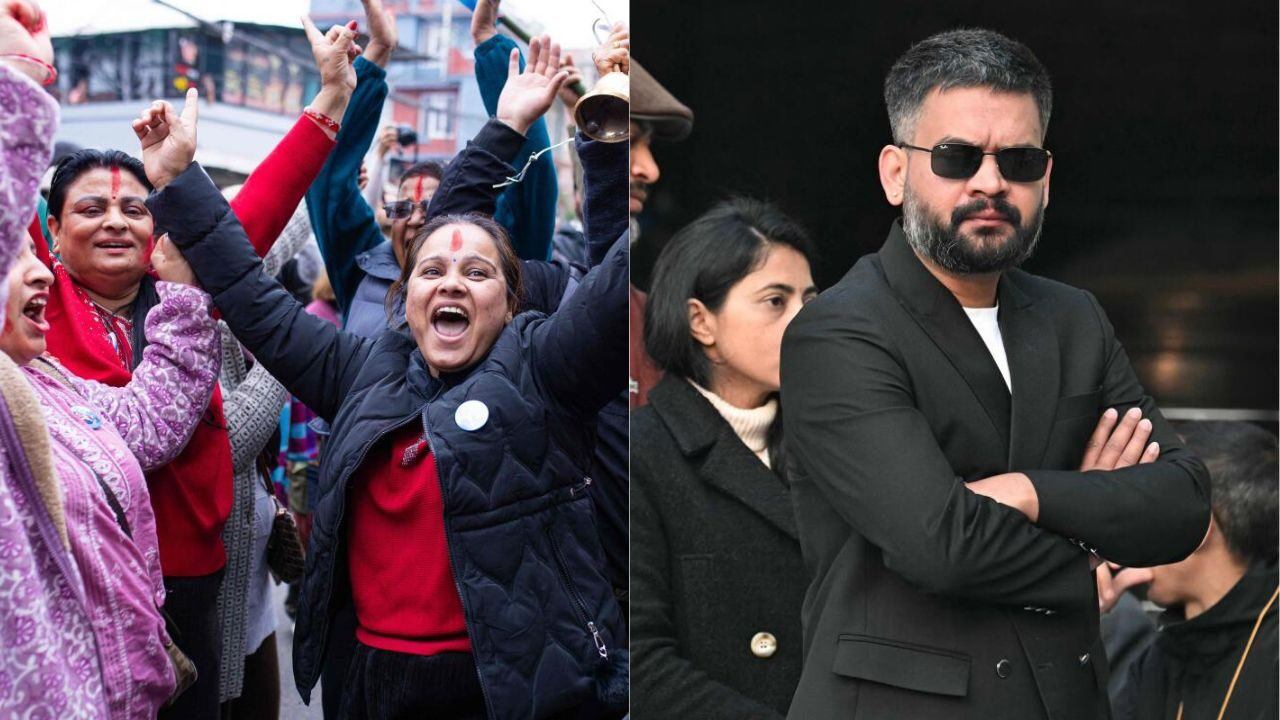
Shah is the prime ministerial candidate from the Rastriya Swatantra Party, which is currently at the forefront of the vote count two days following Nepal’s inaugural election since the youth-led protests in September led to the ousting of the previously elected government.
The election commission anticipates that the final results for 165 seats determined by direct, first-past-the-post tallies and 110 seats allocated through proportional representation will be available by next week.
If current trends continue, Shah—more commonly known as Balen—will have effectively captured a surge of support generated by the September uprising through one of the most advanced campaigns ever witnessed in the small Himalayan nation.
Reuters spoke with six officials from the RSP to gather insights into Shah’s campaign, which is largely organized from the upper three floors of the party’s headquarters located in the Balaju neighborhood of the capital city and significantly funded by the Nepali diaspora. “We are truly grateful for the support and affection we have received from the people on the ground,” remarked Bigyan Gautam, a member of RSP’s national campaign team.
Shah’s remarkable performance contrasts sharply with Bangladesh’s election last month, where a youth-driven party faltered at the polls after rising from the “Gen-Z” protests that led to the ousting of the country’s long-serving premier in 2024.
ADDRESS EVERY EIGHT DAYS
The core of RSP’s political operations lies within the Research, Strategy, and Documentation Department, managed by an 11-member board that supervises 300 party workers organized into three national groups, which support smaller teams led by individual candidates.
According to three officials, these national-level teams strategize election tactics, organize rallies, develop and oversee online content, and monitor grassroots campaigning and feedback throughout Nepal.
In the lead-up to Thursday’s vote, the party implemented a meticulously planned media strategy, with Shah giving a significant speech every eight days, providing ample opportunity for each rally to be enhanced by a robust social media team of 660 members.
The RSP conducted road shows in five to seven districts daily, complemented by brief daily appearances in one of Nepal’s seven provinces, where Shah engaged with the voters.
“If you continue to deliver speeches, it leads to confusion among the audience,” remarked a party official who requested anonymity. We allow opposition parties to raise specific issues and then respond once. This approach ensures our message remains clear.
According to two officials, the party directly funded the centralized campaign system and large events, receiving significant donations from Nepalis living abroad, especially from those in the United States.
According to RSP’s Treasurer Lima Adhikari, individual candidates were accountable for organizing and financing their campaign events.
FROM THE PLAINS TO THE HILLS
Prior to joining RSP in December in anticipation of the elections, Shah held the position of mayor of Kathmandu, a role he secured in 2022 by capitalizing on his fame as one of Nepal’s leading rap stars, boasting millions of social media followers.
On January 19, Shah stood alongside RSP founder and TV host-turned-politician Rabi Lamichhane at a rally in the capital city of Nepal’s Madhesh province and addressed the thousands gathered: “A Madhesi boy is going to become prime minister.”
Despite Madhesh and the adjacent Terai plains being the most densely populated areas of Nepal, the political landscape has historically been controlled by elites from Kathmandu and its mountainous regions.
Shah’s January speech gained significant traction on social media, highlighting the initial success of the RSP’s gamble that he could be the first leader from the plains to achieve the premiership, according to three party officials. “It was evident to us that the nation was tired of the old corrupt leaders and was finding hope in young leaders like Balen Shah and Rabi Lamichhane,” remarked Birendra Kumar Mehta, a member of the RSP’s central committee. “The party recognized these events as an opportunity.”
Shah is running for election in Jhapa-5, a constituency in the plains that has traditionally been associated with K.P. Sharma Oli, who stepped down as prime minister following the protests in September.
In this rural area of Nepal, Shah has adhered to his unconventional campaign strategy, avoiding formal media interviews, making spontaneous visits to engage with voters, and assembling a team of young volunteers throughout the constituency.
His team, supported by the RSP campaign in Kathmandu, has been gathering voter feedback and complaints, focusing on development projects and overall governance. “People from every corner of Nepal will sense that the government is theirs and, most importantly, that it serves their needs,” stated D.P. Aryal, RSP’s vice chairperson, noting that Shah’s administration aims to incorporate outside experts to enhance its capabilities. “Engaging youth and maximizing the integration of technology will also be key priorities for us.”