France intends to enhance its nuclear capabilities and broaden its deterrence strategy to include European nations, thereby strengthening regional security in the face of increasing global instability.
France is poised to enhance its nuclear capabilities and broaden its strategic deterrence to encompass other European nations, representing the most notable change in French nuclear defense policy since 1960.
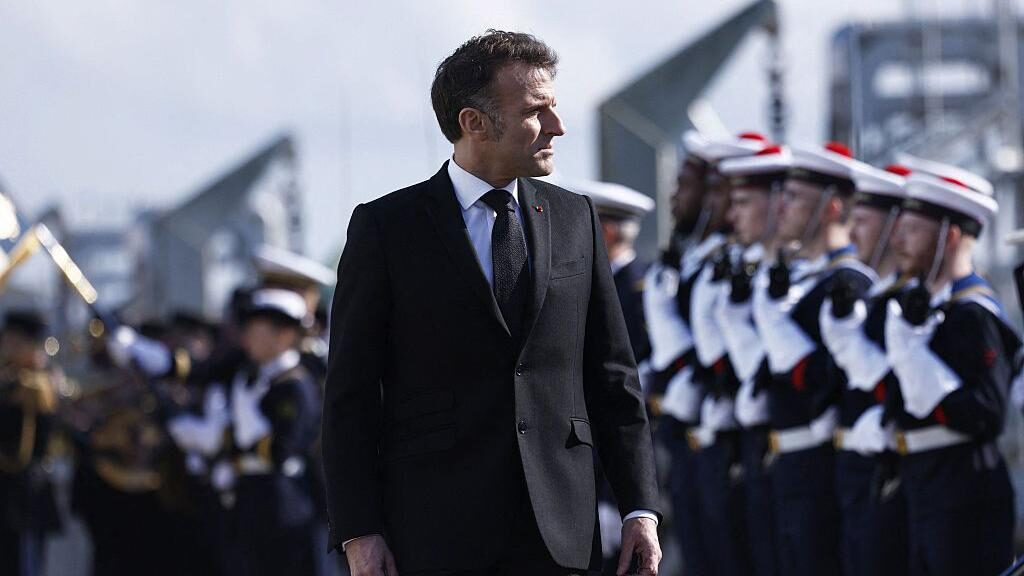
At the Ile Longue naval base near Brest, President Emmanuel Macron detailed the adjustments in response to a “growing unstable strategic environment.” “The next 50 years will be an era of nuclear weapons,” he stated, positioned in front of a French nuclear submarine.
Under the new policy, France plans to boost its nuclear warheads from the existing count of approximately 300 and will introduce a new nuclear-armed submarine, The Invincible, in 2036.
Macron also unveiled a new “advanced deterrence” strategy that includes eight European nations: the UK, Germany, Poland, the Netherlands, Belgium, Greece, Sweden, and Denmark. These countries will have the opportunity to engage in exercises utilizing France’s air-launched nuclear capabilities, accommodate air bases for French nuclear bombers, and assist in the advancement of supplementary capacities, such as space-based early warning systems, air defense against drones and missiles, and long-range missile technology.
Polish Prime Minister Donald Tusk commended the initiative on X, asserting, “We are arming up together with our friends so that our enemies will never dare to attack us.”
According to the revised doctrine, the president of France holds exclusive power regarding the deployment of nuclear weapons, and no official assurances will be provided to allied nations. The policy maintains its foundation on the principle of deterrence: adversaries need to recognize that any assault on France would entail an “unsustainable price.”
The announcement indicates a change in France’s stance regarding “vital interests.” Although historically unclear, Macron’s new doctrine implies that French nuclear deterrence could encompass the defense of European partners, yet specifics remain intentionally vague. France will cease to reveal the quantity of nuclear warheads in its possession.
France has a history of collaboration with the UK, which is another nuclear power in Europe, and recently, UK officials have taken part in exercises alongside France’s Strategic Air Forces (FAS). In the wake of Macron’s address, France and Germany revealed intentions to enhance collaboration in nuclear deterrence, which encompasses German involvement in French nuclear drills and the advancement of conventional capabilities alongside European allies. Officials emphasized that this collaboration will enhance, rather than substitute, NATO’s nuclear deterrent.