In the wake of the death of Supreme Leader Ayatollah Ali Khamenei, some Iranians mourned while others rejoiced, revealing a profound divide in a nation taken aback by the unexpected passing of a leader who had held power for 36 years.
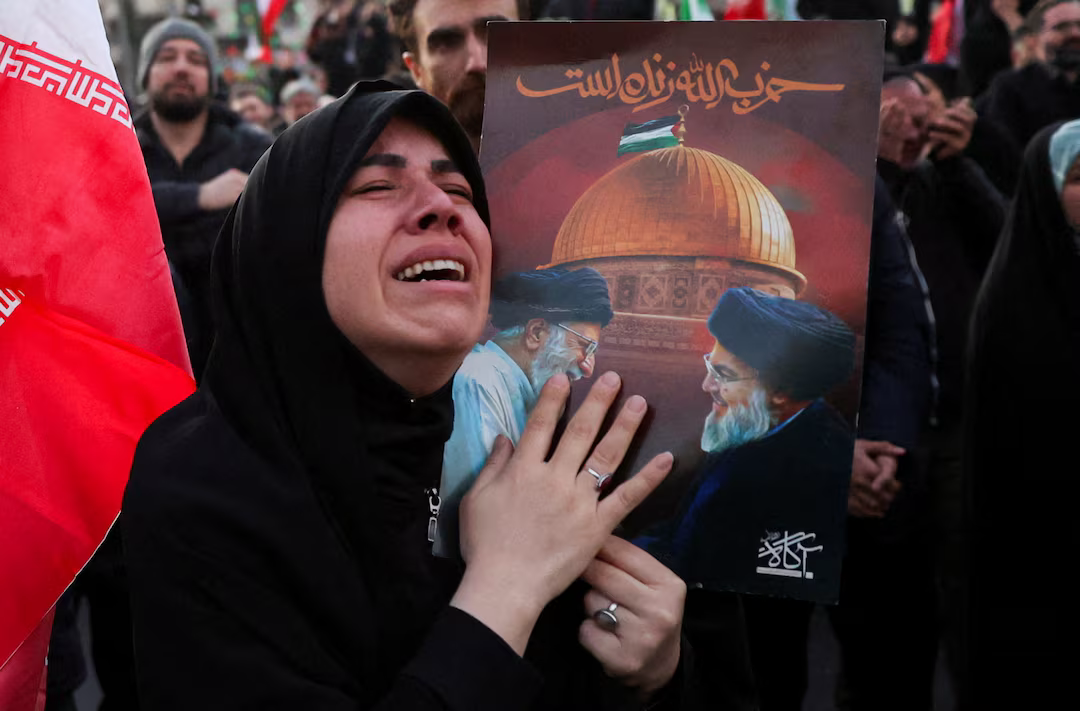
In the early hours of Sunday, Iranian state TV reported his death, the broadcaster’s voice trembling with emotion as it confirmed that Khamenei had been killed in the U.S.-Israeli attack on Saturday. In Tehran, mourners filled a square, clad in black, with many visibly in tears.
Videos shared on social media captured scenes of joy and defiance in various locations, with crowds cheering as a statue was brought down in Dehloran, Ilam province; dancing in the streets of Karaj city near Tehran in Alborz province; and celebrating in Izeh, Khuzestan province.
A video shared on social media depicted individuals in the town of Galleh Dar in southern Iran dismantling a monument dedicated to Ayatollah Ruhollah Khomeini, the founder of the Islamic Republic in 1979.
“Is this a dream?” “Hello to the new world!” a man can be heard shouting in the video, as flames engulfed a traffic circle where the monument lay in ruins, eliciting cheers and applause from the crowd.
Reuters has confirmed the locations of these videos.
A different video captured the scene in the town of Lapuee in southern Iran, where individuals gathered outside the home of 15-year-old Pooya Jafari, who was tragically killed during anti-government protests in January, celebrating his memory.
In January, a crackdown on anti-government protests resulted in the deaths of thousands of Iranians, marking the deadliest wave of unrest since the Islamic Revolution of 1979.
TRUMP AND ISRAEL WILL FACE SIGNIFICANT CONSEQUENCES
On Saturday, U.S. President Donald Trump announced the attack on Iran, encouraging Iranians to take this opportunity to overthrow their government.
Israeli and U.S. forces have killed Iran’s Supreme Leader Ayatollah Ali Khamenei in strikes.
During a rally in Tehran commemorating Khamenei’s passing, an individual expressed that the news had ignited feelings of animosity “towards Israel and America.” We shall seek retribution for the leader’s blood.
“We spoke last night until morning, and if God wills, it is untrue.” “Unfortunately, it was the truth,” a woman mourning Khamenei’s death stated in a pool report through WANA.
Khamenei’s rule has encountered various waves of unrest throughout the decades, such as the student-led protests in 1999 and 2002, the unrest in 2009, and the more recent “Woman, Life, Freedom” protests of 2022, which were sparked by the death of a young woman while in the custody of the morality police.
A 33-year-old woman from Isfahan expressed that she was overcome with tears, a blend of joy and disbelief, upon hearing the news of Khamenei’s death.
In an interview with Reuters from Iran, she expressed that she joined others in dancing in the street to “share my happiness with my people,” conveying her hope that his death would signify the end of the Islamic Republic.
She chose to remain anonymous due to concerns about potential repercussions.
However, Atousa Mirzade, a primary school teacher in the central city of Shiraz, expressed that she could not find joy in the fact that the country’s leader was killed by a foreign power.
“I find it difficult to feel happiness, as I am uncertain about the future of our country.” We witnessed the events in Iraq—turmoil and violence. I would choose the Islamic Republic over that situation.
Hossein Dadbakhsh, a 21-year-old university student in Mashhad, stated that Iran would seek retribution for its leader.
“I am prepared to give my life for Islam and for my Imam Khamenei.” “The Zionist regime and Trump will face serious consequences for the martyrdom of my leader,” he stated over the phone, his voice quivering with emotion.