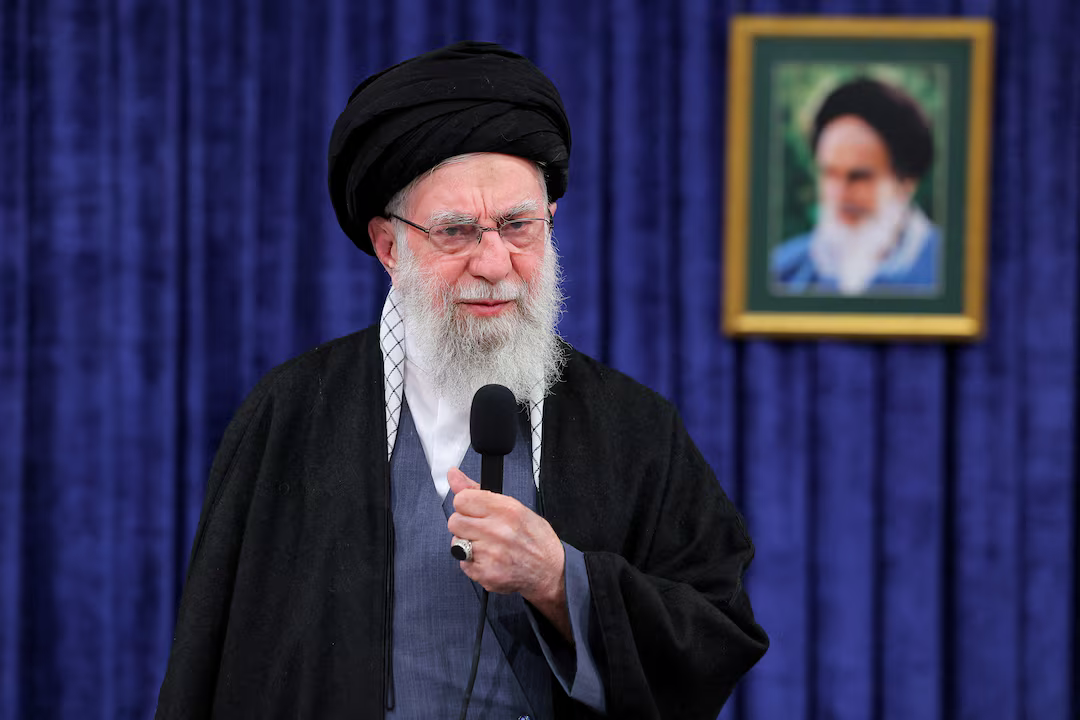
A senior Israeli official informed Reuters on Saturday that Iran’s Supreme Leader Ayatollah Ali Khamenei, who transformed the nation into a formidable anti-U.S. entity and expanded its military reach throughout the Middle East while suppressing ongoing domestic turmoil, was killed in strikes carried out by Israel and the U.S.
Iran provided no immediate confirmation of his fate.
On Saturday, the United States and Israel conducted military strikes against Iran, focusing on its highest-ranking leaders and escalating tensions in the Middle East. President Donald Trump stated that this action would eliminate a security threat to the U.S. and provide an opportunity for the Iranian people to overthrow their government.
Khamenei, 86, assumed the role of Iran’s highest authority in 1989, after the passing of the Islamic Republic’s founder, Ayatollah Ruhollah Khomeini. As the supreme leader, he wielded total authority over Iran’s political, military, and religious institutions, influencing domestic policy and directing foreign relations.
Israel has consistently viewed him as a destabilizing influence in the Middle East, pointing to his support for Iran’s network of militant allies, which includes Palestinian Hamas and Lebanon’s Hezbollah. During the 12-day air war between Israel and Iran in June 2025, Israeli Defense Minister Israel Katz issued a threat to assassinate the supreme leader, asserting that he “cannot continue to exist.”
The conflict witnessed Israel executing a surprise attack that targeted Iran’s underground nuclear facility, resulting in the deaths of high-ranking commanders and nuclear scientists and decimating a significant portion of the military leadership. Khamenei’s assassination strikes yet another devastating blow to a nation already grappling with the consequences of war and economic struggles.
Khamenei maintained the conservative outlook of his predecessor, Khomeini, suppressing the aspirations of elected presidents who aimed for more liberal policies both domestically and internationally. Under his leadership, authorities suppressed ongoing protests and marginalized reformists advocating a more conciliatory approach toward the West.
Under Khamenei, Iran emerged as a formidable regional force opposing the U.S., broadening its influence throughout the Middle East. He supported the 2015 nuclear agreement negotiated with global powers and pragmatic President Hassan Rouhani, which temporarily alleviated Iran’s isolation. However, tensions escalated following Donald Trump’s withdrawal from the accord in 2018 and the reintroduction of sanctions by the U.S. President.
Following the Hamas-led attack on Israel on October 7, 2023, Iran has observed a decline in the strength of its allies. Hamas and Hezbollah faced significant setbacks from Israel, while Syrian President Bashar al-Assad, who had been supported by Tehran for an extended period, was overthrown in December 2024.
The position of Supreme Leader was established following the 1979 revolution and is embedded in Iran’s constitution, granting a senior cleric supreme authority over both the president and parliament. The Assembly of Experts, consisting of 88 members and overseen by a strict watchdog associated with Khamenei, is responsible for the formal selection of the leader.