Newly released documents reveal that Jeffrey Epstein made an attempt to purchase a Moroccan palace just one day prior to his arrest in 2019.
Recently unveiled documents from the US Department of Justice indicate that Jeffrey Epstein sought to acquire a multimillion-dollar palace in Morocco merely one day prior to his arrest in July 2019.
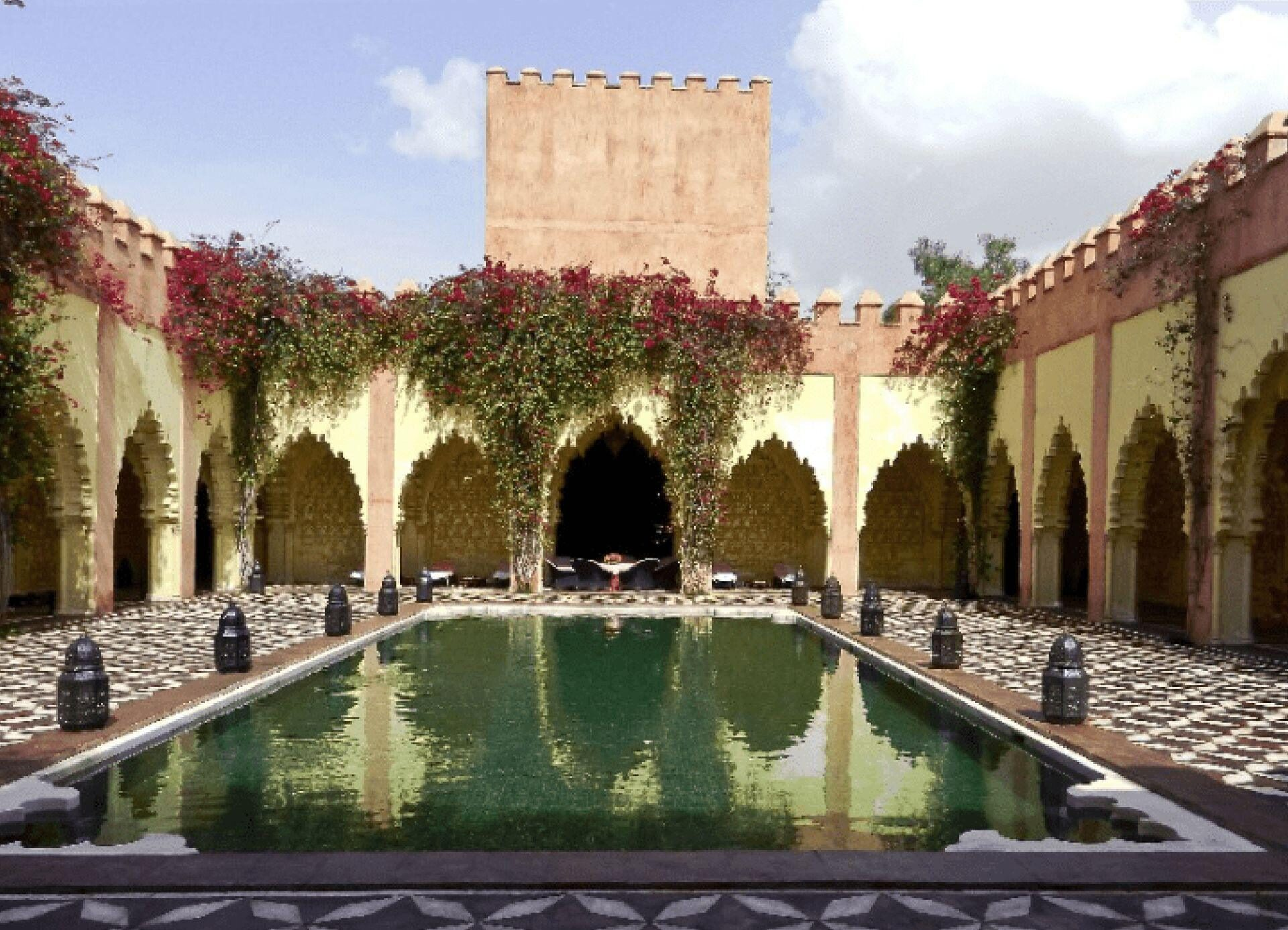
The records indicate that Epstein executed a wire transfer of $14.95 million on July 5, 2019, as part of a deal to purchase the offshore company that possessed Bin Ennakhil, an opulent estate located in Marrakech’s prestigious Palmeraie district. The agreement assessed the property’s worth at €18 million. Epstein was taken into custody the next day after arriving back in New York, facing charges related to sex trafficking.
Three days later, his longtime accountant, Richard Kahn, called off the wire transfer, and the transaction remained unfulfilled. The documents indicate that the payment marked Epstein’s last significant financial action prior to his arrest.
Reports indicate that Epstein had shown interest in the property since 2011. Bin Ennakhil — which translates to “between the palm trees” in Arabic — is portrayed in promotional materials as an architectural marvel, built over three years by 1,300 artisans and embellished with detailed carvings and mosaics.
The discussions with the seller, German businessman Gunter Kiss, were extended and at moments contentious. Initial proposals from Epstein were said to have been turned down as insufficient. As time passed, his partner, Karyna Shuliak, took charge of inspections and negotiations, at one point representing herself as acting on behalf of billionaire investor Leon Black. Ultimately, it became evident that Epstein was the potential buyer, and conversations continued.
Documents reveal that at one stage, a “sale and tax strategy” was suggested, which entailed registering the property at a reduced declared value while transferring shares of the offshore company at an elevated amount. Kensington Luxury Properties, which managed elements of the transaction, refuted any claims of unethical conduct, asserting that the arrangement adhered to Moroccan tax regulations.
“This transaction did not violate any tax regulations,” Mr. Leon informed the BBC. “Mr. Epstein sought to pay registration fees in Morocco, despite having no obligation to do so… to ensure the property was owned in his own name.”
Morocco lacks an extradition treaty with the United States, leading to speculation in local media that Epstein might have considered the country as a possible refuge. Nevertheless, the released files do not provide any direct evidence that he mentioned Morocco as a refuge from US authorities.
An anonymous former associate suggested that the transaction indicated Epstein “had no clue” about his impending arrest, while also acknowledging that Morocco could have been a place where he could “live like a king.”
Epstein’s connections to Morocco trace back to the early 2000s. Virginia Giuffre, a key accuser, stated in her memoir that Epstein and Ghislaine Maxwell arranged for her to be flown to Tangier to evaluate Moroccan-style interior designs for his private island.
In 2002, Epstein was present at the wedding of Morocco’s King Mohammed VI, accompanied by Maxwell, allegedly at the invitation of former US President Bill Clinton. Following a jail sentence in 2008 for soliciting underage sex, his interest in Morocco seemed to grow, with documents indicating he sought help in locating property in Marrakech as early as 2010.
Although the acquisition of the palace did not come to fruition, the recently revealed documents provide new insights into Epstein’s financial activities and international ties in the period preceding his arrest — and prompt additional inquiries into his worldwide network and motives.