US World Cup Host Cities Alert Congress About Security Risks Due To Funding Freeze
Officials from US host cities caution that the freezing of federal security funds and inadequate coordination pose significant risks to the preparations for the 2026 World Cup.
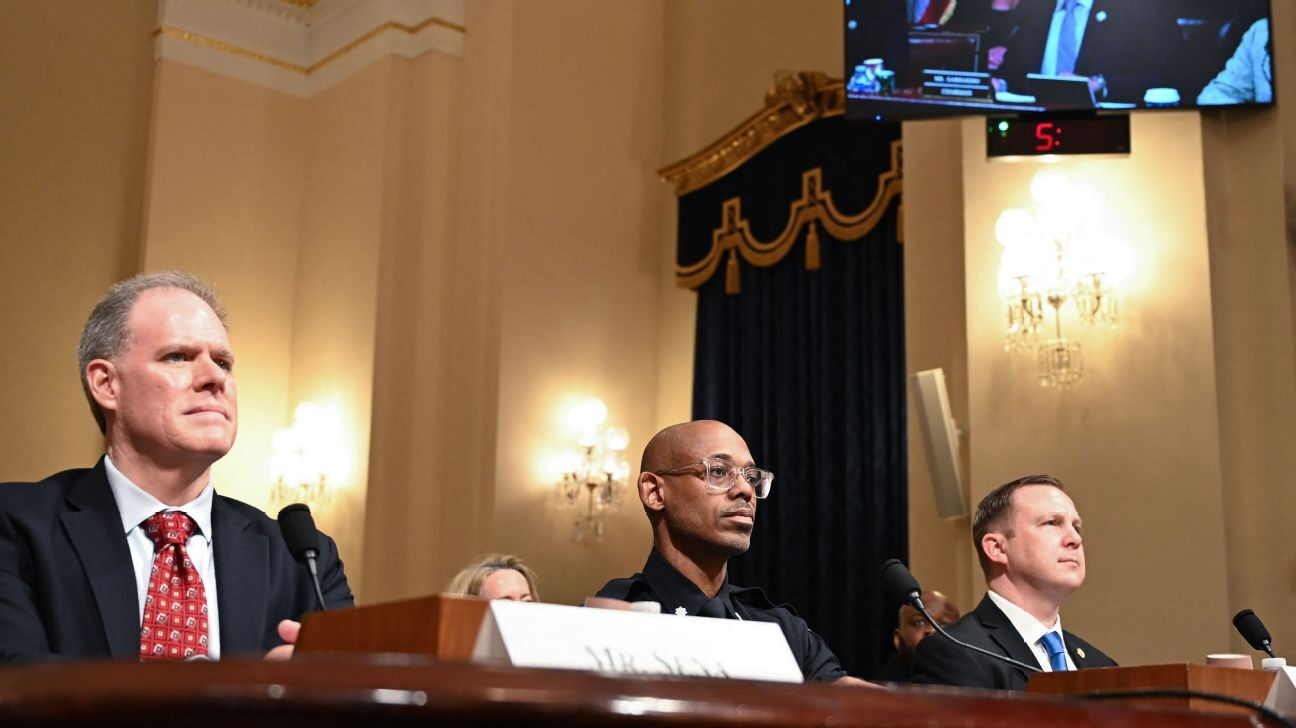
On Tuesday, local officials from cities hosting matches in the 2026 FIFA World Cup warned the United States Congress that issues related to security, coordination, and halted federal funding could threaten preparations with just over 100 days left before the tournament starts.
During their testimony before the US House Homeland Security Committee, officials emphasized the critical necessity of releasing security funds from the Federal Emergency Management Agency (FEMA), which have been held up due to a continuing funding freeze at the US Department of Homeland Security.
The United States is among the three host nations for the tournament, set to commence on June 11 in Mexico City. Matches in the United States commence on June 12 in Los Angeles, with the final scheduled for July 19 in New York City and New Jersey.
Lawmakers were informed by officials that the lack of access to federal funding is obstructing security planning for stadiums, transportation networks, hotels, training sites, and fan events.
The federal government had allocated $625 million for the 11 U.S. host cities to improve security and preparedness, along with an extra $250 million to assist cities in detecting, identifying, and mitigating drone threats, as stated by FEMA.
However, agencies’ challenges in coordinating their security operations have cast doubt on planning efforts.
“I believe that if we had engaged in this discussion two years ago, we would be in a more favorable position,” stated Mike Sena, president of the National Fusion Center Association.
“… However, as we near these games, we find ourselves lacking the necessary capability.”
Sena cautioned that the World Cup, in conjunction with the 2028 Summer Olympics, will pose one of the most significant homeland security challenges the United States has encountered in many years.
“For events of this scale, that approach entails significant risks potentially being overlooked,” he stated, pointing to what he characterized as inadequate coordination between local agencies and the federal government.
Witnesses and lawmakers highlighted various emerging risks, such as threats from drones, human trafficking, the potential presence of U.S. Immigration and Customs Enforcement agents at games, and recent drug cartel violence in Guadalajara, prompting concerns regarding security measures in Mexico.
Concerns arose on the 11th day of a freeze on Homeland Security funding after tragic shootings of U.S. citizens by ICE officers in Minneapolis.
Local organizers have cautioned that insufficient funding is already jeopardizing significant fan events planned for the tournament.
Ray Martinez, the chief operating officer of the Miami World Cup Host Committee, stated that Miami may soon have to abandon crucial plans if funding does not come in promptly.
“We’re 107 days away from the tournament, but even more crucially, we’re roughly 70-something days from kicking off the construction of the Fan Fest.” “We must make these decisions,” Martinez declared.
“…Failing to receive this funding could have dire consequences for our planning and coordination.”
Miami has requested approximately $70 million in federal security funding, and officials indicate that the end of March serves as a critical deadline for decisions regarding major events like the Fan Fest concerts.
Lawmakers cautioned that the shutdown is hindering FEMA staff from processing grants.
Carlos Gimenez, a Republican representative from Florida, stated during the hearing that the funding would remain on hold until the government reopens.
“FEMA staffers responsible for processing grants are currently not working due to the partial shutdown, and funding will not be available until the government reopens,” Gimenez stated.
Several police departments in the host cities have expressed concerns that they are unable to recruit or deploy additional officers without federal assistance.
Joseph Mabin, deputy chief of the Kansas City (State of Missouri) Police Department, stated that the funds are crucial for his city’s preparations.
“The release of this funding is essential for Kansas City to bring on more personnel in preparation for the World Cup,” Mabin stated, emphasizing that the department currently does not have enough manpower to tackle all potential threats.
Kansas City (State of Missouri) is set to host six matches and will act as a base camp for four teams.
Officials revealed that the frozen funding affects the salaries of numerous workers involved in coordinating security planning.
Travis Nelson, deputy chief of staff and homeland security adviser to the governor of Maryland, characterized the situation as a pivotal moment.
“This moment is crucial,” Nelson remarked, likening the situation to a game of Jenga where a single misstep “will lead to the entire structure collapsing.”
At the same time, local officials in Foxborough have been seeking clarity regarding the source of approximately $8 million required to support public safety operations for events at Gillette Stadium, the home of the New England Patriots.
The White House World Cup Task Force, under the leadership of Andrew Giuliani, has not yet provided a response to inquiries regarding the delays in funding.