The Supreme Court addresses US-Cuba business disputes involving billions of dollars
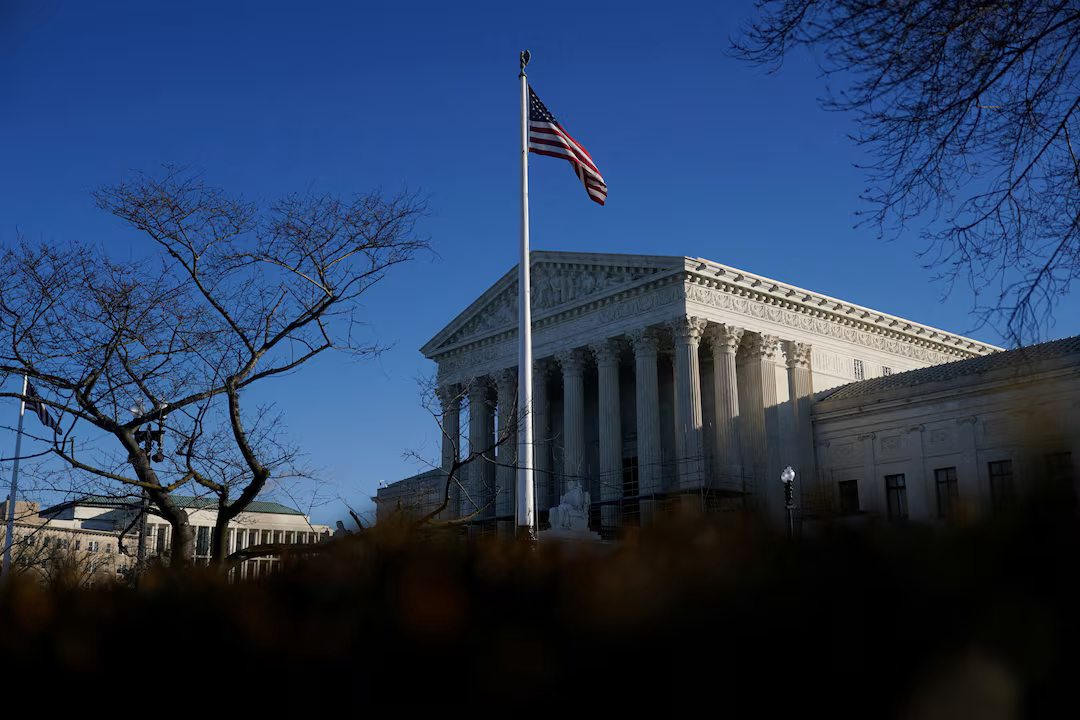
The U.S. Supreme Court is poised to examine legal issues stemming from the complex history of U.S.-Cuban relations as it reviews the extent of a 1996 law that allows U.S. nationals to pursue compensation for property seized by the communist-led Cuban government.
On Monday, the justices will hear arguments in two cases focused on the federal law known as the Helms-Burton Act. One case involves the U.S. oil giant ExxonMobil, while the other pertains to the cruise lines Carnival, Royal Caribbean, Norwegian Cruise Line, and MSC Cruises.
One provision of the law, known as Title III, permits lawsuits in U.S. courts against entities that “traffic” in property seized by the Cuban government following the revolution that led to Fidel Castro’s rise to power in 1959.
Although the two cases address different legal matters, they both highlight the extent of the remedy that Congress envisioned for Title III. The Supreme Court has the chance to remove obstacles that claimants encounter when pursuing lawsuits under the Helms-Burton Act in both instances.
The justices have not previously interpreted Title III, which Congress empowered the U.S. president to suspend if considered “necessary to the national interests of the United States.”
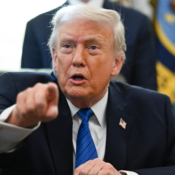
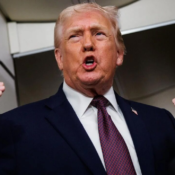
Title III remained inactive for an extended period because of presidential choices to halt its implementation. President Donald Trump, known for his firm stance on Cuba, lifted that suspension during his initial term, resulting in a surge of approximately 40 lawsuits filed in 2019 and 2020 that have gradually progressed through the judicial system.
The Trump administration has labeled Cuba as “an unusual and extraordinary threat” to U.S. national security, halting the flow of Venezuelan oil to the Caribbean island and warning of potential tariffs on any nation providing it with fuel.
Billions of dollars in claims
After the revolution, Cuba’s newly established communist government took control of U.S. properties valued in the billions, encompassing factories, sugar mills, oil refineries, and power plants.
The Helms-Burton Act established the U.S. trade embargo against Cuba, which had been in place by presidential order since the administration of President John Kennedy in the 1960s.
Title III provided a legal remedy for U.S. nationals who lost their property. Plaintiffs in this situation may pursue increased damages in federal courts against entities that are aware of their use of the property, which includes both state-owned entities from Cuba and multinational corporations.
Presidents Bill Clinton, George W. Bush, and Barack Obama all chose to suspend Title III to prevent diplomatic conflicts with allies such as Canada and Spain, whose companies had invested in Cuba, until Trump lifted the suspension in 2019. The State Department stated at that time that Trump’s action would “increase pressure on the Cuban government” and “punish those who profit from the rightful property of Americans.”
In a Supreme Court case, Exxon is pursuing over $1 billion in compensation from CIMEX, a Cuban state-owned company, for oil and gas assets that were seized in 1960. A small company that constructed docks in Havana’s port before the revolution is pursuing compensation from the four cruise lines that have utilized the terminal.
Exxon, having initiated its lawsuit in Washington in 2019, has requested that the justices overturn a lower court’s 2024 ruling that determined Cuban state-owned enterprises facing claims under the Helms-Burton Act may invoke the defense of foreign sovereign immunity. The legal doctrine typically protects foreign governments and their representatives from lawsuits in U.S. courts.
Exxon’s lawyers stated in a 2024 court filing that the lower court’s decision “imposes yet another in a long line of barriers to recovery for victims of the Castro government’s illegal confiscations.”
CIMEX has contended in court documents that the 2024 decision ought to be maintained, as it “both respects and safeguards congressional judgment in this sensitive area.”
Legal experts indicated that the 2024 decision, along with other rulings interpreting Helms-Burton, has rendered it expensive and time-intensive for U.S. businesses to pursue compensation from Cuban entities.
“The time and resources needed have been quite overwhelming for many claimants,” stated Washington lawyer Jared Butcher, who represents clients in commercial litigation.
DISPUTE REGARDING CRUISE SHIP
The other case on Monday does not involve sovereign immunity, as the cruise companies’ defendants are private entities rather than state-owned organizations. The central question in that case is whether a claimant under the Helms-Burton Act is required to demonstrate that they would currently possess a property interest in the assets in question had they not been nationalized.
In 2019, the Havana Docks Corporation, a U.S. company that constructed docks in the port of Havana before the revolution, initiated a lawsuit against the cruise lines in federal court in Florida. Shortly after assuming power, Castro revoked the company’s legal right to the docks.
The four cruise operators utilized the docks between 2016 and 2019, following the easing of travel restrictions on Cuba by Obama. In a collaborative court submission, the companies asserted that it is illogical for them to “pay hundreds of millions of dollars for adhering to the executive branch’s guidance in resuming travel to Cuba.”
A federal judge determined that the cruise companies were liable for a total of $440 million, stating that they had engaged in the trafficking of confiscated property. An appeals court dismissed those judgments last year, underscoring the challenges faced by claimants under the Helms-Burton Act.
“Plaintiffs are facing significant challenges in recovering under the Helms-Burton Act for numerous reasons, and it is likely more difficult to achieve recovery than Congress anticipated when it enacted the act in 1996,” stated Vanderbilt Law School professor Ingrid Brunk. “However, that does not imply that every plaintiff is entitled to victory.”