Trump announces that the US global tariff rate will increase from 10% to 15%, following the court ruling
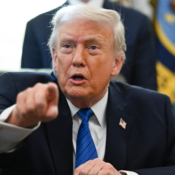
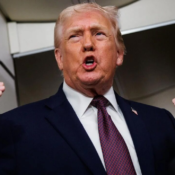
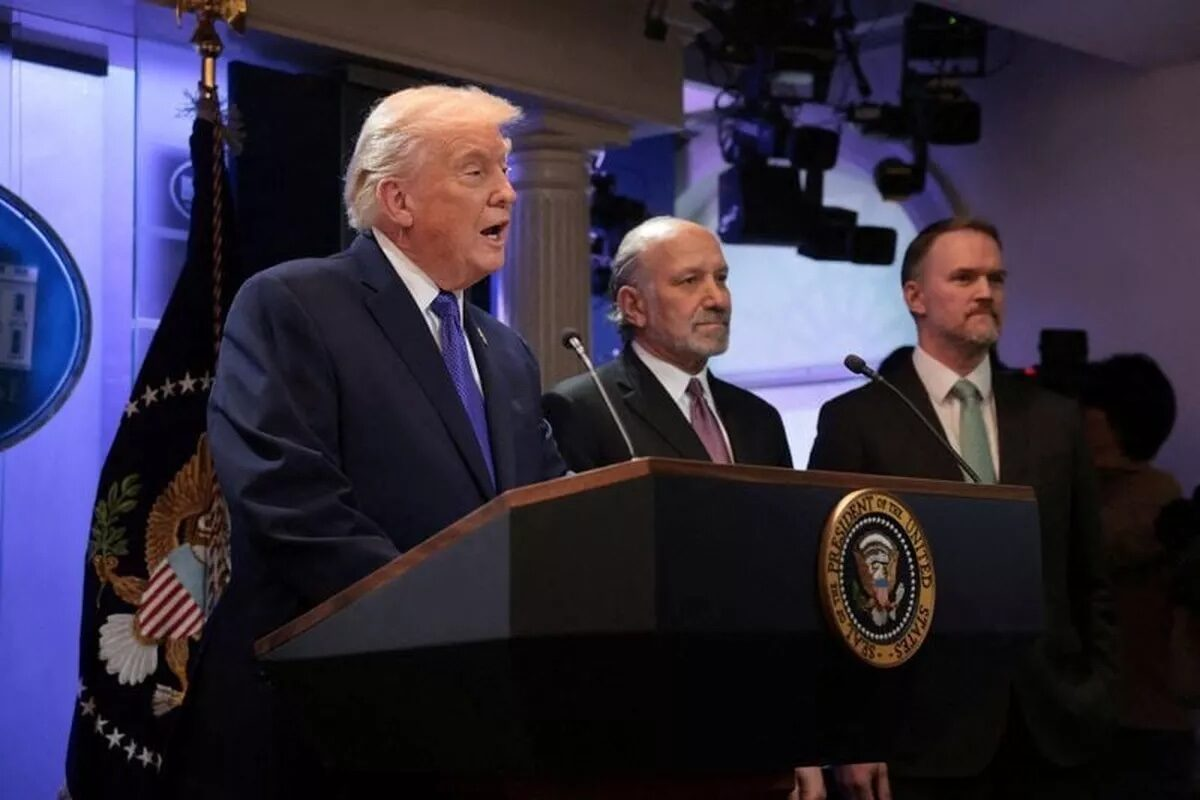
President Donald Trump announced on Saturday that he will increase a temporary tariff from 10% to 15% on U.S. imports from all countries, reaching the maximum level permitted by law, following the U.S. Supreme Court’s decision to invalidate his earlier tariff program.
Less than 24 hours had passed since Trump announced a 10% universal tariff on Friday, following the court’s ruling. The court determined that the president had exceeded his authority by enacting a series of increased rates under the pretext of an economic emergency law.
The new levies are based on a distinct yet unproven law, referred to as Section 122, which permits tariffs of up to 15% but mandates congressional approval for any extension beyond 150 days. No president has ever utilized Section 122 before, and doing so may result in additional legal disputes.
Trade experts and congressional aides express doubt that the Republican-majority Congress will extend the tariffs, particularly in light of polls indicating that an increasing number of Americans attribute higher prices to these duties.
TRUMP EXPLORES ALTERNATIVE METHODS FOR TARIFF IMPLEMENTATION
On Saturday, Trump announced in a social media post that he plans to utilize the 150-day timeframe to focus on implementing other “legally permissible” tariffs. The administration plans to utilize two additional statutes that allow for import taxes on certain products or countries following investigations related to national security or unfair trade practices. “I, as President of the United States of America, will be, effective immediately, increasing the 10% worldwide tariff on countries, many of which have been ‘ripping’ the U.S. off for decades without retribution (until I came along!), to the fully permitted and legally validated 15% level,” he stated in a Truth Social post.
The Section 122 tariffs feature exemptions for specific products, such as critical minerals, metals, and energy products, as stated by the White House.
Wendy Cutler, a former senior U.S. trade official and senior vice president at the Asia Society think tank, expressed her surprise that Trump did not choose the maximum Section 122 rate on Friday. She noted that his swift decision highlighted the uncertainty that trading partners were experiencing.
The Supreme Court’s ruling, written by Chief Justice John Roberts, determined that the law utilized by Trump for the majority of his tariffs, the International Emergency Economic Powers Act, did not provide the president with the authority he asserted.
Roberts was accompanied in the majority by fellow conservatives Neil Gorsuch and Amy Coney Barrett, both appointed by Trump, along with the court’s three liberal justices.
Trump expressed intense anger over the ruling, labeling the justices in the majority as “fools” and specifically referring to Gorsuch and Barrett as “embarrassments,” while pledging to persist in his global trade war.
Several foreign leaders expressed their approval of the decision. On Saturday, French President Emmanuel Macron stated that the ruling demonstrated the importance of having counterweights to power and upholding the rule of law in democracies.
German Chancellor Friedrich Merz expressed his anticipation that the decision would alleviate the pressures faced by German companies. He mentioned that he would take advantage of his upcoming trip to the U.S. to emphasize that “tariffs harm everyone.”
Trade agreements should be respected: Greer
Trump has leveraged tariffs, or the potential of implementing them, to negotiate trade agreements with other nations.
Following the court’s ruling, Trump’s trade representative, Jamieson Greer, stated to Fox News on Friday that those nations are required to uphold agreements, even if they stipulate rates that exceed the Section 122 tariffs.
According to Greer, exports to the U.S. from nations like Malaysia and Cambodia will still be subject to their agreed-upon tax rates of 19%, although the universal rate is lower.
Airlangga Hartarto, Indonesia’s chief negotiator for U.S. tariffs, stated that the trade deal between the two countries, which established U.S. tariffs at 19% and was signed on Friday, continues to be effective despite the court ruling.
The ruling may bring favorable developments for nations such as Brazil, which has yet to reach an agreement with Washington to reduce its 40% tariff rate but could potentially witness a decrease to 15%, at least for a limited time.
As November’s midterm elections approach, Trump’s approval rating regarding his economic management has consistently fallen throughout his year in office, with 34% of respondents expressing approval and 57% indicating disapproval in a Reuters/Ipsos poll that concluded on Monday.
Voters continue to prioritize affordability as a significant issue. Democrats, needing to secure just three Republican-held seats in the U.S. House of Representatives this November to achieve a majority, have attributed the increasing cost of living to Trump’s tariffs.