Exclusive: Cuban security forces withdraw from Venezuela amid increasing US pressure
Cuban security advisers and doctors are departing Venezuela as Interim President Delcy Rodriguez’s government encounters significant pressure from Washington to dismantle Latin America’s most impactful leftist alliance, according to 11 sources familiar with the situation.
Venezuela’s Interim President Delcy Rodriguez has chosen to rely on Venezuelan bodyguards for her protection, as reported by four sources. This marks a departure from deposed president Nicolas Maduro and his predecessor, the late president Hugo Chavez, who both depended on elite Cuban forces.
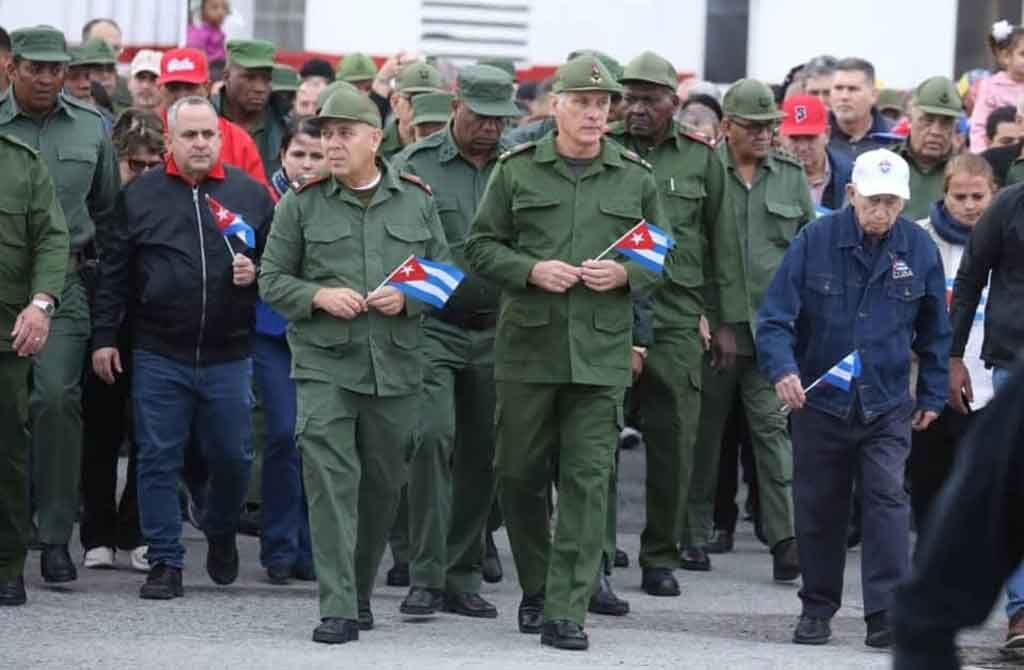
The Cuban government reports that thirty-two Cubans lost their lives in the U.S. military operation that resulted in the capture of Maduro on January 3. The soldiers and bodyguards were integral to a comprehensive security arrangement between Caracas and Havana that commenced in the late 2000s. This involved Cuban intelligence agents being integrated within the military and Venezuela’s powerful DGCIM counterintelligence unit, which played a crucial role in identifying and eliminating domestic opposition.
“The Cuban influence was crucial” to the survival of the Chavista government, stated Alejandro Velasco, an associate professor of history at New York University and a specialist on Venezuela.
According to a former Venezuelan intelligence official, several Cuban advisers have been dismissed from their positions within DGCIM. According to two sources, several Cuban medical workers and security advisers have recently traveled from Venezuela to Cuba on flights.
A source affiliated with Venezuela’s ruling party indicated that the Cubans were leaving under Rodriguez’s directives as a result of U.S. pressure. The other sources did not clarify whether the Cubans were compelled to leave by the new Venezuelan leadership, chose to depart voluntarily, or being called back by Havana.
The choice to exclude Cubans from the presidential guard and the counterintelligence unit has not been reported before.
TRUMP SEEKS TO DISRUPT VENEZUELA-CUBA RELATIONS
Before the operation to oust Maduro, thousands of Cuban doctors, nurses, and sports coaches were engaged in Venezuela through welfare programs initiated under Chavez. In return, Venezuela supplied Cuba with a vital source of oil.
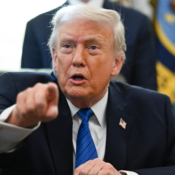
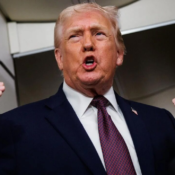
In the wake of the U.S. attack, President Donald Trump pledged to terminate the security ties between Venezuela and Cuba. “For many years, Cuba relied heavily on substantial quantities of oil and financial support from Venezuela.” In exchange, Cuba offered ‘security services’ to the last two Venezuelan dictators, BUT THAT HAS CHANGED!” he posted on Truth Social on January 11.
A White House official addressed inquiries regarding U.S. pressure on Venezuela to sever its connections with Cuba, stating that the U.S. maintains “a very good relationship with the leaders of Venezuela” and believes that Rodriguez’s “own self-interest aligns with advancing our key objectives.”
Ending Venezuela’s ties with Cuba is a component of Washington’s larger plan to overthrow Havana’s communist government. Since mid-December, Washington has imposed a blockade on Venezuela, preventing the shipment of oil to Cuba and severely impacting the island’s economy.
An official stated that the U.S. government is engaging in discussions with Cuba, urging its leaders to reach an agreement.
The Cuban government has expressed its willingness to engage in dialogue on equal footing, while denouncing the oil blockade and pledging to oppose U.S. intervention.
Requests for comment went unanswered by both the Cuban and Venezuelan governments. The two nations have openly confirmed their ongoing partnership.
Rodriguez, the daughter of a former Marxist guerrilla, has consistently supported Maduro and is a member of Venezuela’s ruling Socialist Party. According to ten U.S. and Venezuelan sources, she maintains a personal closeness to the Cuban government.
On January 8, Rodriguez joined Cuban Foreign Minister Bruno Rodriguez at a memorial service adorned with flowers in Caracas, honoring the victims of the U.S. attack. “To the courageous Venezuelan people, we convey Cuba’s profound solidarity,” Bruno Rodriguez stated at the event, before proclaiming the rallying cry of one of the leaders of the Cuban revolution, Ernesto “Che” Guevara: “Hasta la victoria siempre.”
Later in January, Delcy Rodriguez spoke by phone with Cuban President Miguel Diaz-Canel, stating afterwards that the two countries remained “united.” Following the same call, Diaz-Canel expressed Cuba’s dedication to “continue strengthening the historic relations of brotherhood and cooperation.”
Concerning the relationship between the two nations, a White House official remarked: “President Trump recognizes that they must make specific statements for domestic political purposes.”
RETURN FLIGHTS TO CUBA
A source familiar with the Cuban government’s perspective indicated that some military personnel injured in the U.S. attack have returned to Cuba, while others continue to be active in Venezuela. According to the source, numerous Cuban doctors are still delivering care in Venezuela.
In early January, Cuba’s state-run media reported that a suspension of commercial flights and the closure of Venezuelan airspace had resulted in a backlog, hindering Cuba’s ability to repatriate doctors returning from vacations or completing their missions in Venezuela. Reports indicated that those flights resumed the week following the U.S. attack on January 3.
A U.S. source familiar with the matter indicated that although the Cuban presence is decreasing, it is probable that some undercover intelligence agents will continue to be present in the country to monitor the unfolding political situation.
Frank Mora, who held the position of U.S. ambassador to the Organization of American States during the Biden administration, remarked, “Rodriguez is treading very carefully.”
“She aims to maintain a distance from the Cubans until the situation stabilizes and her grip on power is assured, yet she doesn’t want to completely abandon them,” Mora stated.
According to four sources familiar with the matter, a number of Cuban military advisers continue to operate in Venezuela. According to a former police officer, Cuban professors are still engaged in teaching at the state university for police and security forces, referred to as UNES.
John Polga-Hecimovich, a professor at the U.S. Naval Academy in Maryland, has examined the influence of Cuban security advisers in Venezuela. He noted that the impact of the Cuban counterintelligence initiative is still apparent in Caracas, where Maduro’s closest allies continue to hold power.
“While the Cubans were unable to safeguard Maduro, they significantly contributed to maintaining the Chavista government’s hold on power,” Polga-Hecimovich stated. “The measures taken to ensure stability were highly effective.”