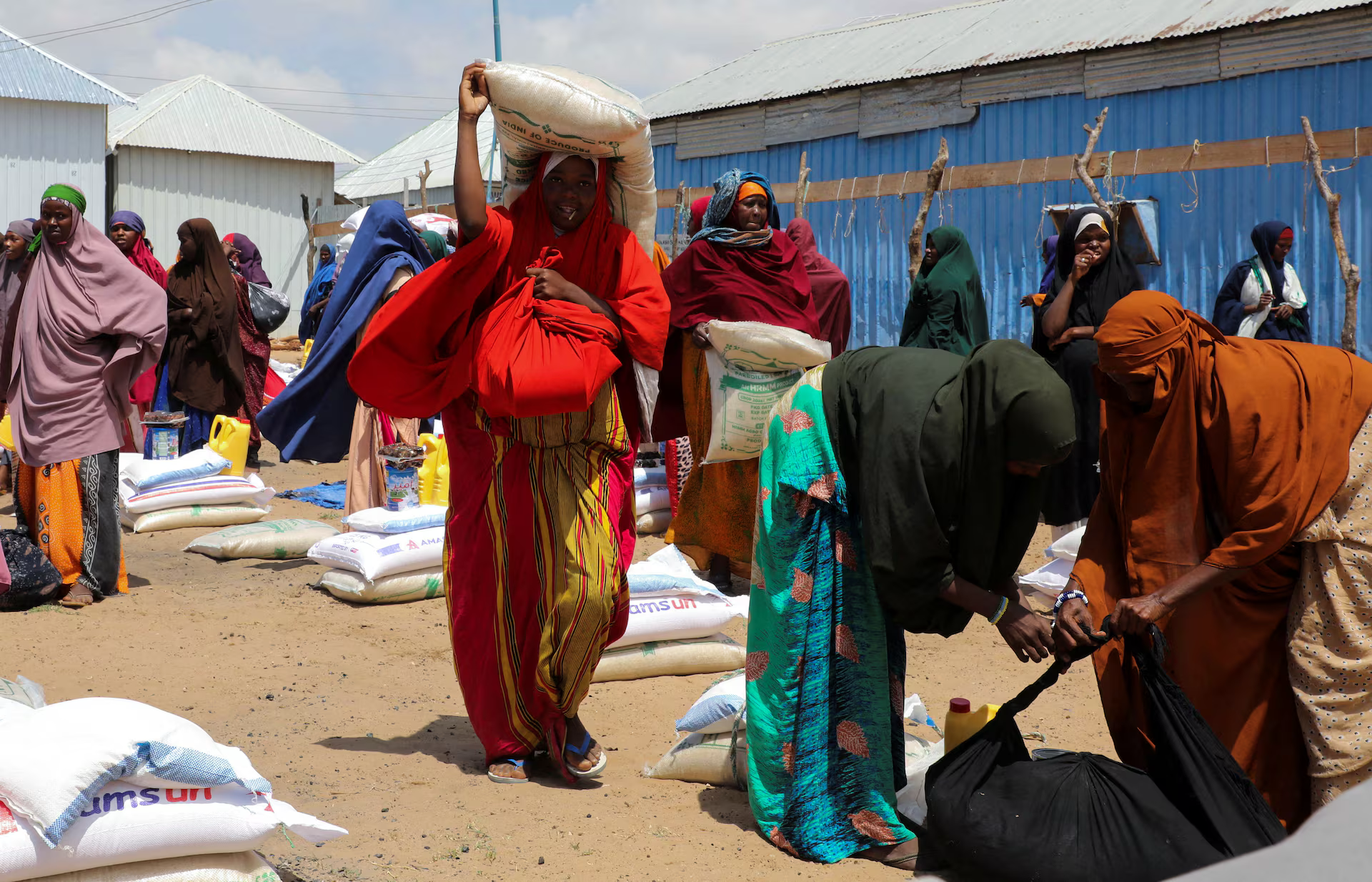
The U.N. World Food Programme announced on Friday that its critical food and nutrition assistance in Somalia may come to a standstill by April if new funding is not obtained, endangering millions of individuals with the threat of escalating hunger.
An estimated 4.4 million individuals are grappling with crisis-level food insecurity, with close to one million enduring severe hunger, attributed to the consequences of failed rainy seasons, conflict, and diminishing humanitarian funding, according to the WFP. “The situation is deteriorating at an alarming rate,” stated Ross Smith, WFP director of emergency preparedness and response. “Families have lost everything, and many are already on the verge of collapse.” “Without prompt emergency food assistance, the situation will deteriorate rapidly,” Smith stated.
In November, Somalia announced a national drought emergency following a series of seasons marked by inadequate rainfall, with neighboring countries in the region also experiencing similar challenges.
The WFP, the largest humanitarian agency in Somalia, announced that it has reduced assistance from 2.2 million people earlier this year to just over 600,000 because of funding shortages. The nutrition programs for pregnant and breastfeeding women, as well as for young children, have seen a significant decline.
The agency indicated that it is at a pivotal juncture reminiscent of a crisis in 2022, when widespread international assistance helped avert a famine. The organization is looking to secure $95 million to maintain its operations from March through August.
“Smith stated that if our already diminished assistance ceases, the humanitarian, security, and economic repercussions will be catastrophic, with impacts extending well beyond the borders of Somalia.”