A US official has pointed to seismic evidence indicating that an explosion occurred at China’s Lop Nor nuclear test site in 2020.
A senior United States official has revealed what he characterized as new evidence suggesting an alleged underground nuclear test carried out by China in June 2020.
During a speech at the Hudson Institute in Washington on Tuesday, Assistant Secretary of State Christopher Yeaw reported that seismic data from a monitoring station in Kazakhstan recorded a “explosion” with a magnitude of 2.75 on June 22, 2020.
The event was said to have occurred approximately 450 miles away at China’s Lop Nor nuclear test site, situated in the western part of the country.
Yeaw, a former intelligence analyst holding a doctorate in nuclear engineering, stated that the seismic signature did not align with either mining activity or a natural earthquake.
He stated that additional analysis reinforced his conviction that the event was “a singular explosion” aligned with a nuclear test.
Nonetheless, the Comprehensive Nuclear-Test-Ban Treaty Organization (CTBTO), responsible for a worldwide monitoring system for nuclear explosions, stated that there was inadequate data to definitively ascertain the cause of the seismic activity.
The organization confirmed that its PS23 station in Kazakhstan detected two minor seismic events 12 seconds apart on the same date, but noted that the signals were significantly below the detection threshold usually linked to nuclear explosions.
China has firmly rejected the accusation. In a statement, Liu Pengyu, spokesperson for the Chinese embassy, characterized the claim as “entirely unfounded” and accused Washington of engaging in political manipulation to justify a possible return to US nuclear testing.
The disagreement arises in the context of heightened tensions regarding nuclear arms control. Former US President Donald Trump has called on China to collaborate with the United States and Russia in discussions aimed at establishing a successor to the New START treaty, which lapsed earlier this month. Beijing has dismissed requests for a trilateral agreement, contending that its nuclear stockpile is considerably smaller than those of Washington and Moscow.
Although China signed the Comprehensive Nuclear Test Ban Treaty in 1996, it has yet to ratify it. The United States is a signatory to the agreement, but it has not yet ratified it. China’s most recent recognized underground nuclear test took place in 1996, whereas the United States conducted its last test in 1992.
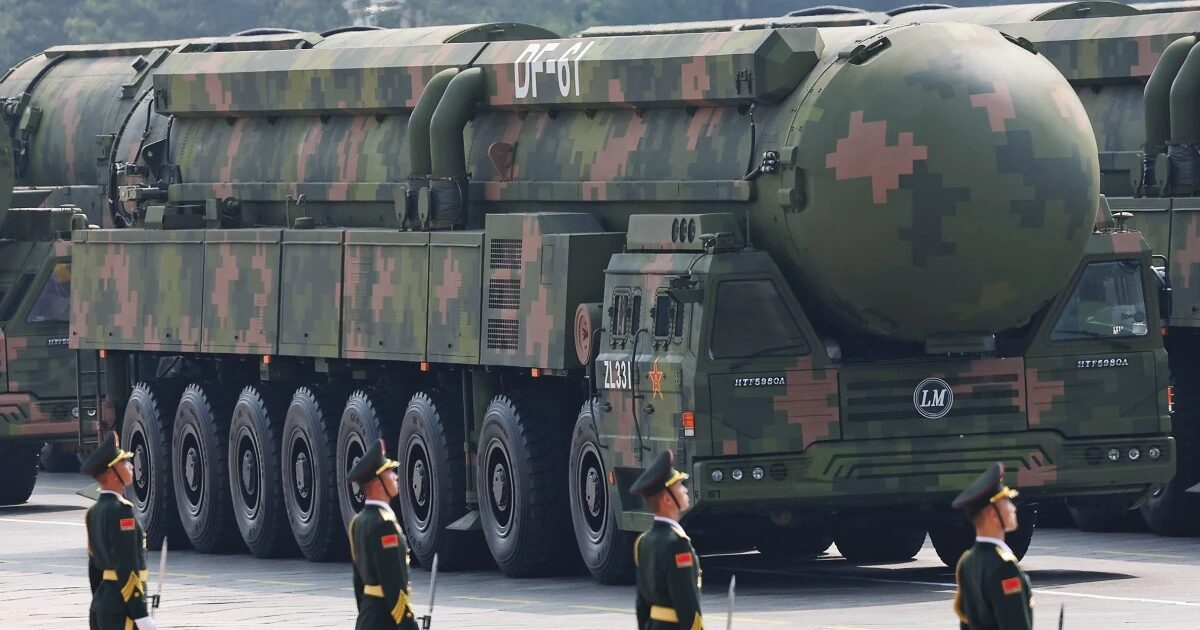
The Pentagon estimates that China currently has over 600 operational nuclear warheads and anticipates that this number could surpass 1,000 by 2030, as Beijing continues to enhance its strategic nuclear capabilities.
Ongoing investigations and international scrutiny continue regarding the 2020 seismic event.