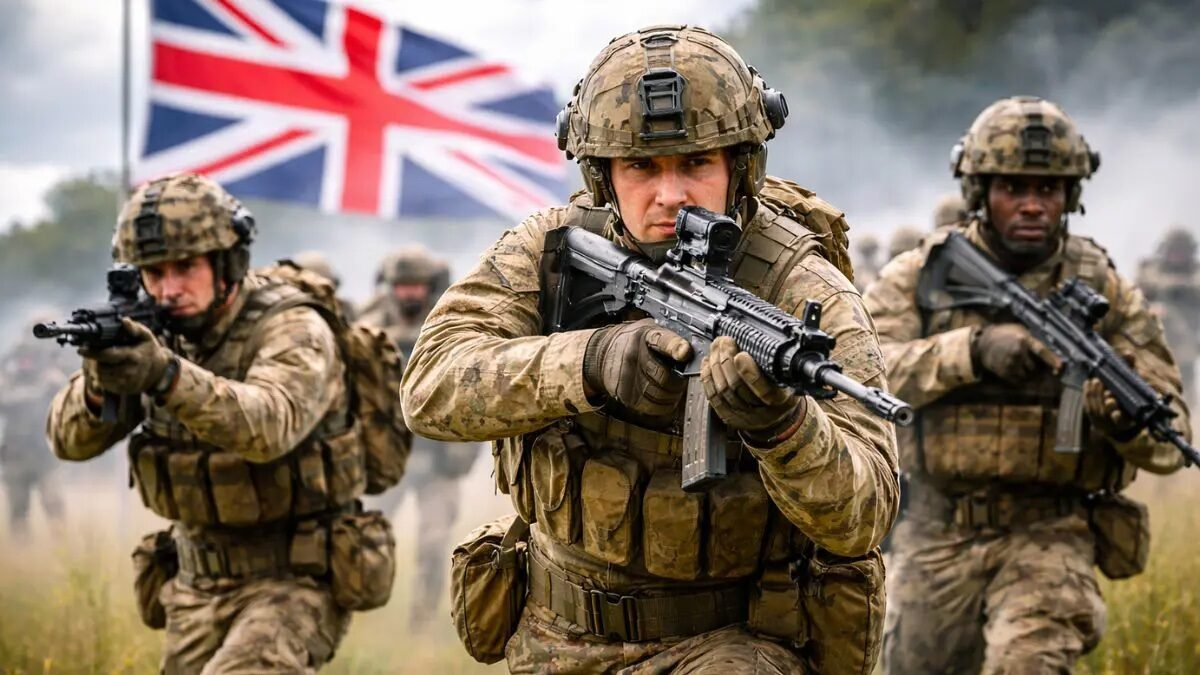
The UK government is contemplating a significant increase in defence spending to tackle security challenges and fulfill long-term military obligations.
Prime Minister Sir Keir Starmer is contemplating a swift increase in UK defence spending, with the possibility of allocating billions of pounds beyond earlier projections, according to information obtained by the BBC.
Downing Street is considering proposals to achieve a target of allocating 3% of gross domestic product (GDP) to core defence by the conclusion of the current parliament, which may extend until 2029. This would advance an ambition that was initially planned for the next parliament by several years.
Sir Keir pledged last year to increase defence spending to 2.5% of GDP by April 2027, with a longer-term goal of achieving 3%. During his address at the Munich Security Conference over the weekend, he indicated a change in urgency. “In order to address the broader threat, it is evident that we must increase our spending more rapidly,” he conveyed to global leaders.
The decision arises in response to increasing worries regarding escalating defense expenditures and the intensifying global security challenges, especially posed by Russia. The Ministry of Defence (MOD) is said to require an extra £28bn over the next four years to fulfill current obligations. In January, Chief of the Defence Staff Sir Richard Knighton informed MPs that the existing budgets were insufficient to meet all requirements at the intended speed.
The Office for Budget Responsibility states that increasing defence spending to 3% of GDP by 2029–30 would incur an extra annual cost of £17.3bn. The Institute for Fiscal Studies estimates that the figure may reach approximately £13–14bn when planned increases are taken into account. In the previous year, the UK allocated approximately £66 billion to defence, which corresponds to about 2.3% of its GDP.
A final decision has yet to be made, and Treasury officials are reportedly exercising caution regarding the fiscal implications. Some in Whitehall contend that hastening the target would showcase the UK’s dedication to NATO obligations, which includes a long-term commitment to achieve 3.5% of GDP on core defence by 2035. However, others caution about the potential strain on public finances.
Reportedly, potential funding options under discussion include reallocating funds from overseas development assistance, net-zero programmes, or significant infrastructure projects like the high-speed rail line connecting London and Birmingham. Another possibility is borrowing more, although Treasury officials are cautious about violating fiscal rules and disturbing financial markets.
Defence sources indicate that achieving the 3% target sooner would be positively received by the United States and strengthen the UK’s leadership role within NATO. In Munich, Sir Keir positioned the enhancement of defence investment as an essential strategy. “We need to strengthen our hard power, as it is the essential currency of our time,” he stated. “We need to invest more, provide more, and collaborate more.”
Foreign Secretary Yvette Cooper expressed a similar view, characterizing the government’s plans as the most significant ongoing rise in defence spending since the Cold War. She stated, “We will need to go further, of course we will need to go further, because we must strengthen our defence and our partnerships to achieve this.”
A spokesperson for the MOD refrained from addressing speculation, stating, “We do not comment on speculation.” The government is committed to ensuring effective outcomes for defence. We are implementing the most significant and ongoing rise in defence expenditure since the Cold War, allocating an additional £5bn for defence in this financial year alone.
The discussion now focuses on whether the UK is capable of accelerating its efforts — and the means by which it would finance such a move — as geopolitical pressures grow stronger.