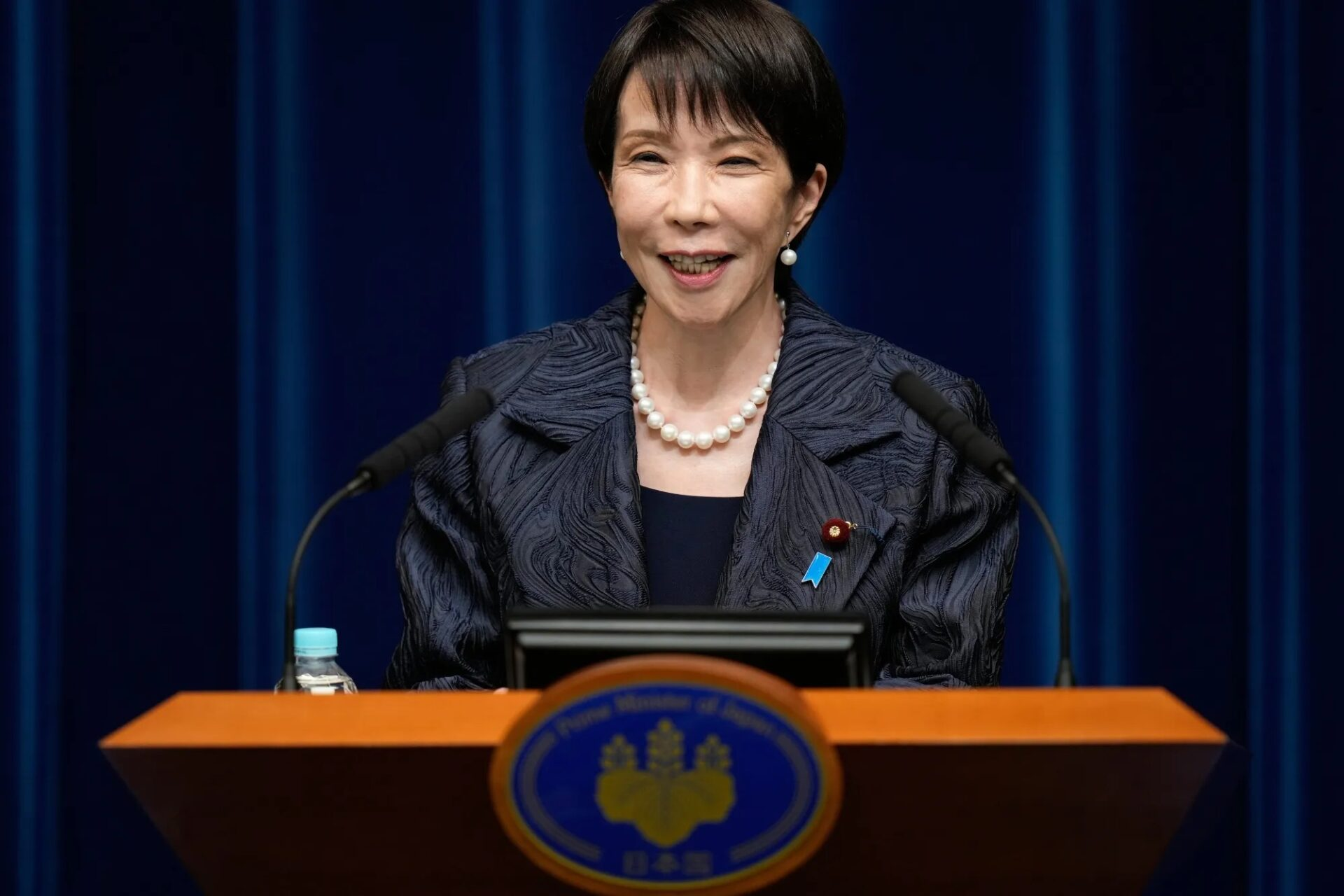
Japan’s economy shows minimal growth, increasing pressure on PM Takaichi’s agenda
Japan’s economy experienced a modest growth of 0.2% in Q4, underscoring a sluggish recovery and placing pressure on PM Takaichi’s policies.
Japan’s economy experienced a setback, returning to weak growth in the fourth quarter. This development raises new concerns for Prime Minister Sanae Takaichi’s administration, as inflation and elevated living costs persist in undermining consumer confidence and domestic demand.
On Monday, government data revealed that the gross domestic product (GDP) rose by an annualised 0.2% in the October-December period, significantly missing the median market expectation of 1.6% as indicated in a Reuters poll. The reading indicated a modest recovery from a revised 2.6% decline in the prior quarter, yet it underscored that the momentum of recovery is still delicate. In the latest quarter, GDP increased by only 0.1%, falling short of the anticipated 0.4% rise.
“It indicates that the recovery momentum of the economy is not particularly robust,” stated Kazutaka Maeda, an economist at Meiji Yasuda Research Institute. “Consumption, capital expenditure, and exports—areas we anticipated would propel the economy—have simply not performed as robustly as we had hoped.”
Following a decisive election victory, Takaichi’s administration is gearing up for strategic public spending aimed at stimulating consumption and enhancing growth. Analysts indicate that the soft GDP figures highlight the difficulties faced by policymakers, especially as the Bank of Japan (BOJ) persists in increasing interest rates following years of extremely low borrowing costs in the context of ongoing inflation and a depreciating yen.
“PM Takaichi’s initiatives to stimulate the economy through more flexible fiscal policy appear to be well-timed,” stated Marcel Thieliant, head of Asia-Pacific at Capital Economics.
The data is expected to heighten focus on Takaichi’s campaign promise to suspend the consumption tax, a policy matter that has previously caused unease in Japanese markets due to worries about fiscal pressure in a country with the highest debt burden among developed economies.
“In fact, sluggish economic activity increases the likelihood that Takaichi will not only move forward with suspending the sales tax on food but also implement a supplementary budget during the first half of the fiscal year starting in April, rather than waiting until the end of this year,” Thieliant added.
Japanese stocks faltered following the GDP release, whereas bond markets stayed relatively quiet. Analysts forecast that Japan will maintain a steady growth trajectory in 2026; however, the lackluster performance in the fourth quarter indicates potential challenges for the economy to operate at full capacity.
“The ability of the economy to attain sustainable growth hinges on the capacity for real wages to consistently rebound into positive growth,” stated Shinichiro Kobayashi, principal economist at Mitsubishi UFJ Research and Consulting.
This month, a survey conducted by the Japan Center for Economic Research revealed that 38 economists anticipate an average annualized GDP growth of 1.04% for the first quarter and 1.12% for the second quarter.
Although the recent GDP figures are underwhelming, it is improbable that they will alter the BOJ’s policy approach. However, Takaichi’s significant victory has sparked market interest regarding whether the dovish premier will persist in promoting low interest rates.
“While GDP showed positive growth this time, the momentum was weak, and considering the need to evaluate the impact of the December rate hike, the chances of another hike in the near term seem to have diminished,” stated Takeshi Minami, chief economist at Norinchukin Research Institute.
The inflation landscape in Japan remains a challenging factor for policy decisions. Kobayashi stated that the primary focus of the central bank will continue to be managing price pressures.
“Instead of this rate hike leading to an economic slowdown, the BOJ is probably more concerned with managing inflation,” he stated.
Private consumption, representing over half of Japan’s economic output, increased by 0.1% in the quarter. This aligns with market expectations but reflects a decrease from the 0.4% rise observed in the prior period. Consistently elevated food prices are adversely affecting household spending.
Capital spending, a crucial factor in demand-led growth, increased by just 0.2% in the quarter, falling short of a Reuters poll prediction of 0.8%. Economists observe that capex figures exhibit volatility, and revisions may reveal a more robust underlying momentum in 2026.
At the same time, Japan’s manufacturing sector encounters challenges stemming from a protectionist trade approach adopted by President Donald Trump in the U.S. In the fourth quarter, net external demand had no impact on growth, contrasting with a 0.3-point decline observed in July-September. Exports experienced a moderate decline following the U.S. implementation of a baseline 15% tariff on the majority of Japanese imports, a reduction from the previously threatened rates of 25% to 27.5% on automobiles and various other goods.
“The effects of tariffs seem to have reached their highest point during July to September, but based on the most recent findings, there remains a possibility that companies will maintain a cautious approach in the future,” Maeda stated.