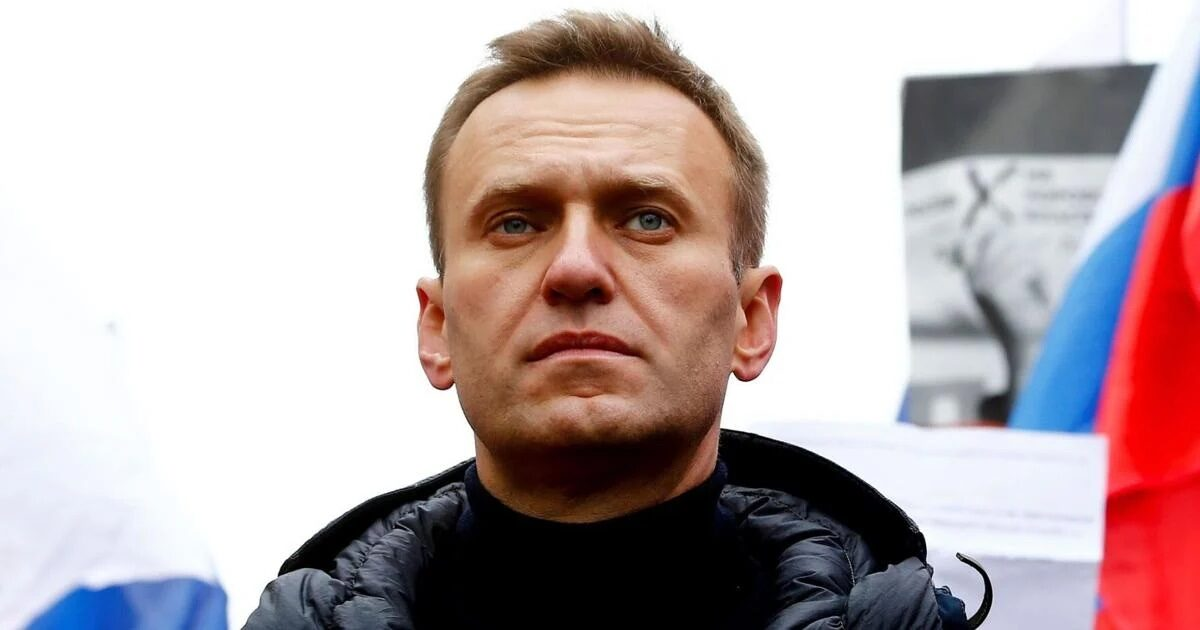
UK and European allies assert that forensic analysis connects the Kremlin to Navalny’s death through the use of dart frog toxin.
Britain and its European allies have officially held the Kremlin responsible for the death of Russian opposition leader Alexei Navalny, asserting that he was murdered with a poison derived from a rare dart frog toxin.
Two years after Navalny died in a Siberian penal colony, the UK announced that an analysis of material samples found on his body revealed the presence of epibatidine, a highly toxic substance sourced from poison dart frogs indigenous to northern South America.
During her address at the Munich Security Conference, UK Foreign Secretary Yvette Cooper stated that “only the Russian government had the means, motive and opportunity” to employ the poison while Navalny was in prison.
A joint statement from the UK, Sweden, France, Germany, and the Netherlands asserted: “Only the Russian state possessed the means, motive, and opportunity to use this lethal toxin against Navalny while he was imprisoned in a Russian penal colony in Siberia, and we hold it accountable for his death.”
Epibatidine occurs naturally in dart frogs native to the wilds of South America. Dart frogs kept in captivity do not generate this toxin, and it is not naturally present in Russia.
“Its presence in Navalny’s body cannot be explained innocently.”
Cooper stated, “Russia viewed Navalny as a threat.”
“Through the use of this poison, the Russian state revealed the contemptible methods it employs and the profound fear it harbors towards political dissent,” she added.
The UK Foreign Office has confirmed that it has notified the Organisation for the Prohibition of Chemical Weapons regarding Russia’s purported violation of the Chemical Weapons Convention.
UK Prime Minister Sir Keir Starmer commended Navalny for his “huge courage,” stating that “his determination to expose the truth has left an enduring legacy.”
“I am committed to taking every necessary action to protect our people, our values, and our way of life from the threat posed by Russia and Putin’s violent intentions,” he added.
French Foreign Minister Jean-Noël Barrot stated that his country “pays tribute” to Navalny, whom he implied was “killed for his fight in favour of a free and democratic Russia.”
Navalny passed away unexpectedly in prison on 16 February 2024 at the age of 47. In 2020, he was poisoned with a Novichok nerve agent, underwent treatment in Germany, and was arrested upon his return to Russia.
Toxicology expert Jill Johnson informed BBC Russian that epibatidine is “200 times more potent than morphine.” She stated that it may lead to “muscle twitching and paralysis, seizures, slow heart rate, respiratory failure, and ultimately death.”
Johnson characterized it as a “incredibly rare method of poisoning a person,” noting: “Locating the wild frog in the right environment that consumes the specific diet to produce the appropriate alkaloids is nearly impossible…almost.”
Yulia Navalnaya, the widow of Navalny, has consistently maintained that her husband was poisoned during his imprisonment. In response to the recent discoveries, she stated: “I was convinced from the very beginning that my husband had been poisoned, and now there is evidence to support that.”
“I appreciate the European states for their diligent efforts over the past two years in revealing the truth,” she added.
Moscow has dismissed the allegations. Kremlin spokesperson Maria Zakharova stated, as reported by state-run news agency Tass: “All the talks and statements are an information campaign aimed at distracting attention from the West’s pressing problems.”
At the time of his death, Navalny had spent three years in prison on charges that many viewed as politically motivated. According to Russian authorities, he took a brief stroll at his Siberian penal colony, experienced discomfort, collapsed, and did not regain consciousness.