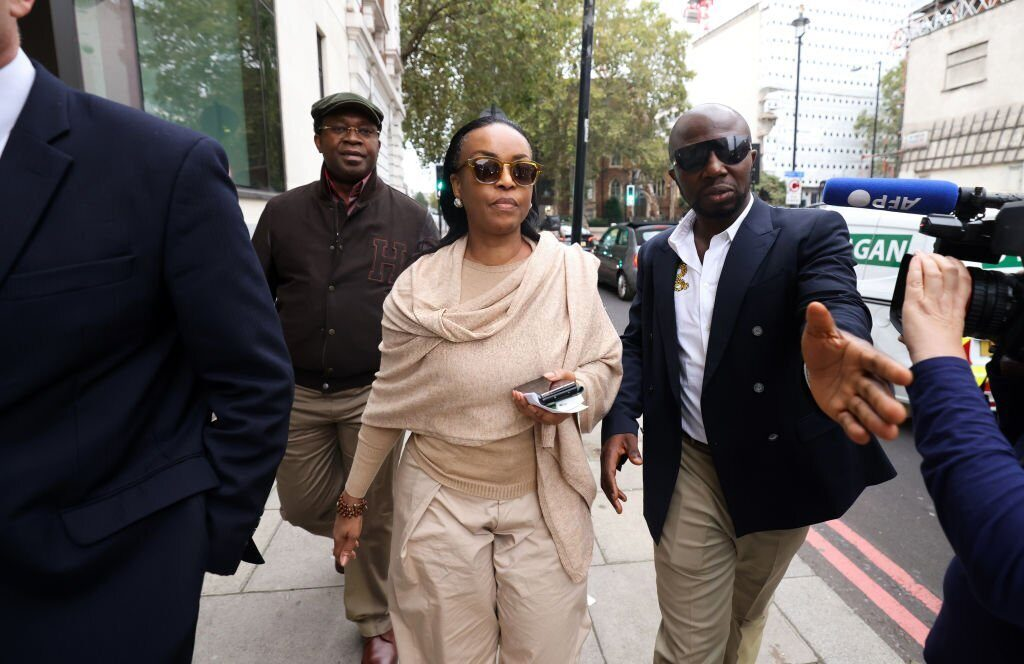
Key witnesses provide conflicting testimonies against the prosecution in the Diezani bribery trial in the UK
Key witnesses in Diezani Allison-Madueke’s UK trial have provided contradictory statements, raising questions about the allegations that the former minister accepted bribes.
The prosecution in the United Kingdom bribery trial of former Nigerian Minister of Petroleum Resources, Diezani Allison-Madueke, has encountered several obstacles as key witnesses provided testimony that seemed to conflict with crucial aspects of the Crown’s case.
The trial taking place at Southwark Crown Court involves five counts of bribery and one count of conspiracy to commit bribery.
Prosecutors claimed that while serving as Nigeria’s Petroleum Minister, Allison-Madueke accepted gifts characterized as bribes from notable individuals in the oil sector, purportedly aimed at swaying her official choices.
In recent days, jurors have been presented with allegations concerning extravagant shopping sprees and significant purchases in upscale areas of London.
Nonetheless, testimony during cross-examination has revealed notable inconsistencies that the defense is anticipated to leverage as the proceedings advance.
One of the prosecution’s key witnesses, Sandro Rocha, who formerly served as a driver for Nigerian businessman Kola Aluko, provided testimony over the course of two days.
During his first testimony, Rocha recounted the transportation of significant amounts of cash and the driving of Allison-Madueke to and from residences associated with Aluko in London.
He asserted that he had driven her once alongside former Nigerian President, Goodluck Jonathan.
During cross-examination, Rocha admitted that his memory of events from 2009 to 2014 was “patchy.”
He also acknowledged that he had depended solely on a witness statement crafted for him by officials from the United Kingdom’s National Crime Agency (NCA).
When pressed on specific aspects of his earlier account, Rocha admitted that some impressions he had conveyed, including claims about Allison-Madueke’s alleged presence at an unfinished property and the supposed sighting of her elderly mother at an active construction site, were “most likely wrong” when faced with documentary and factual discrepancies.
His acknowledgment that the statement was prepared by investigators highlighted the prosecutorial guidelines related to witness preparation.
The Crown Prosecution Service (CPS) of the United Kingdom clearly warns against coaching witnesses or sharing detailed accounts of the evidence they are anticipated to present in court, to prevent the impression that testimony is being influenced rather than genuinely remembered.
Although it is up to the court to assess the significance of Rocha’s evidence, the defence has indicated that these admissions could impact its credibility.
During the trial, the prosecution presented Amina Hamila, a Private Client Manager at Harrods, the prestigious London department store, to substantiate claims that over £2 million in purchases were linked to Allison-Madueke’s client profile.
The court was informed that she was classified as a “Black Tier” client, a status that grants access to personal shopping services and exclusive advantages.
During cross-examination, Hamila admitted that Harrods’ transaction records, when compared with Allison-Madueke’s immigration history and passport stamps, indicated that substantial amounts of the spending linked to her took place during periods when she was not in the United Kingdom.
Hamila further confirmed that Allison-Madueke did not present a payment card in person during the transactions in question.
Her evidence indicates that Harrods’ internal systems identified Kola Aluko as the paying client, with the purchased items recorded in his name prior to being sent to his storage facilities.
The details presented a clear distinction between the existence of a client profile and the inquiry into who funded and formally received the luxury goods. This distinction may prove to be crucial as the jury evaluates whether the prosecution has demonstrated that the alleged benefits were personally received as bribes.
The prosecution asserts that the gifts and luxury benefits were given with the aim of swaying Allison-Madueke’s decisions while she served as Petroleum Minister.
The defense has aimed to contest the evidentiary basis of those assertions, concentrating on discrepancies in witness memories and documentary evidence.
The proceedings are set to resume on February 23, 2026, with more prosecution witnesses anticipated to take the stand.