Donald Trump has reversed the 2009 ruling on greenhouse gases, leading to legal disputes and transforming climate regulation across the United States.
Donald Trump has officially overturned a significant 2009 climate decision that has acted as the legal foundation for federal greenhouse gas regulation for over ten years. The decision overturns the “endangerment finding” established during Barack Obama’s administration, a ruling that determined greenhouse gases represent a risk to public health and welfare.
The Environmental Protection Agency (EPA) has issued a finding that identifies six planet-warming gases, including carbon dioxide and methane, as hazardous pollutants under the Clean Air Act. Due to Congress’s inability to enact comprehensive climate legislation at that time, the determination emerged as the primary legal authority allowing federal agencies to regulate emissions from motor vehicles, power plants, oil and gas operations, landfills, and even aircraft.
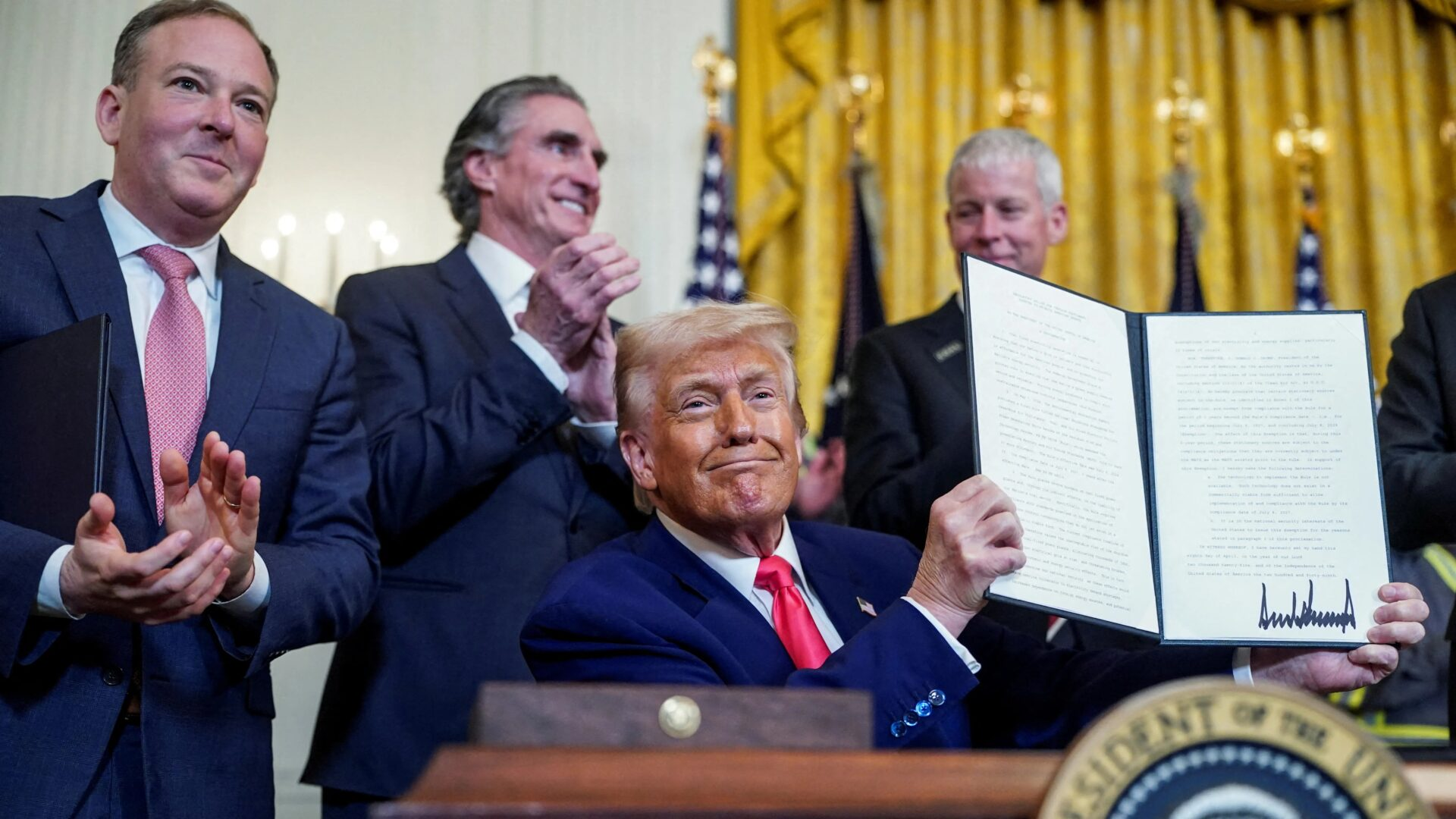
In the Oval Office, Trump announced the repeal, characterizing the original ruling as a “disastrous Obama-era policy” that harmed the American auto industry and increased consumer prices. He contended that reversing it would alleviate regulatory pressures, decrease vehicle expenses, and bolster domestic production. Officials from the White House asserted that the rollback signifies the “largest deregulation in American history,” projecting savings exceeding $1 trillion and a decrease of approximately $2,400 per vehicle for automakers.
The administration asserts that relaxing emissions standards will lead to more affordable cars and lower energy costs. Nonetheless, environmental advocates firmly contest those projections. Organizations such as the Environmental Defense Fund caution that relaxing fuel efficiency standards may lead to higher long-term fuel expenses for consumers, potentially resulting in trillions in extra spending and an increase in pollution levels across the country. Critics point to health modelling indicating that this decision could result in tens of thousands of extra premature deaths and millions more cases of asthma in the long run.
Legal experts highlight that the endangerment finding has historically served as the cornerstone of US climate regulation. The removal impacts not just vehicle emissions regulations but also compromises standards related to power generation, methane emissions, and industrial pollution. Some observers point out that although the administration aims to restrict federal authority, the repeal could potentially lead to new litigation at the state level. The prior existence of the EPA’s finding played a crucial role in hindering specific climate-related lawsuits by consolidating regulatory authority at the federal level.
The rollback is expected to create uncertainty within the US auto industry. Although relaxed standards might reduce short-term compliance expenses, vehicles that are less fuel-efficient could encounter diminished demand in global markets where stricter emissions regulations continue to be enforced.
The scientific foundation of the original 2009 determination is at the heart of the policy debate. A recent report from the Department of Energy that challenges widely accepted climate science was utilized to justify the reversal. However, the panel responsible for the report has encountered criticism from climate experts who contend that it was unrepresentative and misleading. A federal judge has recently determined that the establishment of the advisory team breached legal protocols, introducing yet another possible challenge to the administration’s defense.
Numerous analysts contend that the primary objective is to obtain a decision from the US Supreme Court that would consistently limit or abolish the EPA’s power to oversee greenhouse gas emissions under current legislation. If maintained at that level, subsequent administrations may find it challenging to restore comparable climate protections without new legislation from Congress.
The decision represents a significant change in US environmental policy in recent decades, paving the way for an extended political and legal struggle regarding the federal government’s involvement in tackling climate change.