Trump states there is no ‘definitive’ agreement with Netanyahu, and that US discussions with Iran will proceed
President Donald Trump stated following discussions with Israeli Prime Minister Benjamin Netanyahu on Wednesday that they did not arrive at a “definitive” agreement regarding the path forward with Iran; however, he emphasized that negotiations with Tehran would persist in an effort to determine if a deal can be reached.
Netanyahu, who was anticipated to urge Trump to expand diplomacy with Iran to encompass restrictions on its missile arsenal in addition to its nuclear program, emphasized the necessity of considering Israel’s security interests, yet provided no indication that the president fulfilled the commitments he desired.
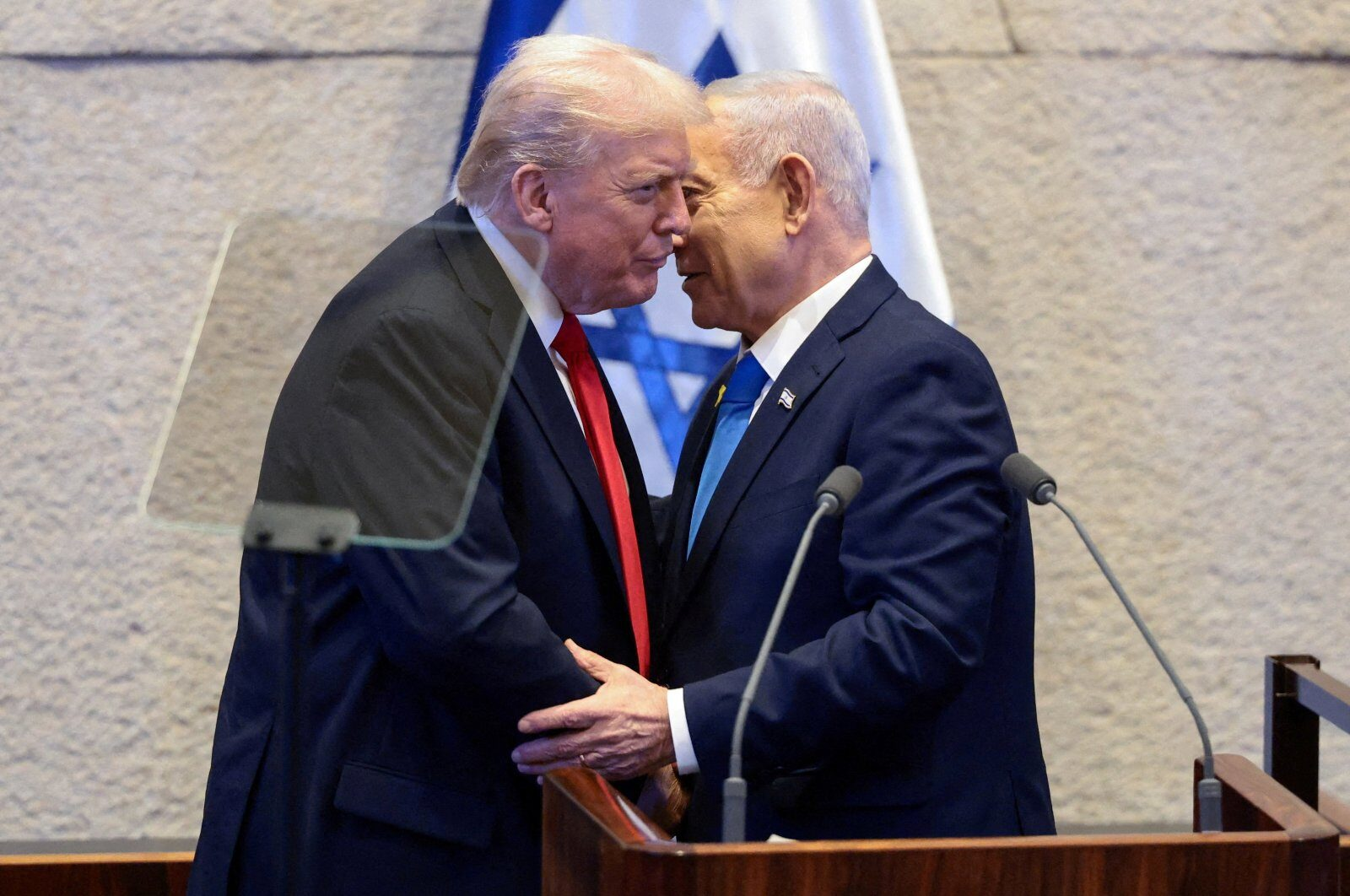
During their seventh meeting since Trump resumed office last year, Netanyahu – whose visit was notably subdued and restricted from the press – aimed to sway the upcoming U.S. discussions with Iran after the nuclear negotiations that took place in Oman last Friday.
The two leaders engaged in a private discussion for over two and a half hours, which Trump characterized as a “very good meeting.” However, he noted that no significant decisions were reached and refrained from publicly endorsing Netanyahu’s requests.
Trump has issued threats of strikes on Iran should an agreement not be reached, while Tehran has promised to retaliate, heightening concerns of a broader conflict as the U.S. builds up its military presence in the Middle East. He has consistently expressed his backing for a secure Israel, a long-time ally of the U.S. and a principal adversary of Iran.
During media interviews on Tuesday, Trump emphasized his straightforward warning to Iran, expressing his belief that Tehran is seeking a deal. “There was nothing definitive reached other than I insisted that negotiations with Iran continue to see whether or not a deal can be consummated,” Trump stated in a social media post following his meeting with Netanyahu. “If possible, I will inform the Prime Minister that this would be my preference.”
“If it cannot, we will simply have to wait and see what the outcome will be,” Trump remarked, highlighting that the last time Iran opted against an agreement, the U.S. targeted its nuclear sites last June.
Trump opposes Iranian nuclear weapons and missiles.
In an interview aired on Tuesday, Trump stated to Fox Business that a favorable agreement with Iran would entail “no nuclear weapons, no missiles,” though he did not provide further details. He mentioned to Axios that he was contemplating the deployment of a second aircraft carrier strike group as part of a significant U.S. buildup in proximity to Iran.
Israel is concerned that the U.S. may seek a limited nuclear agreement that fails to impose limitations on Iran’s ballistic missile program or to halt Iranian backing for armed groups like Hamas and Hezbollah, as reported by sources knowledgeable about the situation. Israeli officials have advised the U.S. to be cautious regarding Iran’s assurances.
Iran has dismissed these demands, asserting that the discussions in Oman were solely centered on nuclear matters.
The Prime Minister highlighted the security requirements of the State of Israel during the negotiations, and both parties concurred on the importance of maintaining their close coordination and ongoing communication, according to a statement from Netanyahu’s office following Wednesday’s discussions.
According to one source, the two leaders were also anticipated to discuss possible military action should diplomacy with Iran not succeed.
Iran has expressed its willingness to engage in discussions regarding limitations on its nuclear program in return for the removal of sanctions, yet it has firmly rejected any connection between this matter and its missile capabilities. “The Islamic Republic’s missile capabilities are non-negotiable,” stated Ali Shamkhani, an adviser to Iran’s supreme leader, on Wednesday.
Netanyahu’s arrival at the White House was more subdued than typical. A photo released by the Israeli Embassy depicted the two leaders shaking hands. However, in contrast to earlier visits by Netanyahu with Trump, a press pool was not permitted entry into the Oval Office. The reasons behind his low-profile treatment were not immediately clear.
GAZA IN FOCUS
Additionally, Gaza was on the agenda, as Trump aimed to advance a ceasefire agreement he played a role in brokering. Progress on his 20-point plan to end the war and rebuild the shattered Palestinian enclave has come to a standstill, with significant disagreements over issues like the disarmament of Hamas as Israeli troops withdraw in stages. “We discussed the tremendous progress being made in Gaza, and the region in general,” Trump stated following the meeting.
Netanyahu’s visit, initially set for February 18, was advanced in light of increased U.S. involvement with Iran. Both parties at the Oman meeting last week expressed that the negotiations were constructive, and additional discussions are anticipated in the near future.
Trump has not provided clear details regarding the expansion of the negotiations. He stated to Axios on Tuesday that it was a “no-brainer” for any agreement to encompass Iran’s nuclear program, while also expressing the possibility of addressing its missile stockpiles.
Iran asserts that its nuclear activities are intended for peaceful purposes, whereas the U.S. and Israel have alleged that it has previously sought to develop nuclear weapons.
In June, a 12-day conflict resulted in significant damage to Iran’s air defenses and missile capabilities by Israel. According to two Israeli officials, there are indications that Iran is making efforts to restore those capabilities.
Last month, Trump issued a threat to intervene militarily amid a violent crackdown on anti-government protests in Iran, but ultimately decided against it.
ISRAEL CONCERNED ABOUT A RESURGENT IRAN
Tehran’s regional influence has diminished due to Israel’s June attack, the setbacks experienced by its proxies in Gaza, Lebanon, Yemen, and Iraq, as well as the removal of its ally, former Syrian President Bashar al-Assad.
Israel remains cautious about its adversaries rearming following the multifront conflict initiated by Hamas’ attack on southern Israel in October 2023.
Although Trump and Netanyahu have generally aligned in their approaches and the U.S. continues to be Israel’s primary arms supplier, they seem to diverge on another significant matter.
A component of Trump’s Gaza plan offers the possibility of future Palestinian statehood, a notion that Netanyahu and his coalition, the most far-right in Israel’s history, have consistently opposed.
On Sunday, Netanyahu’s security cabinet approved measures aimed at facilitating land purchases for Israeli settlers in the occupied West Bank, while also expanding Israel’s authority in what Palestinians consider the core of a future state.
The decision faced widespread international criticism, and on Tuesday, Trump reaffirmed his stance against the annexation of the West Bank.